Hey everyone! Let's talk about something that, in my opinion, has become the lifeblood of the modern gaming scene: developer diaries. We're living in a world where games are built with us, not just for us. It's 2026, and the wall between the devs in their creative caves and us players has never been thinner. And honestly? That's the best thing to happen to gaming. Keeping players in the dark feels as outdated as a dial-up modem. Transparency isn't just nice; it's necessary. Think about it: when a studio pulls back the curtain, we don't just see code and assets; we see the passion, the late-night pizza, the scrapped ideas, and the triumphant breakthroughs. That connection? It's priceless.
The Magic of Pulling Back the Curtain 🎬
Remember the old days? A game would just... appear. Maybe a trailer or two, then radio silence until launch. Now? The journey is half the fun. Developer diaries turn the development process from a mysterious black box into a shared adventure. I've seen it firsthand. Studios like Gameloft, way back before Asphalt 8: Airborne launched, showed us the nuts and bolts. They talked about the struggle to get the physics just right, the joy of nailing a new car model, and the heartbreak of cutting a feature that just didn't work. It was raw, real, and we ate it up. The comment sections were flooded with "More please!"

Seeing the early models for Asphalt 8 was like watching a sculptor find the shape inside the marble.
Modern Masters of the Diary Format
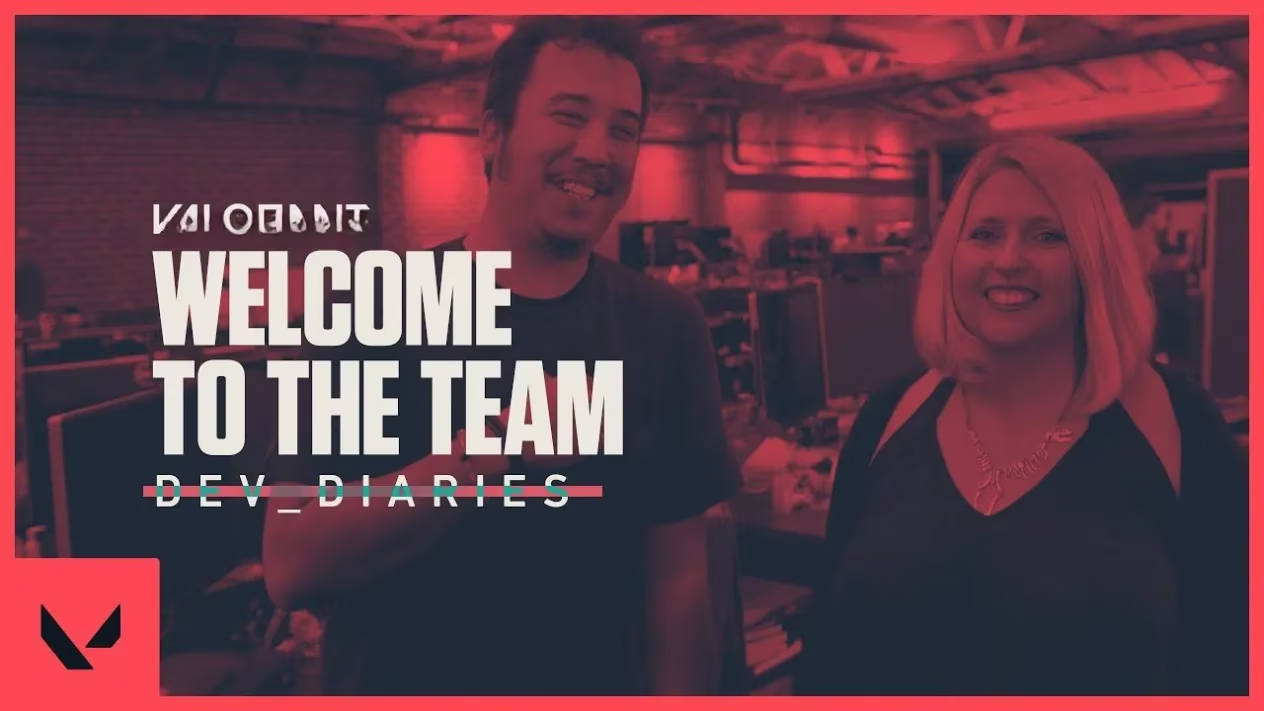
Fast forward to today, and the masters of this craft are setting the standard. Riot Games with VALORANT is a textbook example. Their dev diaries aren't just marketing fluff. They're deep dives into character design philosophy, map balancing acts that are more delicate than a house of cards in a breeze, and the tech behind that satisfying "headshot" sound. The VALORANT community doesn't just play the game; they feel invested in its evolution. They're co-pilots on the development flight.
Then there's Firefly Worlds and Stronghold: Warlords. One comment on their dev diary video said it all: "I really like your new approach of making videos and giving updates on the game. Please do more." And the studio heart-ed that comment! That small interaction is more powerful than a dozen press releases. It shows they're listening. This level of engagement is like a community garden; the developers plant the seeds, but the players help water it and watch it grow, creating something everyone is proud of.
Why Aren't More Studios Doing This?! 🤔
Here's the crazy part: in 2026, it's still not the industry standard. So many studios operate behind a veil of secrecy, treating their roadmap like a state secret. I get that there's a fear of overpromising or showing unpolished work. But let's be real: players aren't naive. We know game dev is hard. Hiding the process often backfires. Players become like cats curiously pawing at a closed door—the mystery itself becomes a distraction, and sometimes leads to frustration. Transparency builds trust. Secrecy builds speculation, and often, it's not the good kind.
A dev diary is the ultimate trust-building exercise. It says, "We respect you enough to show you our work-in-progress." It manages expectations realistically. If we see a feature struggling in a dev vlog, we understand if it's polished or cut later. It turns potential criticism into collective problem-solving.
The Future is Transparent
As games become ever more community-driven, the developer diary should be the central hub of that relationship. It's not just about showing cool new guns or maps. It's about showing the humanity behind the pixels. What's the team excited about this week? What technical hurdle did they just overcome? What music is fueling their coding sessions?
For us players, it means we're not just buying a product; we're joining a journey. We get to see the fortress of Stronghold: Warlords being built brick by digital brick. That connection makes the final launch feel like a celebration we're all part of, not just a transaction. It transforms players from customers into stakeholders.
So, to any devs out there listening: your next powerful update shouldn't just be a patch note list. Hit record. Talk to us. Show us the messy, beautiful, frustrating, and glorious process of making games. In 2026, that's not just good PR; it's the heart of a lasting gaming community. The evidence is clear—when you treat your development like an open book, your players will want to read every single chapter. 🚀