Back in the spring of 2020, as the world nervously watched a pandemic unfold, Riot Games was about to unleash something that would dominate PC gaming for years to come. Six years later, in 2026, Valorant remains a titan of the tactical shooter scene – but one of the juiciest behind‑the‑scenes tales from its development still makes Riot veterans chuckle. It turns out the biggest threat to finishing Valorant wasn't crunch, technical bugs, or a global lockdown. It was the developers themselves, utterly incapable of putting their own game down.
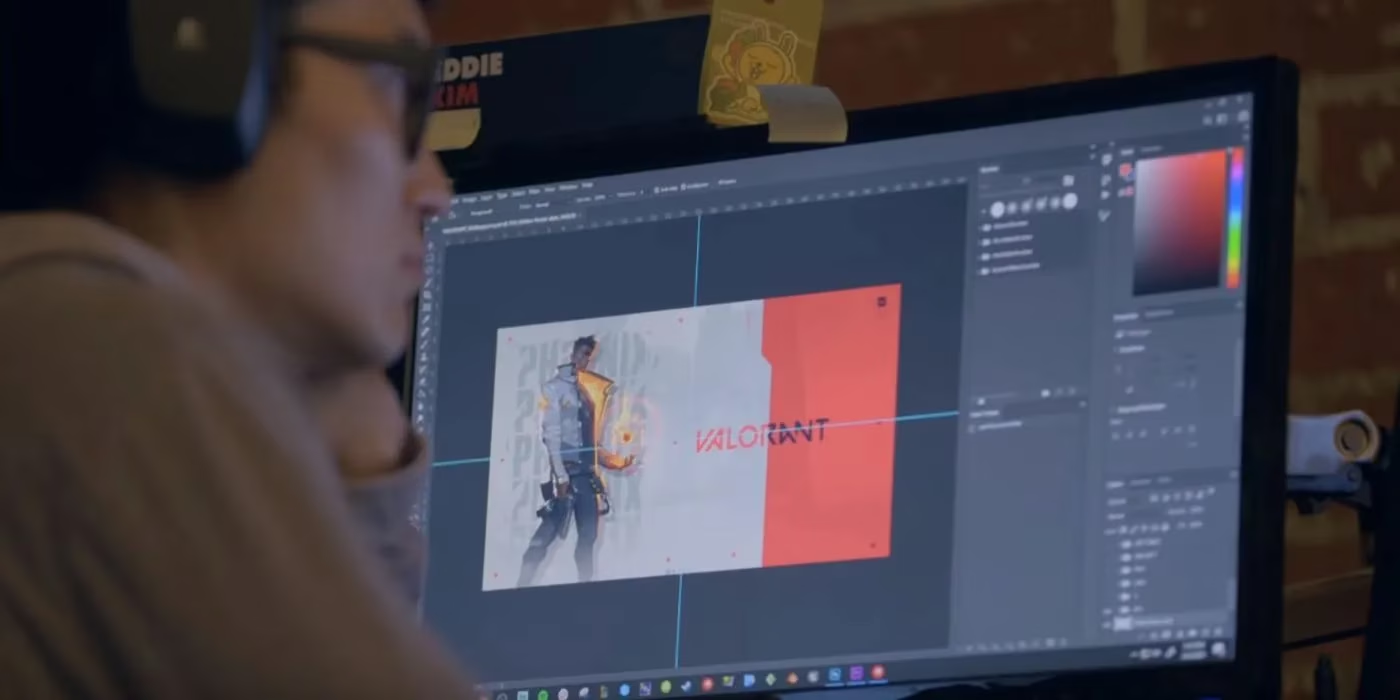
The problem surfaced right after the internal "Friend & Family" playtests went live. Suddenly, hallways at Riot's Los Angeles headquarters started echoing with frantic callouts and the crisp sound of headshots. Design Director Joe Ziegler, in a developer diary that still gets quoted on forums today, described a scene straight out of a comedy sketch. Every time he strolled past a pod of workstations, at least three screens were glowing with a familiar red‑and‑blue tint. People who were supposed to be fine‑tuning agent abilities or stress‑testing servers were, ahem, "exploring the meta"… for six hours straight.
Honestly, you can't really blame them. Valorant’s tight gunplay and ability interplay hit that sweet spot that even seasoned playtesters find irresistible. But eventually, someone had to be the party pooper. Enter the “evil” senior producer – Ziegler’s words, not ours – who had to do the unthinkable. A decree came down: no more playing Valorant on the clock unless your name was explicitly on a testing roster. Suddenly, ears were met with a dreadful silence. Rows of developers stared longingly at their launchers, like kids told they could only watch cartoons after homework.
It’s almost as if the game itself had developed a mischievous personality. Picture Valorant as a sassy, charming agent who whispers, "Just one more round, the patch notes can wait." And these were the people who coded that voice into existence! There’s a delicious irony in creators being so ensnared by their creation that the project nearly stalled. The development pipeline reportedly slowed to a crawl, with progress on new maps and balance tweaks slipping because… well, too many employees were busy testing whether the Vandal on a 30‑round spray pattern could out‑duel a Phantom at 20 meters.
Riot’s culture has always been famously pro‑gamer. Former Overwatch pro Seagull, during one of his early Valorant broadcasts back in 2020, casually dropped that several League of Legends casters inside Riot were shockingly good at the game. It made sense: the studio hires people who genuinely adore competitive play. But when that passion spilled from after‑hours escapades into the middle of a sprint cycle, someone had to put the brakes on. The senior producer reportedly wasn't even angry, just… spectacularly disappointed, the way a parent catches their teenager attempting a 360 no‑scope instead of doing algebra.
Despite the internal distraction, Valorant managed to hit its summer 2020 launch window – a borderline miracle given that COVID‑19 had already forced everyone into remote work. The lockdown situation probably helped, because you can’t easily pop over to a colleague’s desk to whisper, "Yo, let’s queue up" when that desk is now a laptop in a kitchen. Still, the saga turned into one of those legendary industry anecdotes: the game that almost didn’t ship because its makers were too busy perfecting their Jett knives.
Fast forward to 2026, and Valorant is a six‑year‑old behemoth with a global esports circuit, rotating map pools, and an ever‑growing roster that shows no signs of slowing. Yet that 2020 moment of self‑inflicted chaos remains a badge of honor. If a studio’s own employees can’t pry themselves away from a title, what hope do regular players have? It’s the ultimate endorsement, wrapped in a hilarious cautionary tale about the dangers of making a game that’s just a little too fun.
The next time an agent reveal gets delayed or a patch arrives a day late, someone in the Valorant subreddit will inevitably resurrect the old joke: "Probably because a Riot dev is still trying to rank up." And somewhere in Los Angeles, a now‑relaxed senior producer might just smile, knowing their "evil" rule probably saved a masterpiece from its own creators' obsession.