The release of Valorant's Icebox map in late 2020 marked a significant shift in the tactical shooter's landscape. Introduced ahead of schedule with patch 1.10, this Arctic-themed battleground was designed as a vertical playground, emphasizing intense skirmishes, layered sightlines, and dynamic movement via ziplines. Set within the frigid confines of a former excavation site, its initial visual and environmental novelty captivated the player base. However, this frosty infatuation proved transient, giving way to a heated and ongoing debate within the community regarding the map's fundamental design philosophy and its place in the competitive ecosystem.
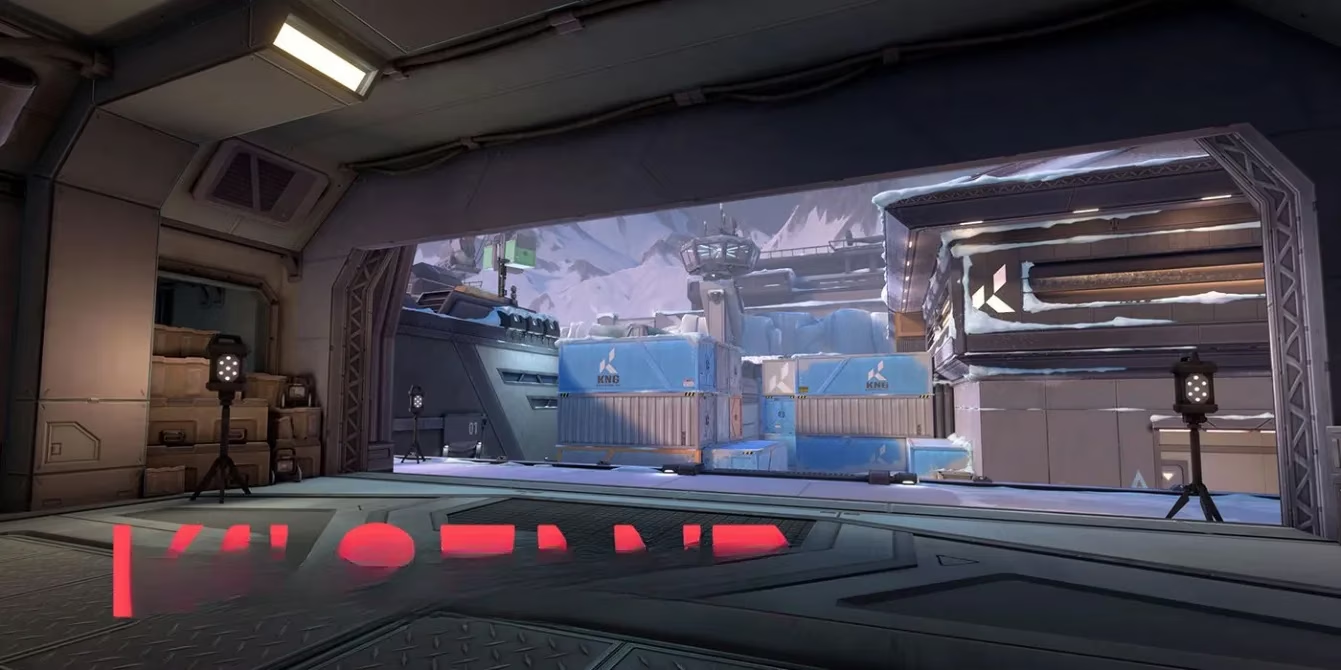
The core of the contention revolves around Icebox's architectural identity. Unlike the more traditional, ground-level focused layouts of maps like Bind or Haven, Icebox aggressively implements verticality and multi-level engagements. This design choice creates a complex web of sightlines and angles that players must constantly manage. Critics argue that this complexity transforms standard tactical play into a frustrating exercise of checking an excessive number of positions. The sentiment, powerfully vocalized by a segment of the community, is that the map demands an overwhelming amount of information gathering and area denial, slowing down the pace of rounds and punishing aggressive playstyles.
Community feedback crystallized notably around a specific event. When Riot Games announced that Patch 1.11—which included fixes and was set to formally integrate Icebox into the esports map pool—was being rolled back due to technical glitches, the response was revealing. A vocal contingent, led by players like SingularityCS, used the announcement as a platform to advocate for the map's complete removal. Their argument centered on the premise that Icebox's design ran counter to previous game balance efforts. They pointed out that Riot had previously patched the game to reduce the necessity of 'hard-clearing' every single corner, a tactic Icebox's labyrinthine design allegedly made ten times more critical and tedious.
This perspective found a resonant echo in broader community spaces. A poll on the game's official subreddit, created to gauge player sentiment, presented three options: 'Love it,' 'Meh,' and 'Hate it.' The results were telling, with a plurality of voters selecting the ambivalent 'Meh.' The comment sections beneath such discussions were often filled with players echoing the call for removal, citing frustration with the map's learning curve and perceived imbalance. Common complaints included:
-
Overwhelming vertical vantage points that are difficult to challenge.
-
Excessive clutter and cover, creating too many hiding spots.
-
A steep learning curve that feels punishing for casual and ranked players alike.
-
Zipline mechanics that can feel gimmicky or inconsistent in high-stakes situations.
However, the narrative is not universally negative. A significant, though often less vocal, portion of the player base has expressed genuine appreciation for Icebox. These players champion the map for the very reasons its detractors criticize it. They enjoy the strategic depth and creative playmaking opportunities born from the vertical design. For them, Icebox represents a refreshing deviation from formula, demanding new agent compositions, innovative utility usage, and adaptive teamwork. This group values the map's capacity to reward coordinated map control strategies and clever use of agents with vertical mobility or recon tools.
Riot Games' response to this polarized feedback has been measured and developmental. The company acknowledged the map's challenging nature by initially releasing it in a 'beta state' for extended playtesting. Furthermore, developer communications have indicated a long-term commitment to refining the map through iterative changes rather than outright removal. This approach suggests an understanding that new, complex map designs require time for meta-strategies to evolve and for players to develop mastery.
The debate over Icebox also accelerated Riot's publicly stated roadmap for map development. In interviews, Game Director Joe Ziegler indicated that the team felt reaching a pool of seven maps was a crucial 'good starting point' for variety and balance. This acceleration in new map development can be seen, in part, as a response to having one map in the rotation that generated such strong, divided reactions. It provided a strategic buffer, ensuring that players who disliked Icebox would have more frequent alternatives, while also expanding the game's overall tactical vocabulary.
Years later, as of 2026, Icebox remains a fixture in Valorant's map rotation, a testament to Riot's philosophy of iterative improvement and meta evolution. The map has undergone several rounds of tweaks and adjustments aimed at smoothing its sharpest edges—simplifying some vertical complexities, adjusting spawn timers, and modifying certain plant site geometries to make them less defensively oppressive. While it may never achieve universal acclaim, Icebox has cemented its legacy as Valorant's most controversial and discussion-provoking arena. It stands as a bold experiment in vertical level design that continues to separate the player base, challenge conventional tactics, and spark endless debate about the ideal balance between innovation and accessibility in a competitive tactical shooter.