The year is 2026, and the ghost shots, the phantom pings, the soul-crushing moments where a perfectly placed crosshair yields nothing but a mocking silence—these specters that have haunted VALORANT players for years are finally, finally being exorcised by Riot Games. For too long, the competitive integrity of this tactical titan has been haunted by the inconsistent phantom known as hit registration, a problem as elusive as smoke on the wind and as frustrating as a one-tap that somehow misses. The developers, having emerged from their data-laden war room, have confirmed what the player base has screamed into their monitors for months: the inconsistency is real, it is palpable, and it is being hunted down with the precision of a Sova recon bolt. This isn't just a patch; this is a surgical strike on the very fabric of gameplay, a promise to forge a shooter as reliable as a calibrated scale and as responsive as a neural synapse.
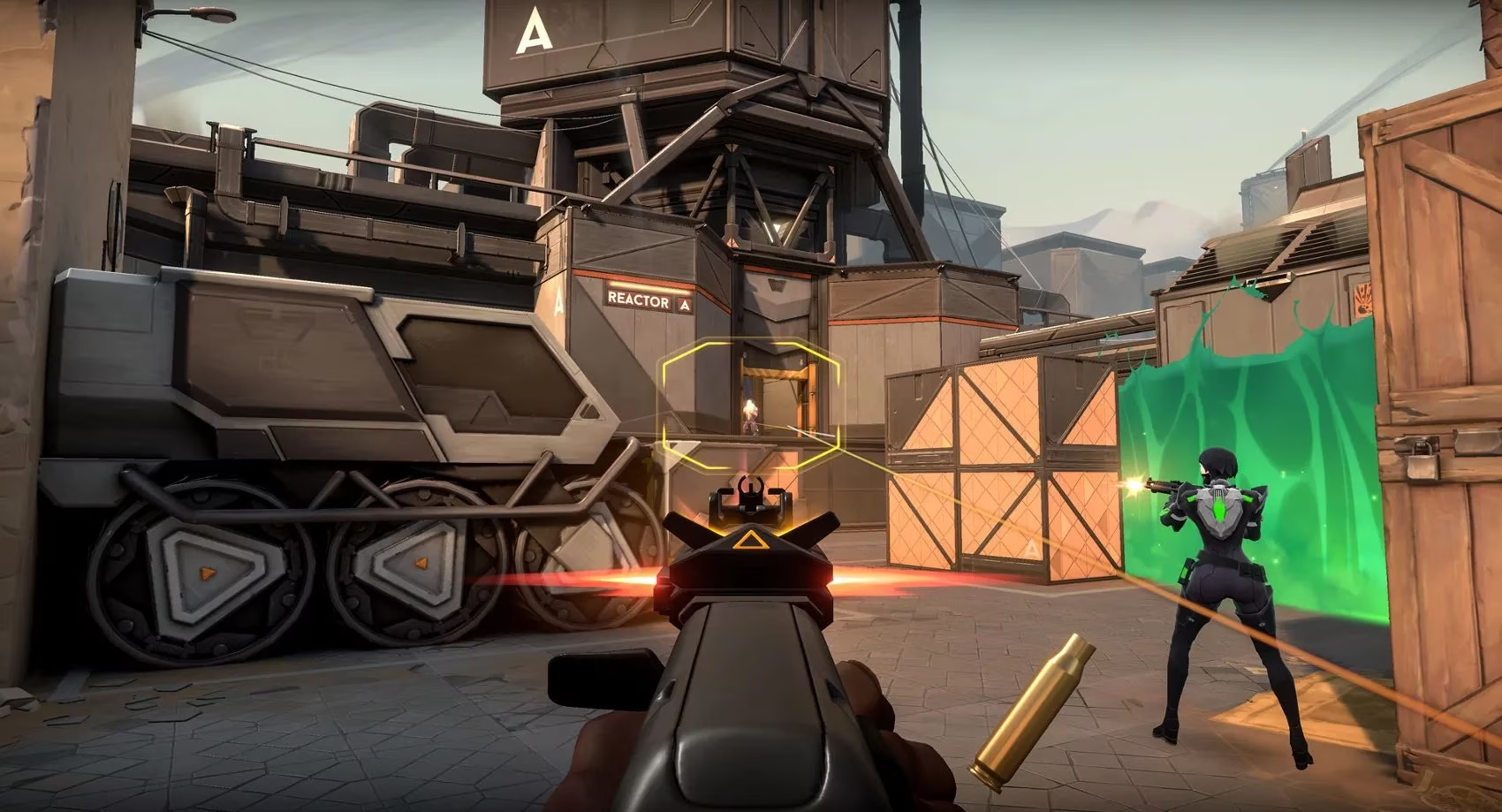
Riot Games, in a display of transparency that rivals a Jett dash into the open, has torn back the curtain on their grand investigation. They are not merely tweaking numbers; they are dissecting the game's soul across three critical, interlocking fronts. Imagine hit registration not as a simple button press, but as a delicate, three-part symphony where one out-of-tune instrument ruins the entire performance. First, Hitbox Clarity is getting a brutal, high-definition makeover. The ethereal, sometimes-misleading outlines of character models are being sharpened into crystal-clear definitions, ensuring what you see is precisely what you can shoot. No more guessing if that pixel belongs to the enemy's shoulder or the void. Second, the visual feedback for Movement Inaccuracy is being refined to a microscopic degree. The subtle, often imperceptible bloom and sway that occurs when strafing or jumping will now be communicated with the unmistakable clarity of a neon sign in a dark alley. Players will know the exact moment their shot becomes a gamble. Finally, and perhaps most crucially, Riot is tackling the hydra-headed beast of Ping Disparity. The chaotic, lag-infused dance between players on different connections is being choreographed into a predictable waltz. The goal is to create a unified field where a player in Tokyo and a player in Texas interact under the same, immutable laws of physics, their duel decided by skill, not by the whims of an overloaded server router.
This undertaking is monumental, a feat of engineering as complex as building a skyscraper on a foundation of shifting sand. Riot has been admirably candid: these changes will not hit the live servers with the haste of a Raze Satchel. Major, systemic overhauls of this magnitude require research, testing, and iteration on a scale that would make Brimstone's strategic mind boggle. One wrong line of code, one misaligned calculation, could be more game-breaking than an entire team of ulting Reynas. The studio is moving with the deliberate, measured pace of a Cypher setting up his Trapwires, ensuring every change is bomb-proof before deployment.
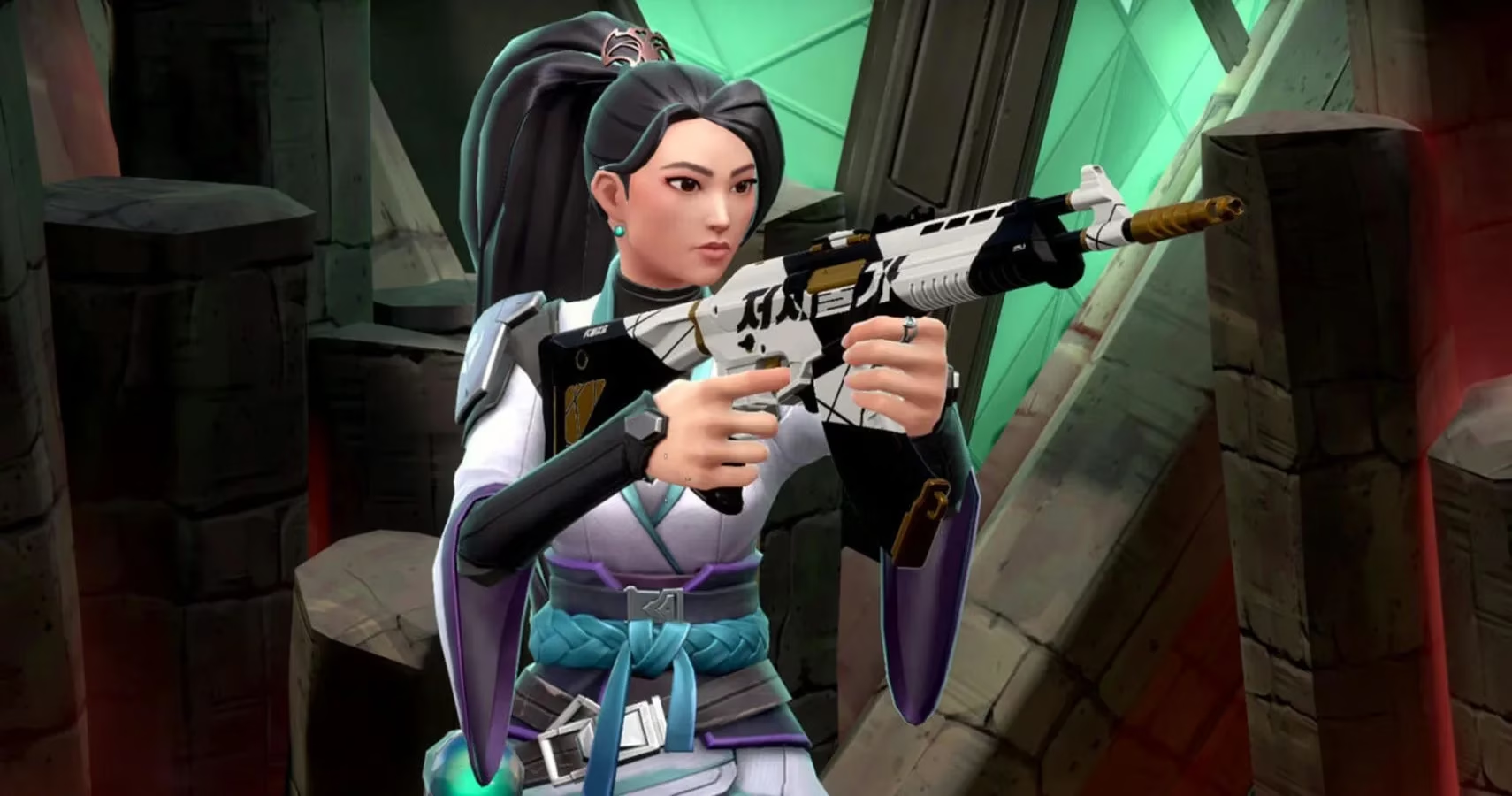
But the ambition doesn't stop at mere technical fixes! The 2026 roadmap is dripping with quality-of-life nectar. Players have long clamored for a left-handed view model, a feature Riot is actively stress-testing with the paranoid vigilance of a Killjoy locking down a site. The concern? Ensuring this cosmetic preference doesn't accidentally grant a competitive edge, like a slightly clearer angle on a right-hand peek. It's a testament to their commitment to pure balance. Furthermore, the cosmetic arsenal is poised for expansion. Existing skin collections, some of which have gathered digital dust, may soon be revitalized with new variants and visual effects. Imagine your beloved Prime Vandal or Elderflame Operator receiving fresh, optional layers of flair, allowing for deeper personalization without needing an entirely new bundle.
This comprehensive push for perfection follows what many considered the calm before the storm. The era of smaller, incremental patches is giving way to a new age of foundational updates. The community should brace itself for patch notes that read less like a changelog and more like a constitution for a new, fairer VALORANT. The message from Riot is thunderously clear: they are listening, they have diagnosed the illness, and they are preparing the cure. The future of VALORANT is being forged in the fires of player feedback and technical obsession, promising a game where every click, every flick, and every calculated spray is rewarded with the satisfying, unequivocal thwack of a perfectly registered hit. The duel of the future won't be clouded by doubt; it will be a pristine, crystalline test of aim and mind.