I still remember April 2020 like it was yesterday—the world was locked down, and suddenly everyone was talking about a game they couldn't even play yet. Riot Games had just flipped the switch on the Valorant closed beta, and within hours it felt like the entire internet had tuned in. Back then, I was just another bored gamer desperate for something fresh. How could a game that was still in alpha have 1.5 million viewers on Twitch at a single moment? It sounded insane, but it was real.
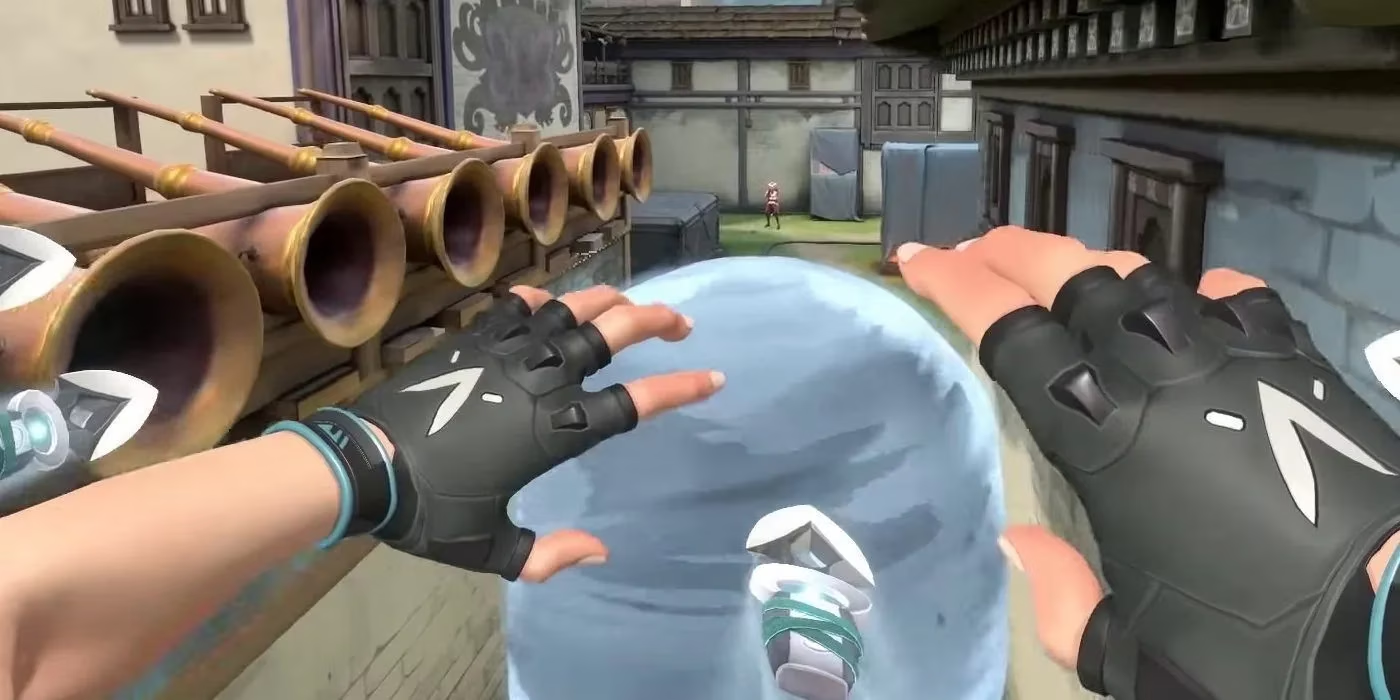
As a longtime Counter-Strike player, I was intrigued by the promise of tactical gunplay mixed with hero abilities. Riot wasn't just launching another shooter; they were building a new IP from the company behind League of Legends, and that pedigree alone made people pay attention. The game’s style felt like Overwatch had collided with CS:GO, and the buzz was electric. I remember frantically watching streams, hoping for a Twitch loot drop to grant me beta access. Drops were live, and FOMO was at an all-time high. Those who got in—mostly streamers and pros—shaped the narrative of the entire launch.
Streamers didn't just play the game; they became part of its lore. Riot had said that Valorant’s story would unfold through character interactions, and in those early days, every match felt like a live storytelling session. I watched as players discovered mobility tricks, like using Jett’s dash to reach unexpected angles or Raze’s satchel charges for vertical plays. These weren't just cool moves; they were the kind of skill-based techniques that separated casuals from regulars, just like rocket jumping did in the Team Fortress days. Even though ranked mode wasn't available at launch, the desire to master these tricks painted a picture of what elite gameplay would look like. And here's the kicker: Valorant promised skill-based matchmaking even for unranked play, so even newbies like me had to adapt fast.
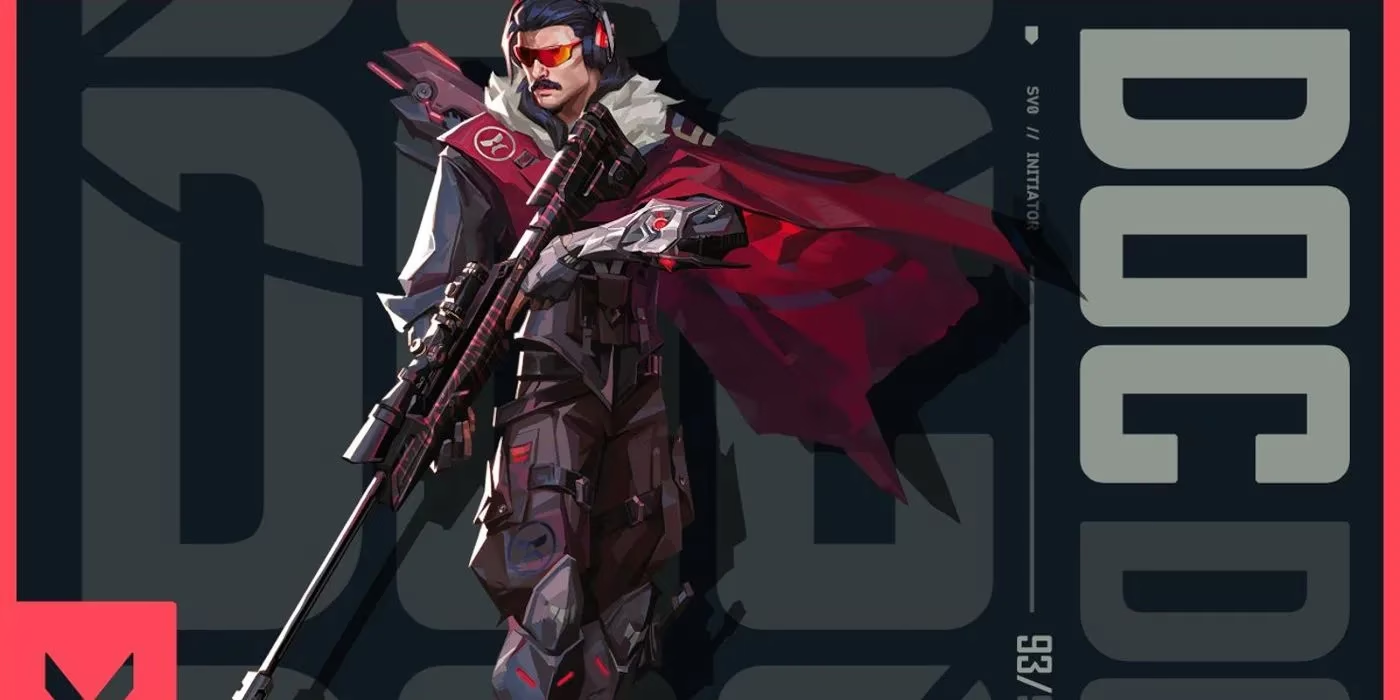
Not everyone was sold, though. The beta had its vocal critics. Dr. Disrespect famously held the game in scorn, turning his distaste into a channel meme. And then there was xQc, the on-and-off Overwatch pro, who fired shots at streamers who declared Valorant their new main game. Looking back, were those criticisms justified? Maybe a little. The beta was rough around the edges, and the hero balance was all over the place. But that raw energy was exactly what we needed. It sparked debates that kept the community alive.
Fast forward to 2026, and it's wild to see how that chaotic spring laid the foundation for a global phenomenon. Valorant didn't just launch that summer; it evolved into a cultural powerhouse. Here’s a snapshot of how far we’ve come:
| Feature | 2020 Closed Beta | 2026 Reality |
|---|---|---|
| Agent Roster | 10 (many locked) | Over 30 agents, each with deep lore |
| Ranked System | Not available at launch | Robust seasonal leagues, radiant tier |
| Esports Scene | Informal streamer matches | Sold-out arenas, VCT Champions 🏆 |
| Content Drops | Twitch loot drops for access | Battle passes, pro team capsules |
Can you believe that the game that once couldn't even handle a ranked queue now hosts million-dollar tournaments? I've watched the competitive scene blossom from kitchen-table streaming setups to packed stadiums for Valorant Champions 2026. The title that was supposedly just a "streamer fad" has become a staple of my gaming library, and I'm not alone—solo queue tonight, anyone?
Thinking back, what surprises me most isn't the growth but how accurate some of those early impressions were. The core gunplay still feels tight, the agent meta is ever-shifting, and yes, I still get out-dueled by players who mastered those original mobility tricks. Riot listened to both the hype and the hate, refining the experience year after year. So to anyone who remembers the Twitch chat spam and the desperate beta key hunts: we were part of something special. And to new players jumping in now, just know—you're walking into a battlefield that was forged in the fires of a pandemic, a closed beta, and a whole lot of "can it really beat CS?" debates. Spoiler: it did its own thing, and it did it incredibly well.