In the world of competitive gaming, few things generate as much buzz as the promise of new content. For the dedicated fans of Valorant, the tactical first-person shooter from Riot Games, the period leading up to the game's official launch was filled with intense scrutiny and detective work. Eagle-eyed players, ever vigilant, began piecing together clues from various official and unofficial sources, leading to a strong consensus about the identity of the game's next battleground. This wasn't a revelation handed down by the developers but a community-driven puzzle solved by cross-referencing subtle details, primarily centering on a map known as Ascent.
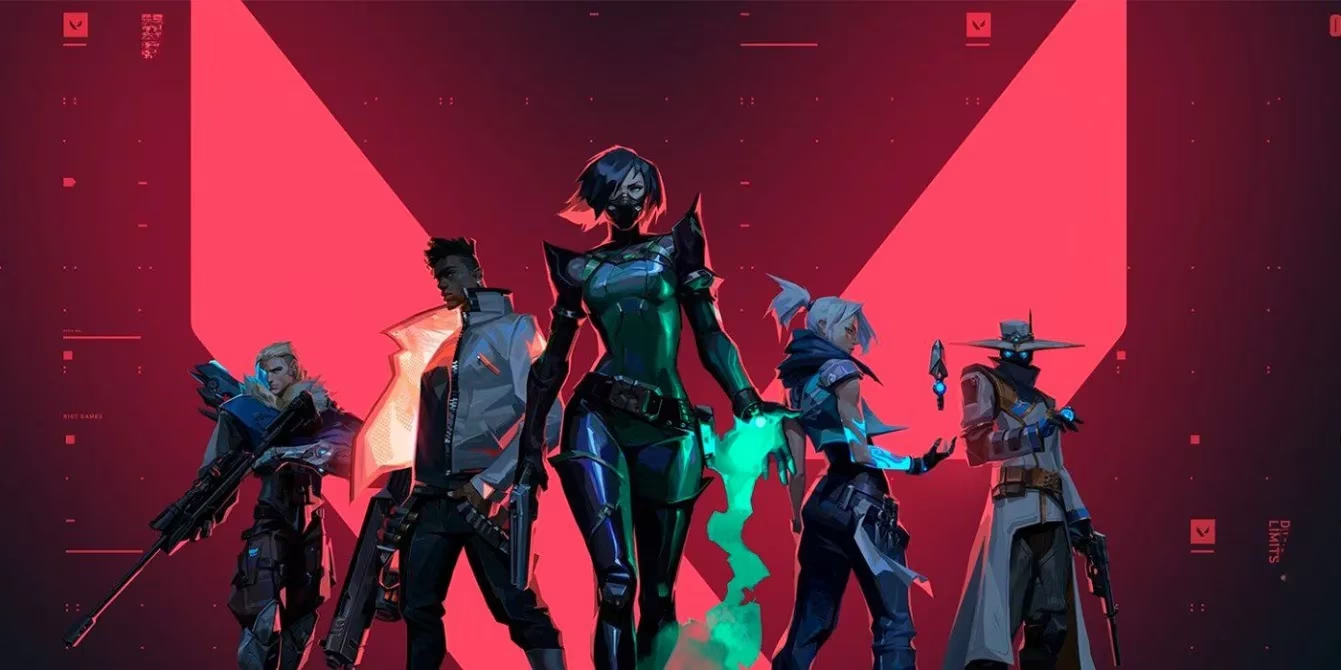
The investigation kicked into high gear with the release of the character trailer for the new agent, Reyna. While the spotlight was rightfully on her haunting abilities and aggressive playstyle, a secondary narrative unfolded in the background. Astute observers noted that the firefights showcased in the trailer were not taking place on any of the known maps available during the closed beta. This discrepancy sparked curiosity. By meticulously comparing the architectural details, sightlines, and environmental textures from the gameplay footage to previously leaked map overviews that had circulated online, the community reached a compelling conclusion: the mysterious setting was almost certainly the Ascent map.
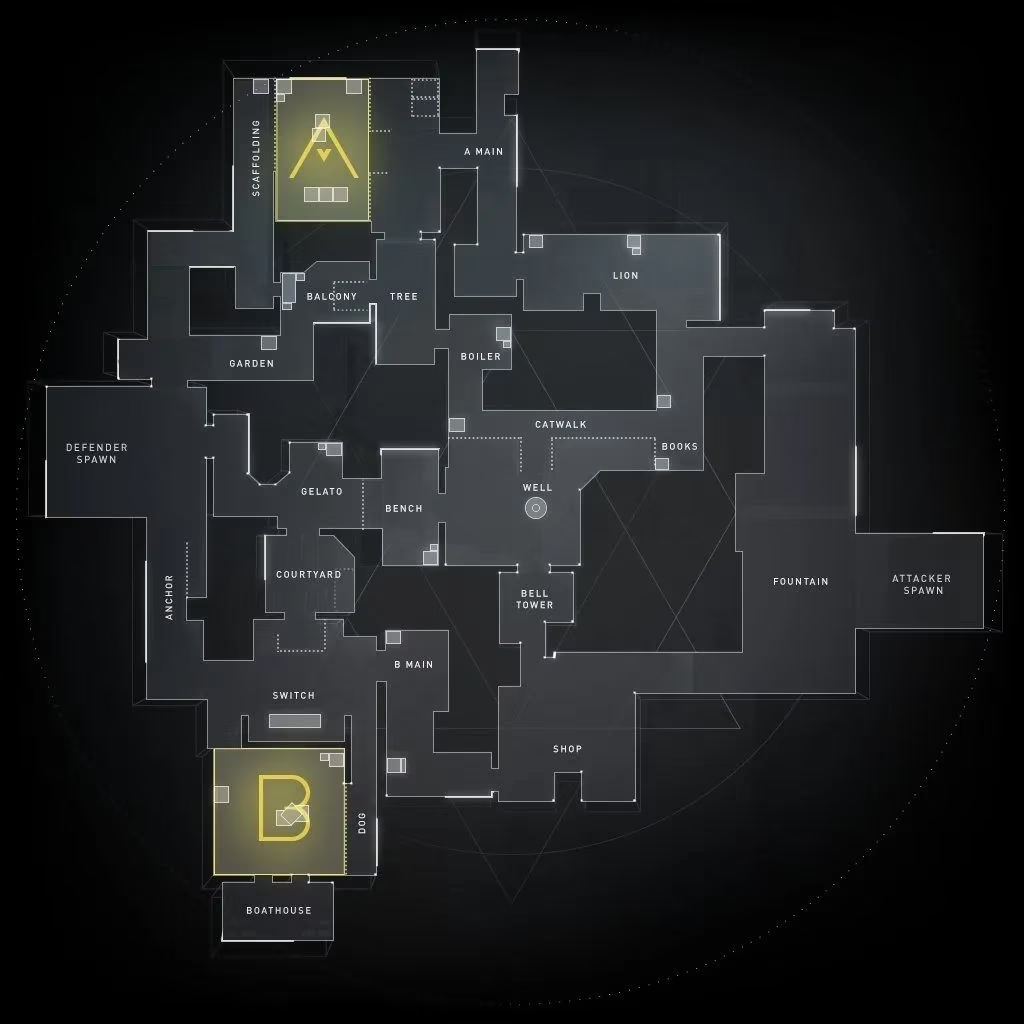
This theory gained significant weight from a second, more official source. During Riot Games' own developer update videos, brief glimpses of a mini-map were shown. These seemingly innocuous UI elements became crucial pieces of evidence. When fans overlaid the layout and iconography from these developer mini-maps onto the schematics of the leaked Ascent layout, the match was nearly perfect. This cross-referencing served as a powerful corroboration, strongly suggesting that Ascent was not just a cinematic backdrop but a fully realized map being used internally. However, a sliver of doubt remained. It was theoretically possible that Ascent served as a generic testing ground for the developers—a sandbox for showcasing new agents or mechanics—and might not necessarily debut at launch. The roster of potential maps waiting in the wings was unknown, so absolute certainty remained just out of reach.
For players with a keen sense of spatial awareness, revisiting the Reyna trailer became an exercise in cartography. Scene by scene, they could trace her path through the map's locales. The analysis revealed visits to distinct, named areas that aligned perfectly with the leaked Ascent callouts:
-
Switch: A likely chokepoint or control area.
-
Courtyard: An open, central space promising intense mid-round skirmishes.
-
Anchor: A site that could be crucial for planting or defusing the Spike.
While the trailer was brief, the developer update mini-maps filled in the gaps, confirming the presence of other key zones like the Defender Spawn area. This layered evidence painted a vivid picture of Ascent's structure long before players could set foot on it.
Fortunately, the community's suspense was short-lived. With Valorant's official PC launch scheduled for June 2nd—just days after the speculation peaked—the wait for a definitive answer was minimal. The speculation, while thrilling, would soon be rendered obsolete by cold, hard facts. The central question transformed from "What is the new map?" to "Will Ascent be ready for launch day?" If it were absent, it would undoubtedly raise questions about its development timeline, but the wealth of evidence made its eventual addition to the game feel like an inevitability. It had become a matter of when, not if.
The pre-launch period for Valorant was a fascinating case study in modern gaming communities. It demonstrated how player engagement extends far beyond gameplay into analysis, speculation, and collective investigation. The hunt for Ascent showcased the following key aspects of the community's approach:
| Aspect | Description |
|---|---|
| Vigilance | Scrutinizing every frame of official media for new information. |
| Collaboration | Pooling knowledge and findings across forums and social platforms. |
| Analytical Skill | Using visual comparison and deductive reasoning to connect clues. |
This episode set the stage for how future content reveals for Valorant might be received. Players had proven they were not passive consumers but active participants, ready to decode even the smallest hints dropped by Riot Games. The successful identification of Ascent through community effort became a memorable chapter in the game's early history, highlighting the deep connection and passionate investment of its player base even before the title was fully available to the public. The anticipation for new maps, agents, and features would forever be tinged with the excitement of the hunt, a legacy of those early days spent piecing together the puzzle of Ascent.