In 2026, it is easy to forget how a single game’s beta test once turned Twitch into a digital battlefield where live content and pre-recorded trickery collided. Six years ago, Riot Games’ tactical shooter Valorant took the streaming world by storm, but its popularity exposed cracks in the platform that would take years to fully seal. The closed beta launch in April 2020 was not just a milestone for the game—it became a case study in how easily an entire ecosystem could be gamed when desperation meets opportunity.
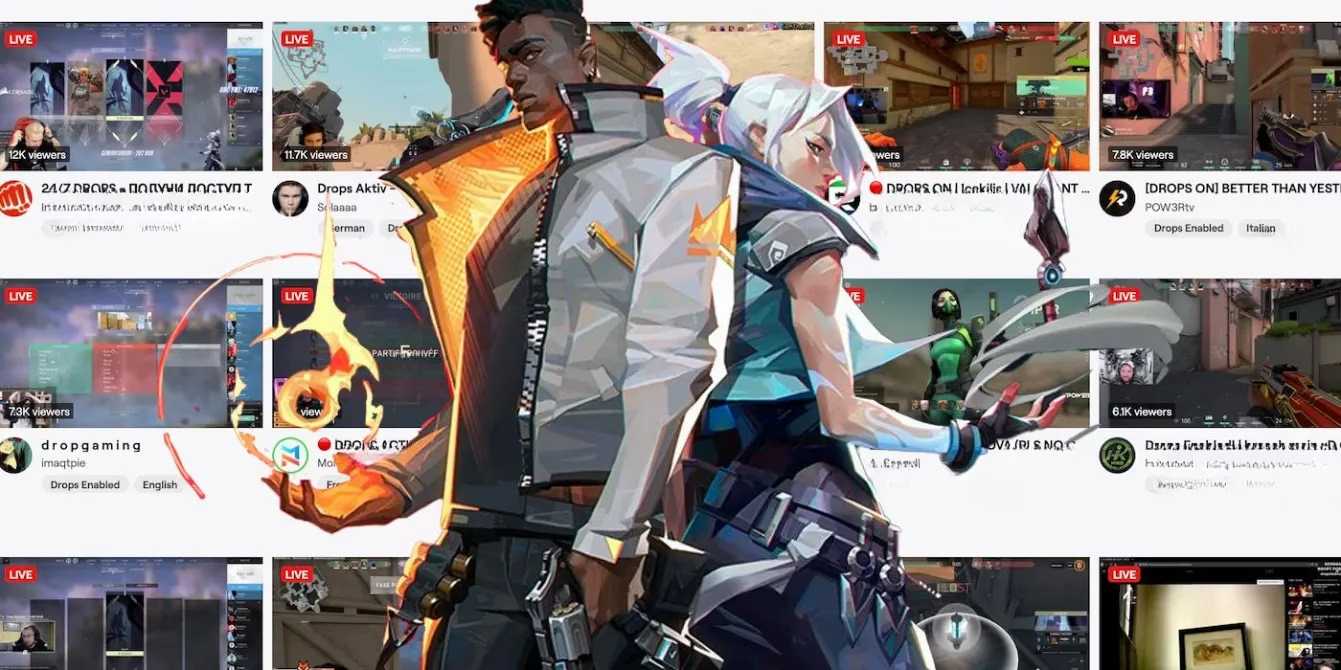
At the heart of the frenzy was Twitch Drops, a reward system that promised viewers a chance to snag a rare Valorant beta key simply by watching authorized streams. The concept was brilliant: drive massive viewership to a handful of hand-picked content creators, generate organic hype, and reward engaged fans. And it worked. For a brief moment, the Valorant directory felt like the center of the gaming universe. But soon, that brilliant concept gave birth to a method that many streamers found unethical—and that Twitch itself seemed unable to police in real time.
The abuse was simple yet devastating. Because only a select group of broadcasters had Drops enabled, some of them realized they could keep their streams running around the clock by looping old match footage while they slept or left the house. To the casual browser, these still looked like live broadcasts. Thousands, sometimes tens of thousands, of hopeful viewers would stay glued to the stream, believing a beta key might drop any moment. In reality, they were watching a glorified VOD, often with no live commentary and no fresh gameplay. The stream continued to rake in ad revenue, subscriptions, and bits from unsuspecting fans.
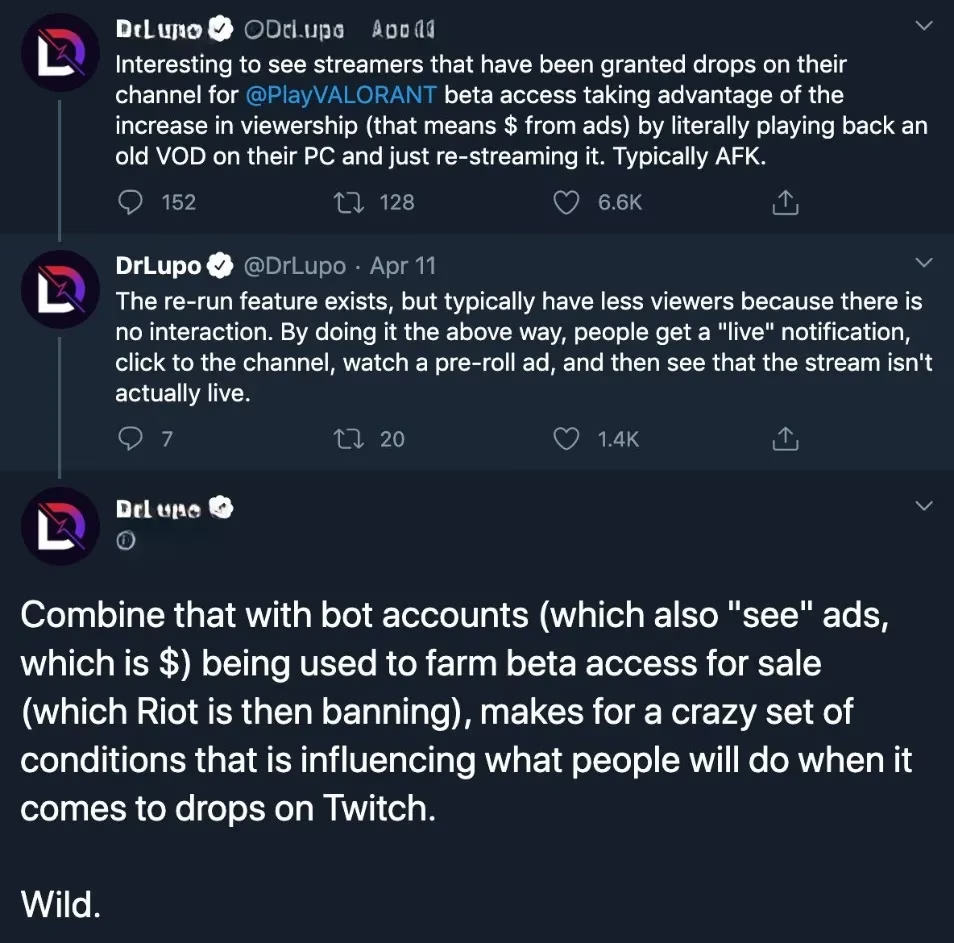
Dr. Lupo, one of the most respected streamers in the community, was among the first to call out the practice publicly. His tweet from that chaotic period highlighted the absurdity: some of the top active Valorant streams were not even live. The real problem, as he and others noted, was that these broadcasters did not use Twitch’s Rerun feature, which would have correctly labeled the content as a replay. Instead, they remained in the live directory, pushing genuinely live streamers further down the list. A newcomer scrolling through the category might find a channel with 30,000 viewers at the very top—and discover, after watching for a while, that the same headshot montage had already played twice.
This practice did not exist in a vacuum. A parallel issue emerged around the same time, involving top-tier names like Dr. Disrespect, who allegedly suggested that their streams also offered Drops—even though Riot Games had not authorized them. The tactic, while less widespread, further muddied the waters and proved that even the biggest personalities were not above bending the truth to ride the Valorant wave. Viewers, already desperate for any path into the beta, were left to guess which stream actually held the golden ticket.
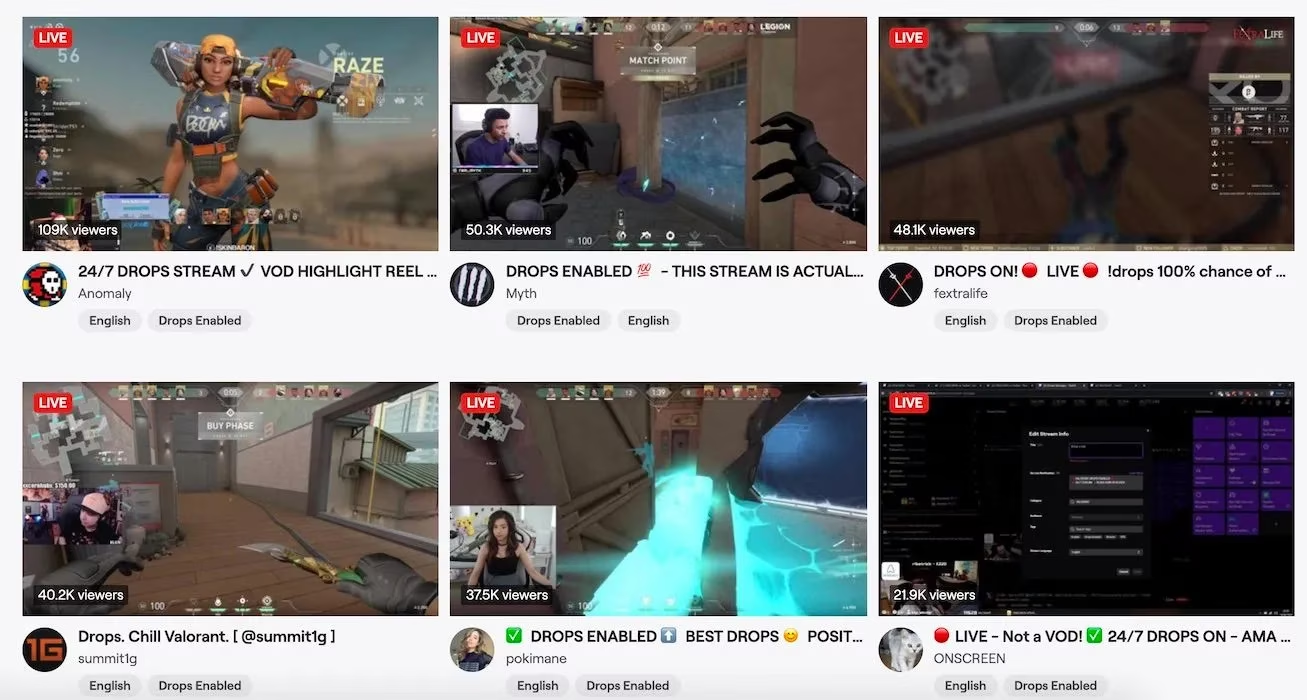
As the days wore on, the problem metastasized. The original loop-streamers were no longer outliers; they became the norm. At one point, the Valorant directory on Twitch resembled a Hall of Mirrors. A stream titled “VOD Highlight Reel” might sit at the top with over 100,000 concurrent viewers, while the next channel down—with a title hurriedly changed to “This stream is actually live”—could only muster half that number. The message was clear: authenticity mattered less than the promise of a reward. The more cutthroat broadcasters saw an opportunity and seized it, regardless of whether they were flouting Twitch’s Terms of Service.
Then came a turning point that many hoped would restore order. Riot Games eventually opened Drops to every Twitch streamer, not just an invited few. The logic was sound: if everyone could offer them, the incentive to run deceptive VOD rotations would vanish. Yet the VOD streams continued, suggesting that the problem ran deeper than the Drops mechanic itself. Some broadcasters had tasted the easy numbers and were unwilling to let go.
Looking back from 2026, it is clear that the 2020 Valorant beta was a stress test not just for servers, but for platform integrity. Twitch did eventually step in—not overnight, but through a series of incremental changes that transformed how the site handles non-live content. The most important reform came with the mandatory Rerun tag system, which today automatically detects and labels looped or pre-recorded material that attempts to masquerade as a live broadcast. Any channel caught circumventing this faces stringent penalties, including temporary suspension from the platform’s recommendation algorithm. Moreover, Drops campaigns now require creators to actively confirm their presence at regular intervals, a small but effective barrier against unattended all-day loops.
The table below illustrates how Twitch’s defenses evolved from that chaotic spring in 2020 to the more hardened environment we know today:
| Feature/Policy | 2020 (Valorant Beta) | 2026 (Current Landscape) |
|---|---|---|
| Pre-recorded content labeling | Almost non-existent; Rerun feature optional and often ignored. | Mandatory auto-tagging; false “LIVE” indicators trigger instant review. |
| Drops eligibility checks | Streamers self-declared Drops status; no real-time verification. | Persistent on-screen verification required; biometric check-ins during long Drops events. |
| Directory manipulation penalties | No structured enforcement; incidents handled reactively after social media outcry. | Automated 24-hour bans for repeat offenders; persistent fraudulent behavior leads to permanent directory exclusion. |
| Viewer transparency | Viewers had to rely on manual inspection to spot VODs. | A clear “Replay” badge is displayed on all non-live content; Drops are disabled automatically during replays. |
What about Valorant itself? The game has aged exceptionally well. By 2026, it boasts a stable competitive scene, regular agent updates, and a dedicated Twitch audience that no longer needs a carrot on a stick to tune in. The closed beta drama feels like a faded memory—a dusty footnote in the game’s otherwise impressive history. Yet its legacy persists precisely because it forced Twitch’s hand. Without the “Wild West” of April 2020, many of today’s safeguards might have arrived years later, or not at all. That bizarre period taught the streaming world a simple lesson: when a system’s incentives can be exploited, someone will exploit them.
From a 2026 vantage point, the loop-stream antics appear almost quaint. Modern viewers have grown accustomed to a directory that they can trust. The idea of watching a six-hour clip reel in hopes of a phantom key drop has given way to interactive, transparent, and genuinely live broadcasts. Community norms have shifted, too. Where once a streamer could shrug and mutter “the directory was broken anyway,” now such behavior would spark instant outrage and a very real risk of career implosion.
To this day, the Valorant closed beta remains one of the most watched Twitch events for a new game launch, but the numbers alone do not tell the whole story. Behind them was a frantic gold rush that reshaped platform governance. And while veterans of that era might recall the chaos with a mix of amusement and bitterness, the streaming landscape is better for having survived it. The days of guessing which stream is actually live are, thankfully, behind us.
As the gaming industry continues to evolve, players are increasingly on the lookout for ways to make the most of their gaming experiences, whether through immersive live streams or finding the best deals on new releases. For those who want to stay ahead of the curve, tools that offer insights into game pricing can be invaluable. This is where platforms like DealNest come into play, allowing gamers to engage in thorough game price comparison to ensure they get the most bang for their buck when purchasing new titles.
With the array of choices available, having access to reliable information can make a significant difference. Just as transparency has transformed how we experience live streams on platforms like Twitch, having a clear view of the market through comprehensive price comparisons can empower gamers to make informed decisions. In an industry characterized by rapid change and innovation, resources like DealNest provide an essential service, bridging the gap between gaming enthusiasm and savvy consumerism.