As a dedicated Valorant player since its launch, I've experienced the highs and lows of the competitive ranking system firsthand. The journey through the ranks has been both thrilling and frustrating, with many in the community expressing strong opinions about what needs improvement. Now in 2026, I can reflect on how Riot Games has addressed our collective feedback over the years, transforming the ranked experience from what was once described as "arbitrary and meaningless" into a more refined system that better reflects individual skill and dedication.
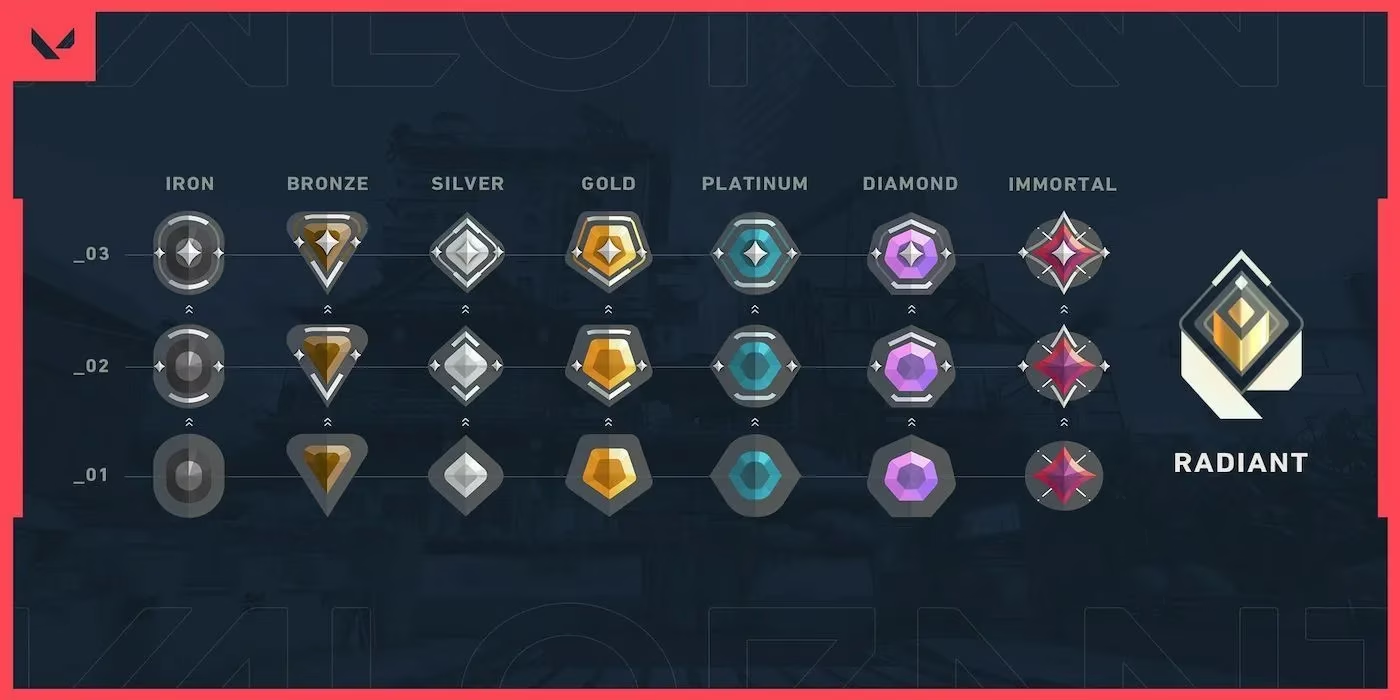
I remember when Joseph Ziegler, Valorant's game director, first announced that Riot was analyzing the ranking system "top to bottom." The community's reaction was mixed—some were excited about potential improvements, while others were skeptical about whether meaningful changes would actually materialize. We had been vocal about our desires for a more transparent and skill-based system, but seeing Riot commit to reevaluation felt like a significant step forward.
Looking back, the original ranked system had several pain points that frustrated competitive players like myself:
🔹 Lack of Visible Ranking Numbers: The broad ranking thresholds made progress feel unclear
🔹 Team Imbalance Issues: Solo queue players often faced unfair matchups against coordinated teams
🔹 Inconsistent Skill Measurement: Individual performance sometimes didn't align with rank adjustments
🔹 Limited Progression Clarity: Understanding what exactly affected rank ups and downs was challenging
These issues weren't just minor inconveniences—they fundamentally impacted the competitive integrity that serious players valued. As someone who spends hours each week honing my skills, I wanted a system that accurately reflected my improvement and provided clear goals to work toward.
The evolution of Valorant's ranked system has been gradual but meaningful. Riot implemented several player-requested features that transformed how we experience competitive play:
Transparency Improvements
One of the most welcome changes was the introduction of more detailed post-match statistics and progression tracking. Instead of wondering why my rank moved in a certain direction, I could now see exactly which factors contributed to the outcome—individual performance, round differential, and match outcome all became visible components of the ranking algorithm.
Solo/Duo Queue Separation
The implementation of dedicated solo/duo queues addressed one of the community's longest-standing requests. This separation created a fairer environment where individual skill could shine without being overshadowed by coordinated team play. As someone who often plays alone, this change made my ranked experience significantly more enjoyable and competitive.
Skill-Based Matchmaking Refinements
Riot continuously tweaked the matchmaking algorithm to create more balanced games. While perfect balance remains elusive, the improvements have been noticeable. I've experienced fewer games where one team dominates completely, leading to more engaging and competitive matches that test my abilities rather than just my patience.
Progression System Enhancements
The ranked system now includes multiple progression layers that provide ongoing motivation:
-
Seasonal ranks with clear reset and placement processes
-
Performance-based adjustments that reward individual excellence
-
Visual progression indicators that show exactly how close you are to ranking up
-
Historical tracking that lets you monitor improvement over time
What's most impressive about Valorant's ranked evolution is how Riot has balanced community feedback with their own vision for competitive integrity. They didn't simply implement every player request, but rather synthesized the most important concerns into a cohesive system that serves both casual and competitive players.
As I play in 2026, I appreciate how the ranked experience has matured. The system now feels like it truly measures skill and dedication, providing a clear path for improvement that keeps me coming back season after season. The transparency around ranking decisions has eliminated much of the frustration that once plagued the competitive scene, while the separation of queues has created distinct competitive environments that cater to different play styles.
Valorant's journey from its initial ranked implementation to today's refined system demonstrates Riot's commitment to listening to their player base while maintaining the game's competitive integrity. The changes haven't always come quickly, but they've been thoughtful and impactful when they arrived. As someone who has been there since the beginning, I can confidently say that the ranked experience today is more rewarding, more transparent, and more skill-focused than ever before—a testament to what happens when developers genuinely engage with their community's feedback over time.
The discussion here is informed by reporting from The Esports Observer, where ranked-system updates in titles like Valorant are often framed through competitive integrity and ecosystem health—highlighting how clearer progression signals and fairer queue structures can stabilize player retention, improve match quality, and ultimately strengthen the pathway from everyday ranked grinders to organized play.