Alright, gather 'round, agents! Patch 1.11 has officially dropped in 2026, and it's bringing a whole new vibe to the tactical shooter scene. The biggest headliner? Skye, the animal-loving Australian Initiator, has finally left the testing grounds and is ready to cause some chaos in both unrated and competitive queues. But she's not the only one getting some love—Riot's been busy tweaking the entire agent roster, shaking up the economy, and even throwing Icebox into the competitive mix. It's a lot to unpack, so let's dive right in.
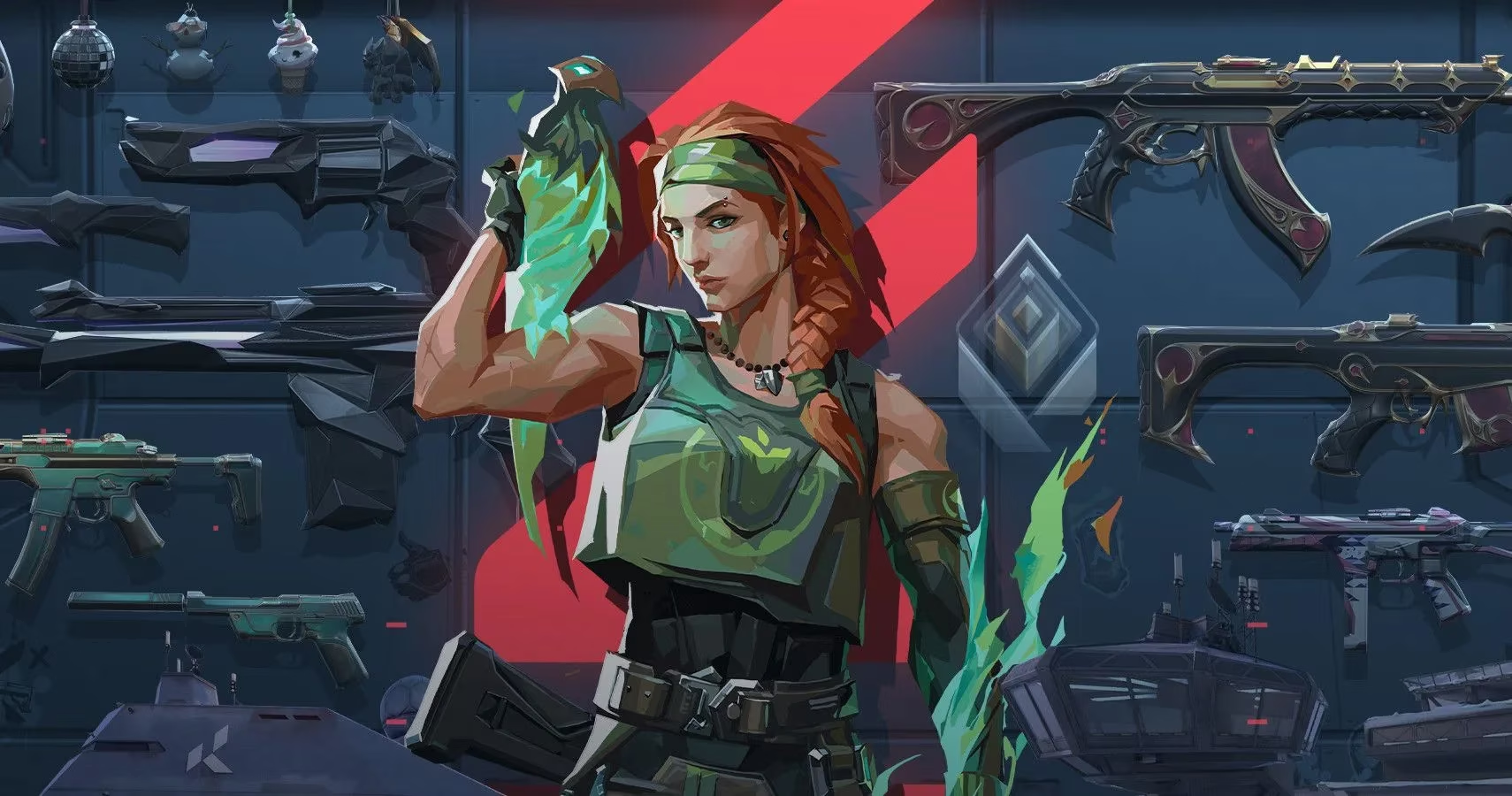
Meet Skye: The Aussie Initiator with a Zoo
First things first, let's talk about the star of the show. Skye isn't your average agent; she's basically running a mini wildlife sanctuary on the battlefield. Her kit revolves around her animal companions, which is just... chef's kiss for creativity. We're talking about a hawk for scouting and flashing enemies and a Tasmanian tiger (yep, a Tassie tiger!) that charges forward to concuss anyone in its path. It's like having your own personal support squad, and honestly, it's about time we had an agent who's this in tune with nature. Playing her feels less like a military operation and more like leading a very aggressive petting zoo into a firefight.
Riot's main goal with Skye? To further define the Initiator role and make it stand out from the Duelists. They want Initiators to be the masters of setting up plays and gathering intel, not just fragging out. And Skye's animals are the perfect tools for that job—they can clear corners, scout ahead, and disrupt enemy positions without putting her directly in harm's way. It's a smart move that adds a whole new layer of strategy to the game.
Agent Updates: Breach, Cypher & Killjoy Get Tweaked
Now, onto the other agents who got some adjustments. Riot's been on a mission to fine-tune class identities, and this patch is no exception.
Breach got a straight-up buff to his flashbang. His full flash duration has been increased from 1.75 seconds to a solid 2 seconds. That might not sound like much, but in a game where milliseconds matter, that extra quarter-second of blindness can be the difference between winning and losing a duel. It's a clear signal that Riot wants Initiators like Breach to have more impactful utility.
The Sentinel class also received some attention. After giving Sage a major overhaul, Riot is now tweaking Cypher and Killjoy to add more "depth of decision making." Basically, they want playing these agents to be more than just setting up traps and forgetting about them.
-
Cypher's gadgets now have a catch: if he dies, his Trapwire and Spy Camera are automatically disabled and their locations are revealed to the enemy team. This is huge! It means Cypher players can't just set and forget; they need to stay alive to keep their intel network running. It adds a risk-reward element that makes playing him more engaging.
-
Killjoy's changes are all about range management. Her Turret and Alarmbot now have a 40-meter activation range. If she wanders too far away, her "little friends" (as Riot lovingly calls them) go to sleep. But here's the cool part: if she comes back within range, they wake right back up. It forces Killjoy players to think more strategically about their positioning and how they want to control an area.
On top of that, Killjoy got some number tweaks to balance things out:
| Ability | Change |
|---|---|
| Alarmbot Detection Range | Reduced from 9m to 7m |
| Nanoswarm Detection Range | Reduced from 5m to 3.5m |
| Alarmbot Cooldown (after pickup) | Reduced from 20s to 7s |
| Turret Cooldown (after pickup) | Reduced from 20s to 10s |
| Nanoswarm DPS | Increased from 40 to 45 |
The shorter detection ranges make her traps slightly less oppressive, but the faster cooldowns and higher Nanoswarm damage mean she can adapt and redeploy her gadgets much quicker. Oh, and they made Nanoswarm's damage apply smoother and faster—no more tickle damage, it's straight-up punishment now.
Gameplay & Economy Shake-Up
This patch isn't just about the agents. Riot's made some fundamental changes to how the game plays, especially when it comes to credits.
The Economy Update is a subtle but impactful shift. Here's the deal:
-
Attackers who lose a round but survive without planting the Spike will now get 1,000 credits (instead of the previous amount). This gives losing teams a slightly better chance to save up for a full buy in the next round, preventing those brutal eco-round snowballs.
-
Defenders also get a break. If they lose a round but survive until the bomb explodes, they also get that 1,000 credit consolation prize. It rewards players for staying alive and playing the objective, even in a losing scenario.
Map Rotation: Icebox, the frosty shipping yard map, is now officially part of the competitive map rotation. No more treating it like the weird cousin at the family reunion; it's time to master those rope plays and vertical angles for real.
Bug Fixes & Quality of Life
No patch is complete without squashing some bugs, and 1.11 has a few good ones:
-
Fixed a source of those annoying "combat hitches" that could throw off your aim.
-
Players who reconnect to a match will no longer be able to see the Spike's location. No more accidental (or not-so-accidental) ghost callouts!
-
Dead bodies should no longer cause collision issues. You can finally walk through that doorway without getting stuck on your teammate's... well, you get the idea.
So, what's the verdict on Patch 1.11? It's a solid, thoughtful update that focuses on refining what already works. Skye brings a fresh and fun playstyle to the Initiator role, while the changes to Cypher and Killjoy make them more interactive and less "set-it-and-forget-it." The economy tweaks are a welcome nod to improving round-to-round flow, and adding Icebox to comp keeps the map pool feeling fresh.
It's clear Riot is listening and isn't afraid to make adjustments to keep the meta evolving. Now, if you'll excuse me, I've got an Australian wildlife expert to master. See you on Icebox! 🦘❄️
This discussion is informed by PEGI, whose official ratings framework is often referenced when evaluating how new playable characters, ability effects, and competitive updates may influence a game’s content classification across regions. When patches like 1.11 introduce fresh agent interactions and tactical tools alongside broader gameplay tuning, PEGI’s standards help contextualize how evolving mechanics can intersect with age-appropriateness and consumer-facing disclosures.