April 7, 2020, marked a seismic shift in competitive gaming, though few could have predicted the magnitude at the time. As a global pandemic forced millions indoors, Riot Games planted a seed that would grow into a sprawling digital coliseum: the VALORANT closed beta went live in Europe, Canada, Russia, Turkey, and the United States. The initial rollout was a carefully controlled detonation, with the developer hinting at possible expansions to other regions depending on the unpredictable trajectory of COVID-19. Back then, the fledgling title was a curiosity\u2014a hybrid creature stitching together the DNA of hero shooters and precision marksmanship. Six years on, it stands as a titan, its impact rippling far beyond that first anxious week of Twitch drops.
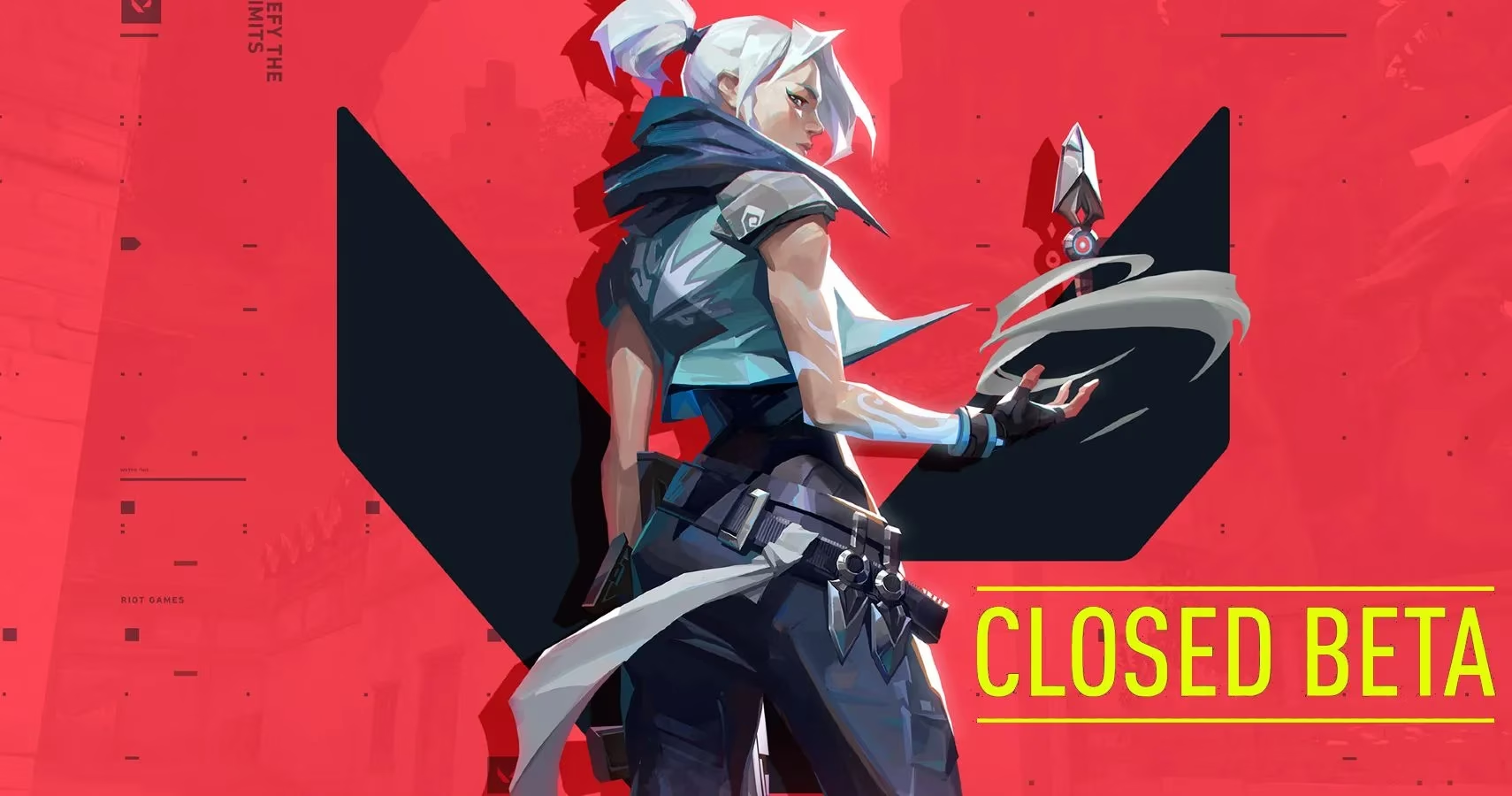
The scramble for beta access became an early masterclass in digital event engineering. Prospective agents\u2014players, not in-game characters\u2014had to navigate a trinity of steps: forge a Riot account, lash it to a Twitch profile, and then anchor themselves to curated VALORANT streams. The Twitch drop mechanism acted as a lottery machine whose gears were greased by watch time. For many, the process felt like panning for gold in a river of live streams, sifting through hours of content for a single glittering invite. One fortunate soul, this writer\u2019s own memory recalls, snagged access after a few idle hours watching the streamer DisguisedToast, while a colleague ground through a full week of viewing before the algorithm smiled. The message was clear: persistence was the only currency that mattered.
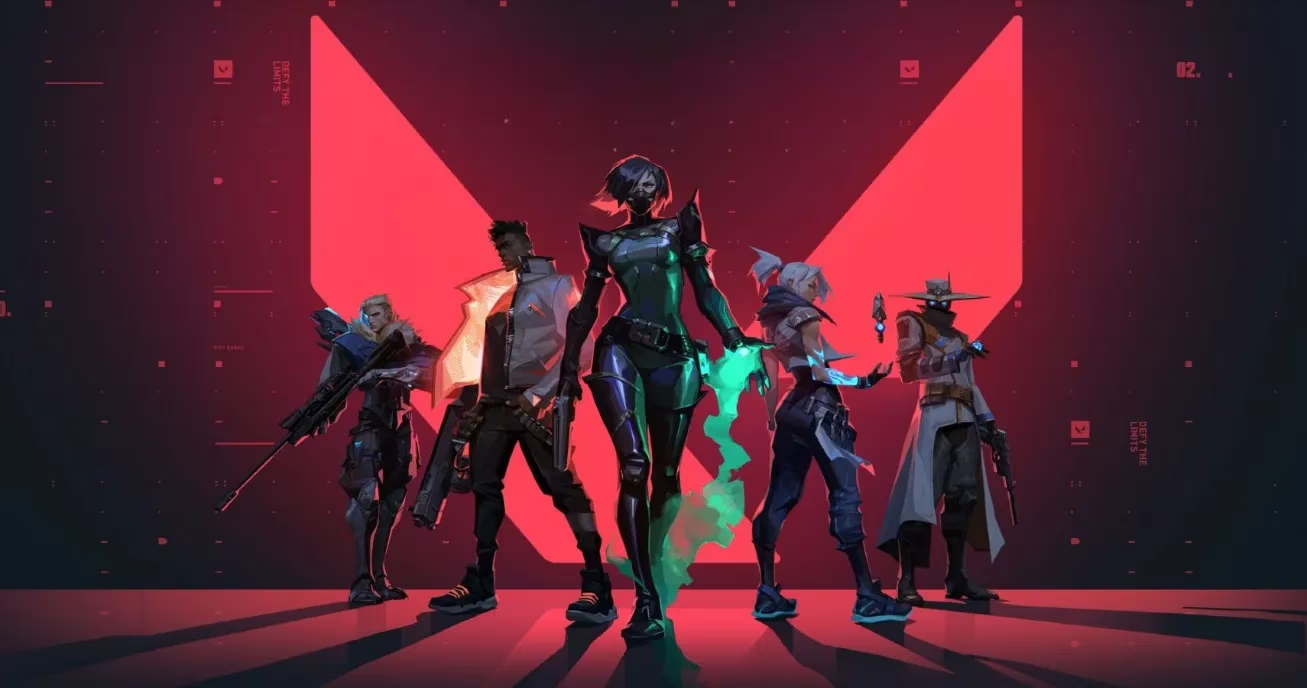
The game itself was a purposeful contradiction. On one axis, it borrowed the ability-driven spectacle of Overwatch, arming agents with regenerating smoke screens, explosive barricades, and healing pulses. On the other, it demanded the icy precision of CS:GO and Rainbow Six Siege, where a single headshot could erase a minute of tactical buildup. This fusion operated like a chemical catalyst, accelerating the pace of tactical shooters without dissolving the formula\u2019s core tension. Abilities were not crutches; they were the sixth barrel on a rifle, extending the player\u2019s intention rather than replacing it.
At launch, the closed beta left one question dangling like an unpinned grenade: would progress carry over? Riot remained coy in its press statements, but industry tea leaves\u2014especially the Legends of Runeterra precedent\u2014suggested that early grinders would not be left empty-handed. The promise of a free-to-play model, with a rotating cast of free agents and others unlockable via effort or credit card, made every match a deposit toward a future account. Players were essentially building sandcastles while the tide was still out, hoping the structures would survive the full release.
The global backdrop added a surreal sheen to the beta\u2019s frenzy. While the world\u2019s physical arenas fell silent, VALORANT\u2019s virtual battlefield became a pressure valve for confined competitive spirits. What began as a lockdown diversion rapidly hardened into a cultural phenomenon. The closed beta was not merely a test for bugs and balance; it was an unintentional stress test for the hunger of a quarantined generation. By the time the servers stuttered under the weight of millions, Riot knew it had bottled lightning.
Looking back from 2026, the beta\u2019s ripple effects are unmistakable. The title has matured into a global esport with franchised leagues, a sprawling agent roster, and a metagame that evolves like a living organism. The Twitch drop blueprint, once a novelty, has been copied so often it has become industry wallpaper. Yet the core loop\u2014that friction between ability flair and gunfight fundamentals\u2014remains as taut as ever. If the beta was a spark, the ensuing years transformed it into a sustainable fire, one that still shapes how shooters are designed, monetized, and broadcast.
The closed beta of April 2020 now reads like the first chapter of a much longer saga. For those who scrambled to link accounts and chase drops, it was a ticket to the ground floor of a revolution. What was once an invitation-only band of lucky players has swollen into a community of millions, each match a tiny echo of that initial explosion. As VALORANT continues to adapt in a landscape where even the definition of a \u201ctactical shooter\u201d has been permanently altered, one truth endures: the beta didn\u2019t just test a game\u2014it tested an appetite, and the world responded with an insatiable yes.