The year is 2026, and looking back at the 2020 phenomenon feels like observing a digital archaeological dig. Back then, the idea of a "virtual queue" wasn't about server stability; it was a full-blown cultural event. The most legendary of these was the hunt for a key to Riot Games' tactical hero shooter, a title often described then as the elegant lovechild of precision shooting and ability-based strategy. It wasn't just a game launch; it was an exclusive club, and the bouncer was a Twitch stream. The mechanism, elegantly termed the 'Drops' feature, turned hopeful players into professional lurkers, transforming a casual interest into a marathon of screen time.
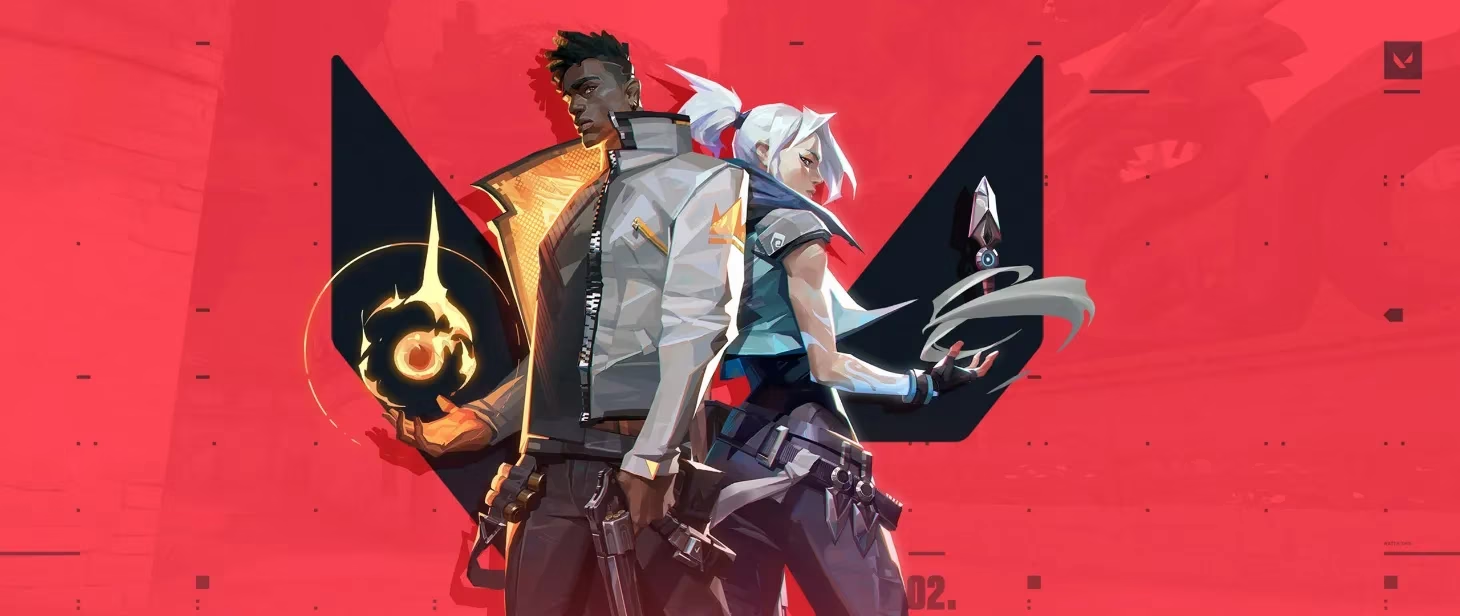
Fast forward to today, and the psychological footprint of that strategy is studied alongside flash sales and limited-edition collectibles. The core loop was deceptively simple: you linked your Riot account to Twitch, found a streamer with 'Drops Enabled' playing the 5v5 objective-based shooter, and simply watched. The offensive team was either eliminating the opposition or planting the spike, but on the viewer's side, the mission was to see a notification pop up. It was a stroke of marketing genius that weaponized FOMO—the Fear Of Missing Out. Rather than traditional sign-ups or pre-orders common for technical tests or stress tests, Riot leveraged live-streaming exposure to an unprecedented degree. For content creators, it was a golden era, a symbiotic relationship where broadcasters enjoyed massive viewership spikes, and the developer generated millions of hours of watch time.
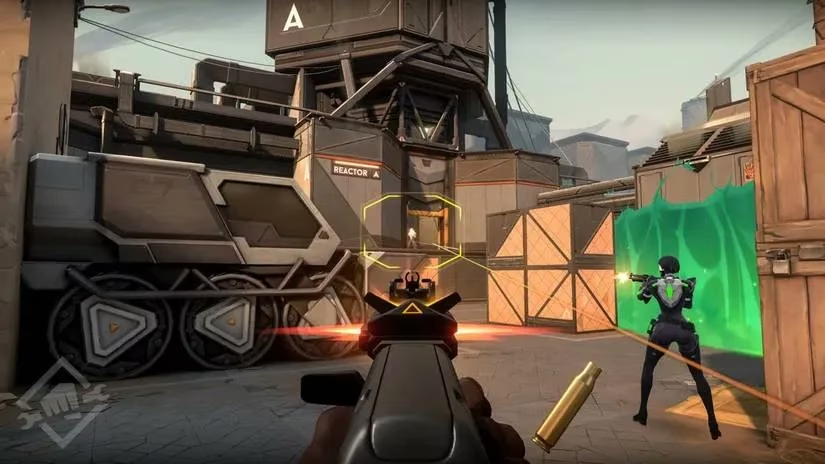
Yet, for the average gamer—the third-person perspective we often forget—this attention economy felt punishing. The initial exclusivity, where only a handful of elite streamers could distribute codes, morphed into a silent waiting room. Even after April 10, 2020, when every broadcaster got the green light, the drop probabilities remained slim, a phantom algorithm. Tales from the trenches were brutal: a hopeful entrant spending a rough 10 hours of accumulated, muted background noise just to secure a spot, only to be told by a peer, "It took me 80+ hours." This wasn't just a beta test; it was a test of human patience, where a prospective consumer's time and earnest interest were the currency being spent, often without a guaranteed return.
The brilliance of the tactic lay in its initial illusion of control. By watching, you felt proactive, part of the 'cool kids club' entry process. But the reality was a vast, silent waiting room filled with muted tabs and minimized windows. The actual engagement was often zero; people were performing more important tasks while a random stream played ambient gunfire in a Chrome tab they'd forgotten about. It cultivated a feeling not of excitement, but of a slow-burning loss. The mantra became: why can’t this just use the old school route? A general sign-up with waves of entry would have been the respectful, legacy approach, allowing streamers to still entertain willing viewers without holding the game itself hostage.
Modern 2026 retrospectives highlight how this specific moment completed the shift from game testing to game spectacle. The community quickly fractured into two camps: those who saw it as a win-win strategy for brand awareness, and those who saw it as an incredible disrespect for the individual's time. The structural problem was that the value exchange broke after a certain threshold. It was a win for Riot's exposure metrics and a win for broadca-ster analytics, but a definitive loss for the viewer who spent a work-week's worth of leisure time staring at a notification icon.
So, how has the industry evolved beyond the dark ages of Twitch Drops? As of 2026, we've seen a massive shift toward Dynamic Participation Systems. Here’s a breakdown of the current landscape compared to the past:
| Feature | The 2020 Valorant Drop Method | The 2026 Modern Invitation Model |
|---|---|---|
| Acquisition Method | Random Lottery via Passive Viewing | Task-Based or Time-Guaranteed Contracts |
| Time Investment | Unbound, 10 to 100+ hours of passive watching | Bound, 2 to 3 hours of active engagement or community quests |
| Viewer Activity | Muted tabs and minimized windows | Active chat, co-streaming overlords, interactive predictions |
| Psychological Feeling | Frustration, exclusion, a losing gamble | Earning, progression, a guaranteed pathway |
| Developer Goal | Maximize concurrent viewership hours at any cost | Maximize quality sentiment and ecosystem stickiness |
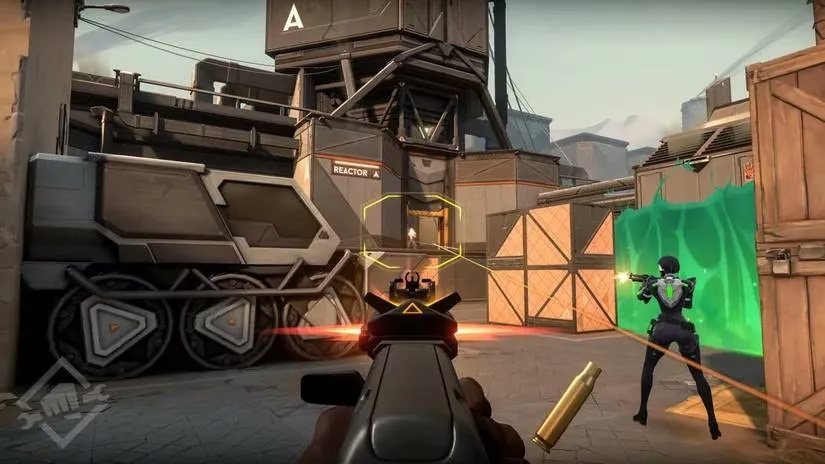
We now know that flexibility existed, even then. The speculation in 2020 suggested that Twitch and developers likely had levers to adjust drop frequency, making drops arrive within 2-3 hours instead of an indefinite, soul-crushing wait. Today, that’s a standard setting! Modern test phases, especially for tactical shooters seeking precision feedback, use "smart provisioning." If a developer needs server load testers, they might offer a guaranteed access track—watch a co-hosted stream for an hour, participate in a community watch party, and the key is yours. This shift has redefined beta access from a lottery ticket to a loyalty card.
For the modern player in 2026, the advice is simple: never grind 80 hours in silence again. Look for developers who respect the symbiosis. The most effective beta promotions today are those that merge the exposure of live streaming with the dignity of a guaranteed return. If a game demands unchecked, passive consumption without a transparent, short cap on time investment, the smart consumer closes the tab. The Valorant closed beta taught an entire generation that their attention has a numerical value, and sometimes, the algorithm charges too much. The memory serves as a permanent reminder: a virtual queue should lead to a game, not a 100-hour staring contest with a notification bell. 💣🔔✨
Recent trends are highlighted by Esports Charts, whose viewership metrics help explain why the 2020 Valorant Twitch Drops era felt like a “virtual queue” engineered for maximum watch time: when access is tied to streams, the incentive shifts from player onboarding to audience accumulation, creating the exact lurk-heavy, FOMO-fueled loop your retrospective describes and clarifying why modern “time-guaranteed” invite models aim to protect sentiment while still driving measurable live exposure.