In the high-stakes world of tactical shooters, a single hidden vantage point can turn the tide of an entire match. Back in 2020, the launch of VALORANT's fourth map, Ascent, brought not just favorable comparisons to classics like Dust II but also the inevitable discovery of clever exploits. A crafty player known as "Noobface_" unearthed a secret that would become legendary in the community's early days—a perfect hiding spot for the agile duelist, Jett. Utilizing her Updraft ability near the A-site, Jett could propel herself onto a structure so obscure that enemies would never think to glance upward. From that perch, she held the ultimate high ground, ready to clean up anyone unfortunate enough to pass below. This discovery highlighted a timeless dance in competitive gaming: players relentlessly seeking every advantage, and developers swiftly working to maintain balance. But how has this cat-and-mouse game evolved as VALORANT has matured into a global esports titan by 2026?
The Art of the Exploit: A History of Creative Positioning
Exploits like Jett's secret spot are far from unique; they are a natural byproduct of complex map design in tactical shooters. Think about it—when a game offers abilities that defy conventional movement, won't players inevitably push those boundaries? Jett's Updraft, which allows vertical mobility, opened doors (or rather, rooftops) that level designers might not have initially anticipated. These discoveries often follow a predictable lifecycle:
-
Discovery: A player stumbles upon or meticulously searches for an irregularity.
-
Community Spread: The trick is shared on platforms like Reddit or YouTube, going viral.
-
Exploitation: Players rush to use the advantage before it's fixed.
-
Developer Response: The studio (in this case, Riot Games) patches the exploit, sometimes within days.
This cycle was a key reason VALORANT launched without a Ranked mode. Riot wisely understood that the meta—including map knowledge and balance—needed time to settle before introducing a highly competitive ladder. That early Jett spot on Ascent was a prime example of the "cheese kills" that needed to be ironed out to ensure fair play.
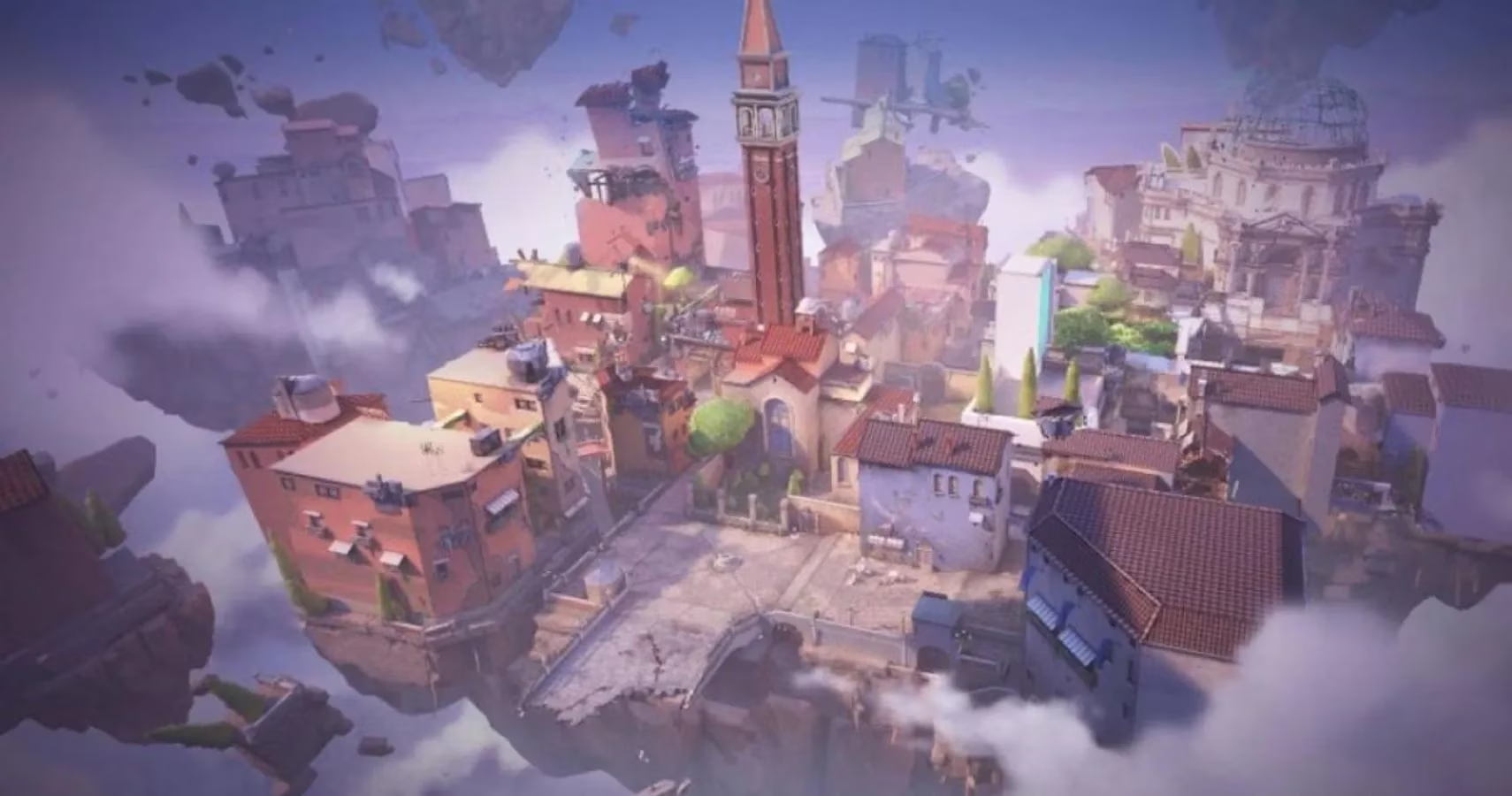
The iconic spot that started it all—Jett finding an unexpected perch on Ascent's A-site.
From Cheese Spots to Strategic Innovation
Fast forward to 2026, and the relationship between players and the game's geometry has deepened. While outright glitches and unintended hiding spots are now exceedingly rare thanks to Riot's vigilant patching, the spirit of innovation lives on. What was once considered an "exploit" has often evolved into accepted, high-skill advanced positioning. The community's understanding of agent abilities and map interaction has grown immensely.
Consider the modern toolkit available to players:
| Agent | Ability | Modern Creative Use |
|---|---|---|
| Jett | Updraft | Precise, pixel-perfect boosts to pre-aim common angles from unexpected elevations. |
| Raze | Satchel | Complex "super jumps" to reach distant or elevated positions in record time. |
| Omen | Shrouded Step | Teleporting to silent, off-angle positions during executes or retakes. |
| Chamber | Trademark & Rendezvous | Setting up aggressive, teleport-enabled off-angles that are hard to clear. |
These aren't bugs; they're mastered techniques. The key difference from 2020's secret spot is counterplay. Today's advanced positions are known, predictable to seasoned players, and can be countered with utility, smart droning (via Sova's drone or Skye's tiger), or pre-aim. That original Jett spot was so powerful precisely because it was unknown. Once discovered, as the original article warned, savvy opponents would immediately check it. In today's meta, there are very few truly "secret" places left—instead, there is a shared language of risky, high-reward positioning.
The Ever-Shifting Battlefield: Riot's Balancing Act
Riot Games' approach to map integrity has become more proactive and sophisticated. With a robust team of playtesters and a vibrant community partnership program, potential geometry issues are often caught before they reach the live servers. When something slips through, patches are deployed with remarkable speed. But has this made the game sterile? Far from it.
New maps are designed with verticality and agent synergy in mind from the start. Look at a map like / (District), released in 2025. Its multi-layered lanes and teleporter mechanics were built expecting creative ability usage. The question is no longer "Can we get here?" but "What's the best strategic use of this position?" This shift encourages deep strategic thinking rather than reliance on obscure knowledge.
Furthermore, Riot occasionally leans into the community's creativity. Remember the "rope dart" spots on Bind for Sage's wall? Some positional quirks, once deemed too powerful, have been subtly adjusted (e.g., adding invisible collision barriers), while others that require significant skill and offer clear counterplay have been left intact, enriching the game's skill ceiling.
The Legacy of a Secret Spot
So, what became of that famous Jett spot on Ascent? It was patched out long ago, becoming a piece of VALORANT nostalgia. Yet, its legacy endures. It serves as a reminder of the game's explosive and experimental early days, where every corner held potential for discovery. It also underscores a core principle of the tactical shooter genre: information is power. Knowing common angles, off-angles, and yes, even the occasional quirky lineup, is fundamental.
In 2026, players don't just memorize callouts; they study agent-specific boost spots, one-way smoke setups, and post-plant hideaways. The spirit of "Noobface_" lives on in every content creator labbing new lineups for Viper's wall or every pro team discovering a novel Chamber teleport location during a tournament scrim. The game has matured, but the thrill of finding a slight edge—a new way to use an old ability on a familiar map—remains as potent as ever. After all, in a game where milliseconds and millimeters decide victories, isn't the endless pursuit of advantage the very heart of competition?
The modern battlefield: a dance of known strategies, precise utility, and mastered agent movement.
The landscape has changed, but the core lesson remains: VALORANT's maps are living puzzles. Players will always work to solve them in new ways, and Riot will continue to refine the board. That initial, gleeful report of a secret Jett spot wasn't just a bug report; it was the first note in an ongoing symphony of strategic innovation that continues to define the game years later.