In the ever-evolving tactical landscape of VALORANT, where split-second decisions and pixel-perfect aim dictate the rhythm of every round, two rifles have reigned supreme since the game's earliest days. The Phantom and the Vandal—names that every player, from Iron novices to Radiant elites, whispers with a mix of reverence and strategy. Even in 2026, after countless patches, new agents, and map reworks, these two weapons continue to anchor the arsenal of every duelist, controller, and flex player worth their salt. They’re not just guns; they’re personalities on the battlefield, each with a distinct voice and a loyal following. So, what makes these iconic rifles the beating heart of VALORANT’s gunplay? Let’s unscrew the suppressors and crack open the chambers to find out.
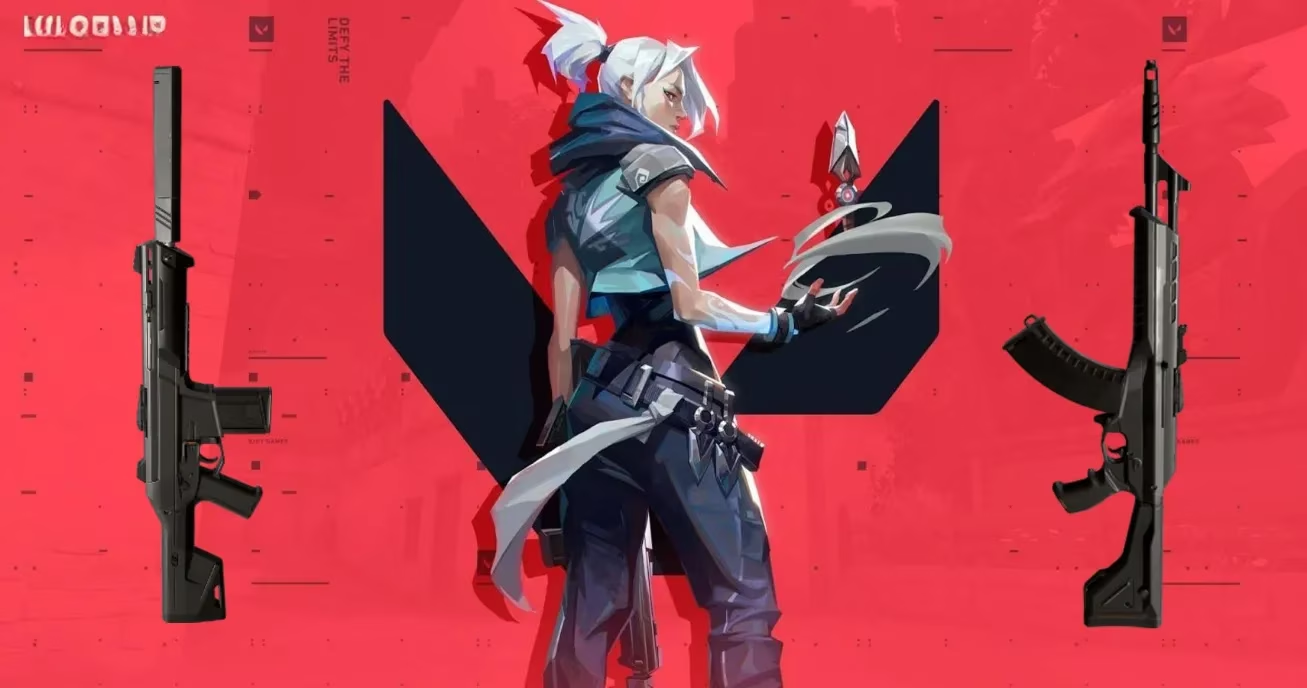
The Phantom: The Silent Strategist
Picture this: you’re holding an angle on Haven’s C long, the enemy team is pushing, and you need to hold your ground without giving away your position. That’s where the Phantom slides in, cool as a cucumber. Priced at a hefty 2,900 creds, it tied with its beefier cousin for the second-highest weapon cost way back in 2020, and that sticker shock hasn’t budged. But shell out those credits, and you’re buying into a philosophy—a weapon that values subtlety over sheer brawn.
The Phantom fires at a blistering 11 rounds per second, making it the fastest-shooting rifle in the game. Its rate of fire feels like a sharp staccato rhythm, a rapid tut-tut-tut that chews through armor before opponents can react. Yet, here’s the kicker: it’s the only rifle in its class that deals with damage fall-off. That means you can’t just point-and-click for a one-tap across the map. Within 0 to 15 meters, a pristine headshot delivers a devastating 156 damage, enough to drop a fully-kitted agent with heavy shields instantly. Stretch that distance to 16–30 meters, and the headshot damage dips to 140—still a two-tap to the body, but not the instant deletion you might crave. Push out beyond 30 meters, all the way to 50, and that number shrinks further to 124. “Not a one-shot?” some might grumble, but honestly, that’s missing the point.
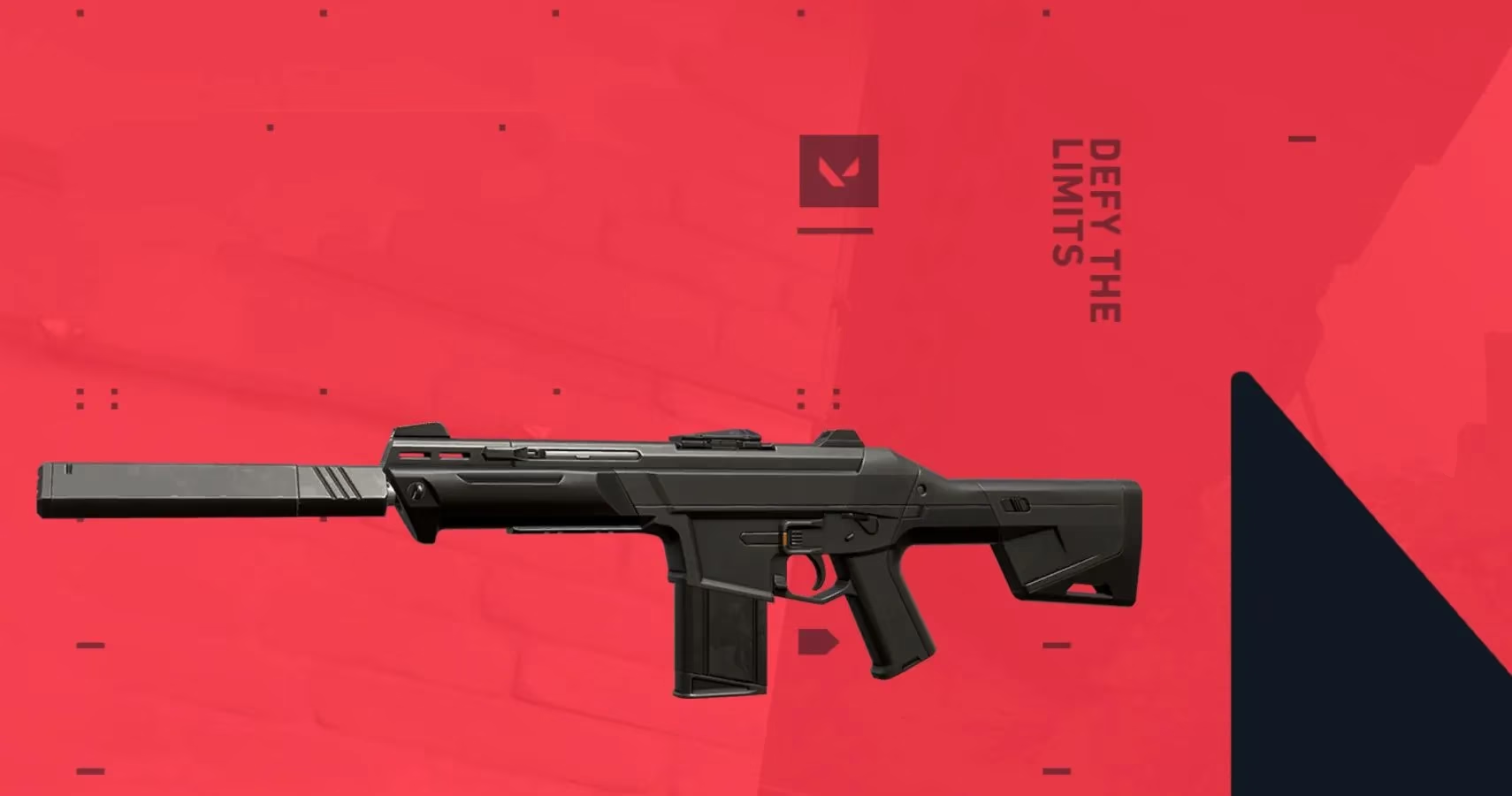
Body shots tell their own story. At close range, each bullet packs 39 damage; step back to 16–30 meters, and it’s 35; at max effective range, just 31. So, sure, you might need an extra bullet or two to secure a kill at longer distances, but that’s where the Phantom’s magic really shines. The recoil on this beauty is almost polite—like a well-trained dog that heels instead of bolting. Its spray pattern is easier to tame than on any other rifle, meaning you can keep your crosshair on target even when you’re firing in sustained bursts. Newer players, or those who’ve just switched from a more forgiving shooter, often find the Phantom’s predictability a warm blanket in the chaos of a ranked match. And let’s not forget its signature party trick: invisible bullet tracers. When you’re holding that sneaky off-angle behind a box, the enemy can’t trace your rounds back to your muzzle. You’re a ghost, a phantom in the truest sense, and that cloak of secrecy can turn a good play into a round-winning mind game.
But wait—there’s more to this silver-tongued rifle than just stats. The Phantom has a personality. It’s the weapon of the thoughtful player, the one who prefers orchestrated retakes and map control over raw ego duels. It whispers where the Vandal roars, and in a game where information is currency, silence is platinum. In 2026, with agents like Cypher and Killjoy doubling down on trap-based intel, a gun that keeps your exact firing position ambiguous is pure gold. If you’re the kind of player who enjoys __ (filling in the blank: “setting up crossfires and watching your opponents second-guess their every step”), the Phantom is your soulmate.
The Vandal: The Undisputed King of One-Taps
Now, if the Phantom is the cool tactician, the Vandal is the brash champion who kicks down the door and demands attention. Also clocking in at 2,900 creds, this rifle doesn’t try to be anything other than what it is: a statement of intent. You buy a Vandal when you’re feeling yourself, when your aim is crisp and your confidence is soaring. Because this gun, quite simply, does not mess around.
The Vandal fires at a slower 9.25 rounds per second—a deliberate, heavy cadence that makes every bullet feel intentional. But what it sacrifices in speed, it more than makes up for in raw stopping power. There is zero damage fall-off. None. Zip. Nada. Whether you’re barrel-stuffing an opponent in a Bind hookah brawl or pixel-peeking down Mid on Ascent, a headshot is always going to dish out a flat 156 damage. Fully armored? 150 health? Vandal doesn’t care. One click, one kill, from any range. Body shots stay consistent at 39 damage, so a well-placed chest-height spray can still drop foes in four hits even at the furthest distances. That predictability is a double-edged sword—once you learn the recoil, you know exactly how many taps you need.
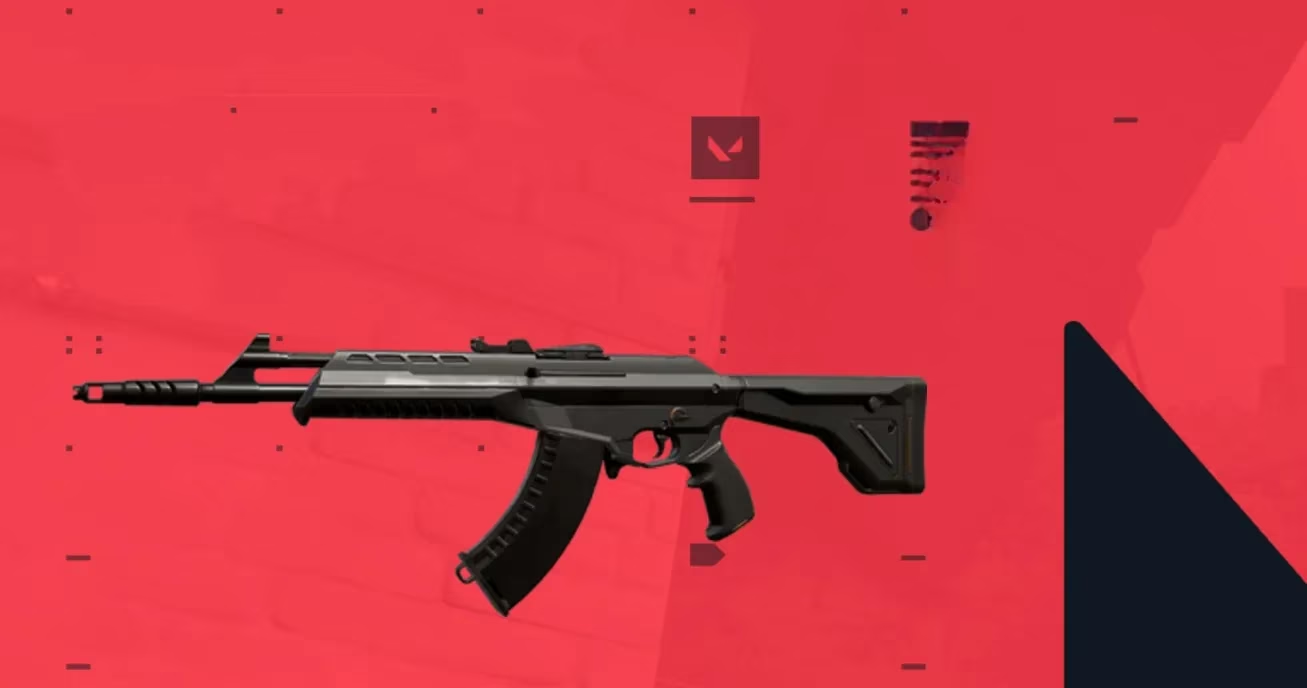
Speaking of recoil, the Vandal is not for the faint of heart. It kicks harder than an angry horse, with a spray pattern that climbs more aggressively and demands more refined mouse control. You can’t just hold down Mouse 1 and pray; you need to pull down, counter-strafe, and burst-fire with discipline. And unlike its silenced sibling, the Vandal shows off with visible bullet tracers. Fire a shot, and everyone in the server can trace that bright, neon streak right back to your position. You’re loud, you’re proud, and you’re practically inviting the enemy to peek you. For players who thrive on taking direct, confident gunfights, this is no problem—heck, it’s a badge of honor. But for those still learning the art of spray control, it can feel like a liability.
Here’s the thing, though: the Vandal is a gun that wears its heart on its sleeve. It says, “I’m here, I’m dangerous, and you’d better respect my space.” In 2026, with the meta favoring aggressive duelists like Jett and Raze who can close distances or dance around corners, the Vandal’s one-tap potential has become the ultimate equalizer. It’s the weapon of the moment, the one that creates highlight reels and tilts entire lobbies. And let’s be real—there’s nothing quite like the sound of a Vandal headshot dinking through a wall. That crisp, metallic
thwack is a dopamine hit that has kept this rifle relevant through every balance patch, every map introduction, every pro meta shift. If you’re someone who lives for those “__” moments (think: “ace clutches where every shot has to count”), the Vandal is your ticket.
Choosing Your Faithful Companion
So, which one lands in your buy menu? The answer, as it’s always been, isn’t about which gun is objectively better—it’s about which one fits your style like a favorite hoodie. The Phantom excels in versatility and stealth. Its manageable recoil means you can spray-transfer between targets with relative ease, and its invisible tracers make you a nightmare on defense. Picture holding a smoke on Breeze’s B site: with a Phantom, you can spam through the smoke and reposition before the enemy ever figures out where you were. It’s the rifle that lets you play chess while the opponent is still setting up the board.
The Vandal, on the other hand, is all about those decisive, high-impact moments. It’s the scalpel in the hands of a surgeon—or the sledgehammer in the hands of a maniac, depending on your mood. On attack, when you’re entry-fragging into a site and need to clear corners with headshots, the Vandal’s consistency at all ranges removes one variable from the game’s complex equation: damage calculation. You hit the head, they die. Simple. No second-guessing whether you were 15 or 16 meters away.
A quick side-by-side look at how these two titans measure up in 2026:
| Feature | Phantom 🎯 | Vandal 🔫 |
|---|---|---|
| Cost | 2,900 creds | 2,900 creds |
| Fire Rate | 11 rounds/second | 9.25 rounds/second |
| Headshot Damage (0-15m) | 156 (one-shot kill) | 156 (one-shot kill) |
| Headshot Damage (16-30m) | 140 (not a one-shot) | 156 (still one-shot) |
| Headshot Damage (31-50m) | 124 | 156 |
| Body Shot Damage | 39/35/31 by range | 39 at all ranges |
| Recoil | Lower, easier to control | Higher, requires more skill |
| Bullet Tracers | Invisible (silent but deadly) | Visible (shows your location) |
You see that, and immediately you understand why this debate never dies. One weapon coddles you with forgiveness and stealth; the other challenges you with raw power and accountability. It’s like choosing between a wise old mentor and a fierce gladiator. Both will carry you to victory, but the path feels different under your fingertips.
Here’s a little secret from the trenches of ranked: many players, especially as they climb, find themselves swapping between the two based on the map, the agent they’re playing, and even their mental state that day. Feeling a bit off, maybe your aim isn’t laser-sharp? Phantom’s got your back, letting you spray and pray with less punishment. Feeling cracked, like you’re about to drop a 30-bomb? Vandal time, baby. This adaptive mindset is what separates good players from great ones. In 2026, with the release of new maps like [redacted due to NDA, but let’s call it “Vista”] featuring long, open sightlines and tight, CQC-heavy interiors, the choice becomes even more about which sections of the map you plan to control. Even pro teams, like the current Masters champions, often have one player on each rifle to cover all bases.
And look, I gotta say it: don’t sleep on the Phantom’s spammability through smokes. In a meta where Viper and Brimstone are still big, being able to lay down suppressive fire without giving away your exact position can win rounds without a single headshot. On the flip side, nothing breaks an opponent’s economy like a Vandal round where you pick up two quick long-range one-taps and watch them type “hacks?” in all chat. It’s poetry.
The Verdict That Isn’t Really a Verdict
If you came here looking for a clear winner, you might leave a little frustrated—but that’s the beauty of VALORANT’s weapon design. The Phantom and the Vandal are more than just guns; they’re extensions of your playstyle, your mood, your very identity on the server. The Phantom will teach you discipline, positioning, and the art of the unexpected. The Vandal will reward your courage, your precision, and your willingness to take risks. Both, in the hands of a skilled player, are capable of dismantling any opponent and clutching any round.
So, the next time you find yourself at the buy phase with 2900 creds burning a hole in your pocket, take a beat. Ask yourself: what kind of story do I want to write this round? A quiet, methodical takeover? Grab the Phantom, vanish into the shadows, and let the enemy hear only the death rattle. A loud, explosive statement? Slam the Vandal, announce your presence, and make every pixel your kingdom. Honestly, you can’t go wrong with either—they’re both, to this day, the undisputed heavyweights of the arsenal.
But hey, if you’re still stuck on the fence, here’s a little thought experiment: the real answer might just be __ (spoiler: practice both, and trust your gut). Because in VALORANT, the only bad choice is indecision. Now go out there, choose your companion, and make those headshots count.