First-person shooters have a strange split personality. On one side, there are relaxed lobbies where players can chat and fire without consequence. On the other, there are competitive modes that treat every round like a chess match played inside a washing machine. Anyone who wants to master the second side quickly learns that skill is not a switch; it is a mountain pass that gets steeper every time the meta shifts. In 2026, the FPS genre still rewards players who treat practice like a daily ritual, and the following games remain some of the steepest climbs in the space.
One common misconception is that high-skill shooters are only about aiming. The truth is closer to learning a musical instrument without sheet music: players develop muscle memory, map awareness, resource timing, and social reads all at once. Damage numbers and flick shots matter, but they are just the visible part of a much larger iceberg.
| Game | Main Skill Wall |
|---|---|
| Halo Infinite | Movement, map flow, sandbox prediction |
| Apex Legends | Aim consistency, movement, game sense |
| Valorant | Map knowledge, agent mastery, resource management |
| Rainbow Six Siege | Teamwork, operator knowledge, destructible environments |
| Rust | Recoil control, survival awareness, combat strategy |
| Escape from Tarkov | Map memory, ammo knowledge, tactical patience |
| Counter-Strike 2 | Grenade lineups, recoil patterns, peek timing |
🎯 Halo Infinite
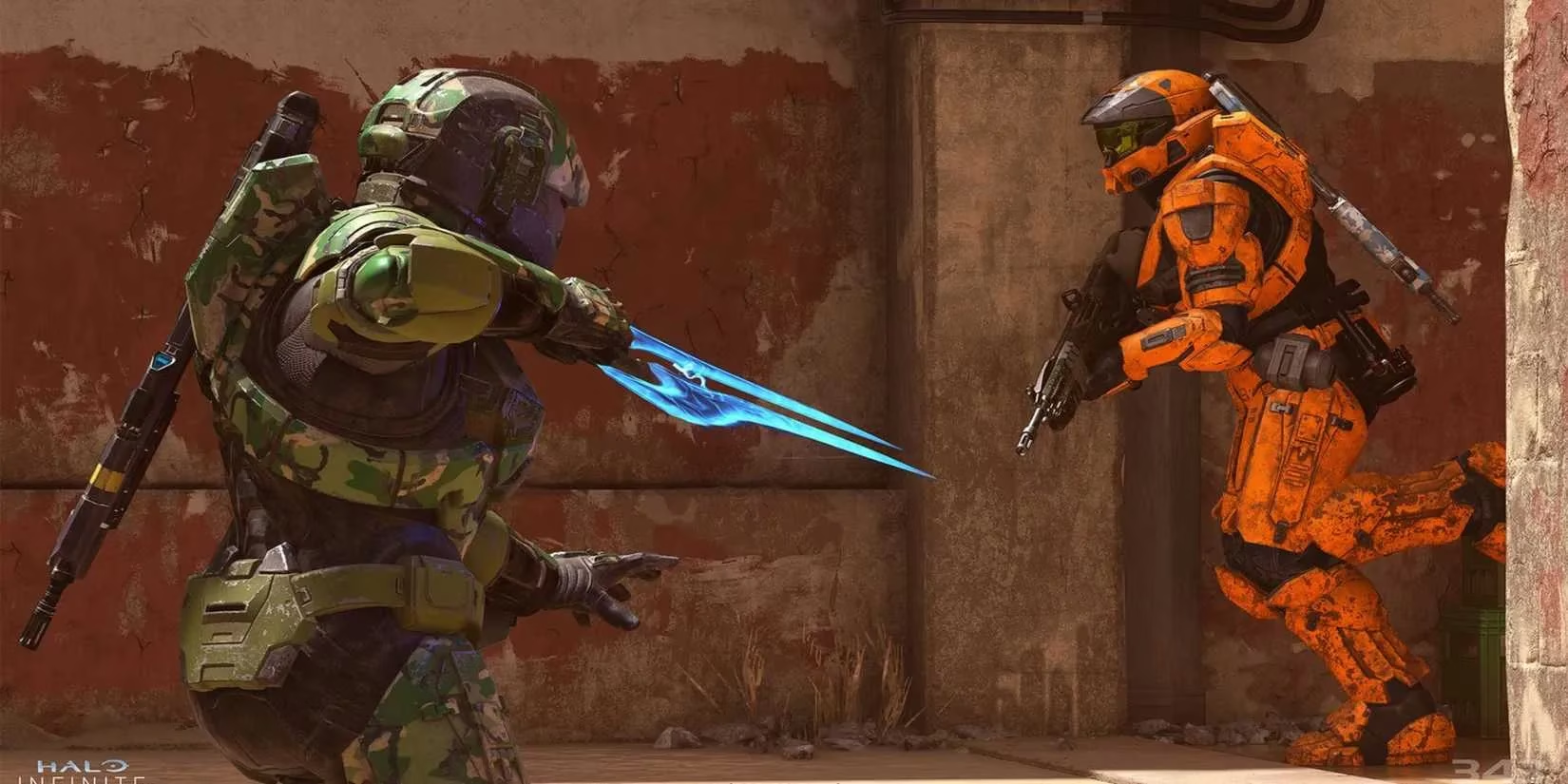
From the outside, Halo Infinite can look like a colorful arena shooter where reflexes dominate. The reality is different. Movement is the first bottleneck: players have to think quickly when peeking corners because mindless shooting does not create leads. Mechanics matter, and even after mastering them, there are RNG-style gun jamming quirks and equipment timings to predict. The best Halo players are not simply good at aiming; they have years of polished habits stacked like sediment.
🚀 Apex Legends
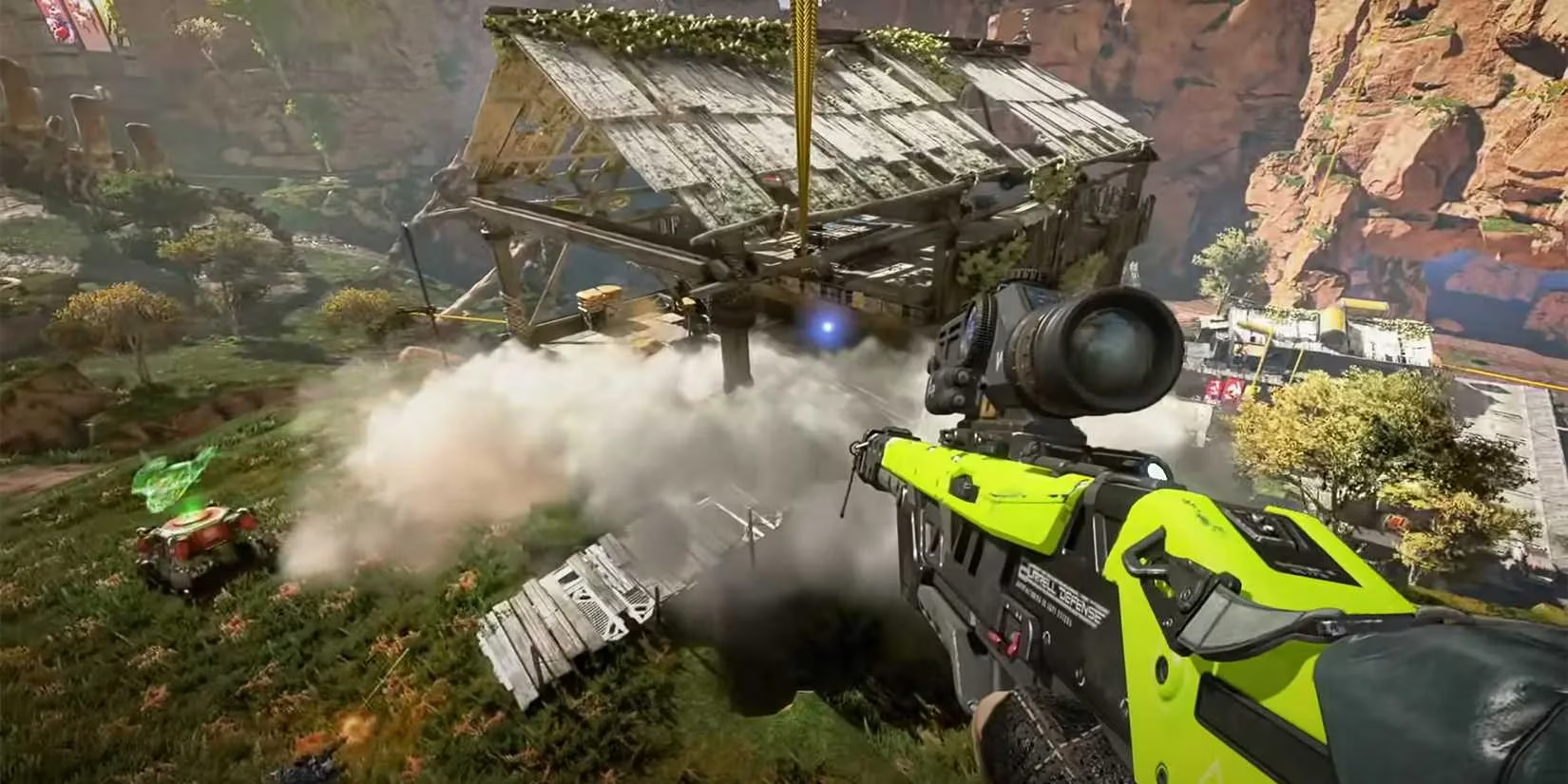
Apex Legends takes the battle royale formula and turns it into a test of consistency. Smaller-than-average hitboxes, fast movement, and high health pools make every fight longer than expected. Players must learn recoil patterns through repetition, but aim alone is not enough. Game sense decides when to push, when to hold, and how to rotate. Movement is often overlooked by newcomers, yet it is essential. Trying to succeed in Apex with only good aim is like steering a speedboat with a canoe paddle: it works in theory, but the current will win.
⚡ Valorant
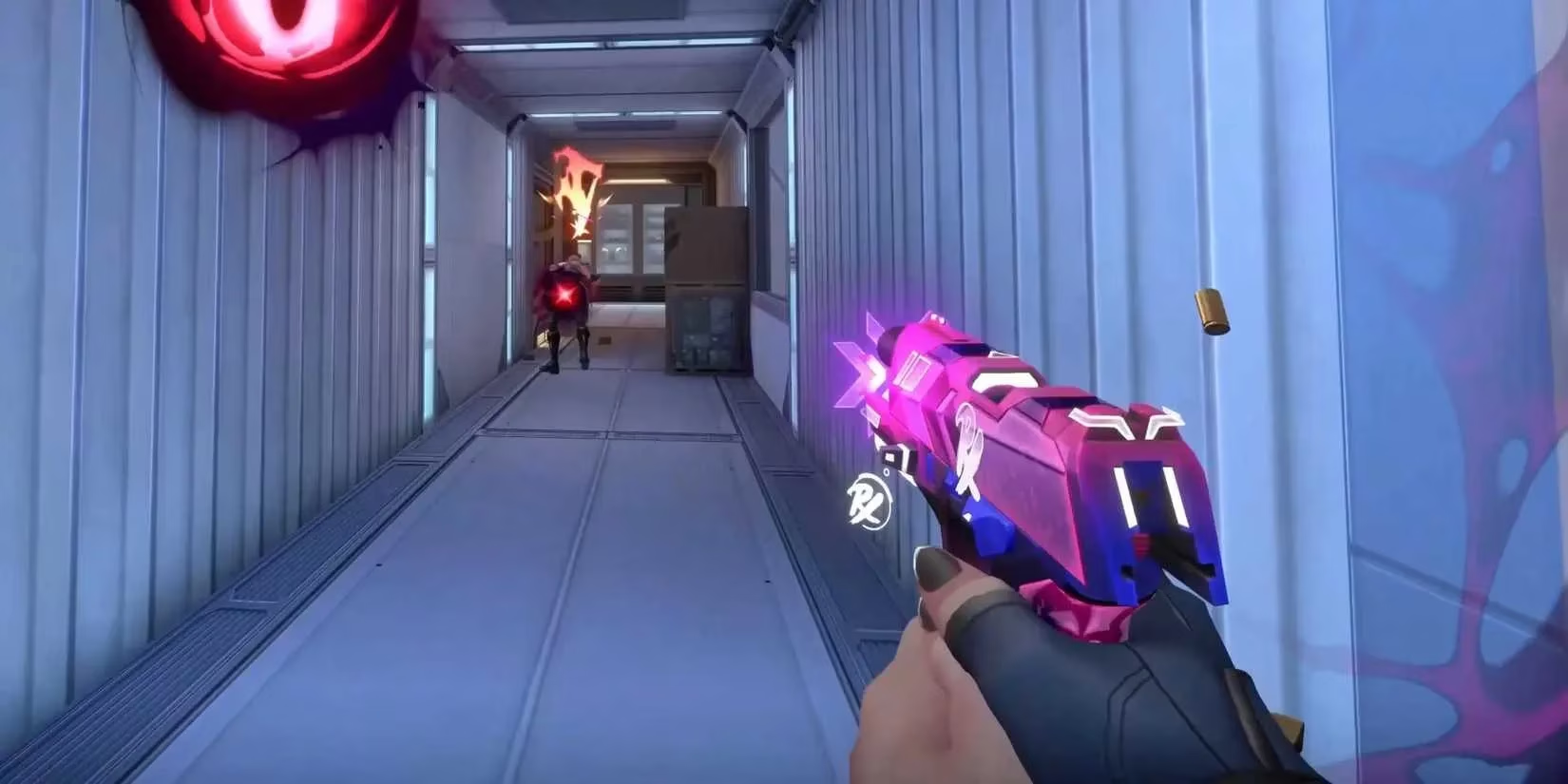
Valorant arrived as a deceptively simple mix of Overwatch-style classes and Counter-Strike gunplay. Its early hours feel welcoming, but the skill ceiling rises sharply. Players need deep map knowledge, lineups, and an understanding of which agents fit each site. Practicing every agent is the only way to keep evolving, and teamwork plus resource management at round start can separate a clean victory from a silent collapse.
🧱 Rainbow Six Siege
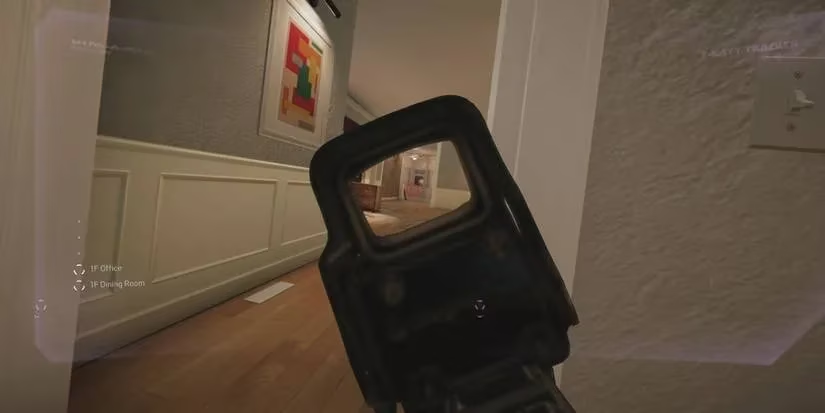
Rainbow Six Siege earns its reputation through environmental creativity. Team coordination is non-negotiable, and communicating effectively while adapting to changing situations is a standalone skill. Operators add layers of complexity, but the destructible maps are the real exam. Breaching walls, creating new sightlines, and manipulating the environment require a blend of spatial reasoning and creativity that most casual shooters never ask for.
🪓 Rust
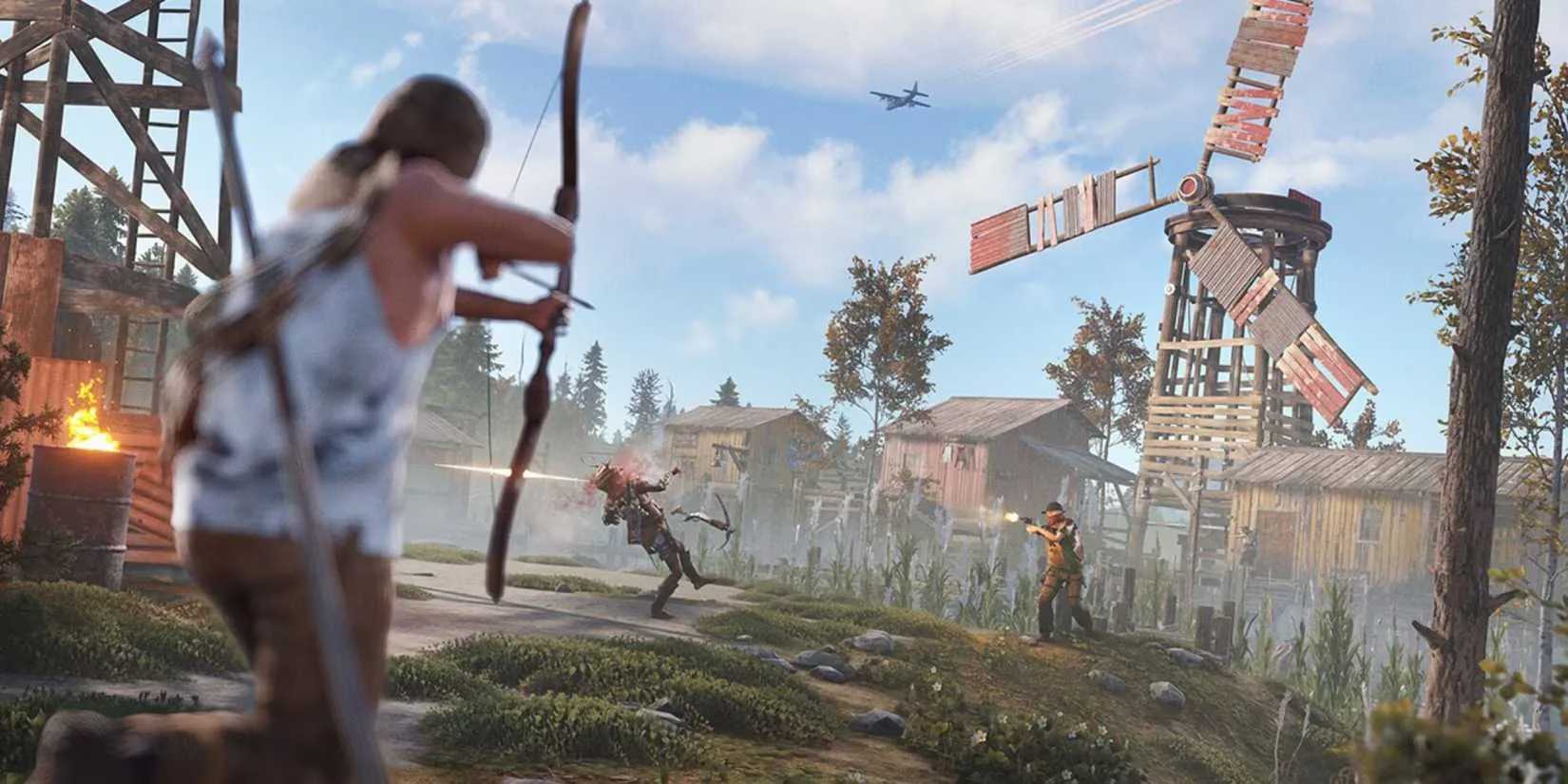
Rust is a survival FPS with a long road before gunplay even begins. Players gather resources, build bases, and survive against the environment and other survivors. Once they graduate from bows to revolvers, the difficulty of gunplay becomes clear. Strong weapons carry heavy recoil, and a fully geared player can lose everything to someone with a cheap Eoka. Combat demands constant awareness and strategy, and it is easy to overthink a situation until the fight is already lost.
🩸 Escape from Tarkov
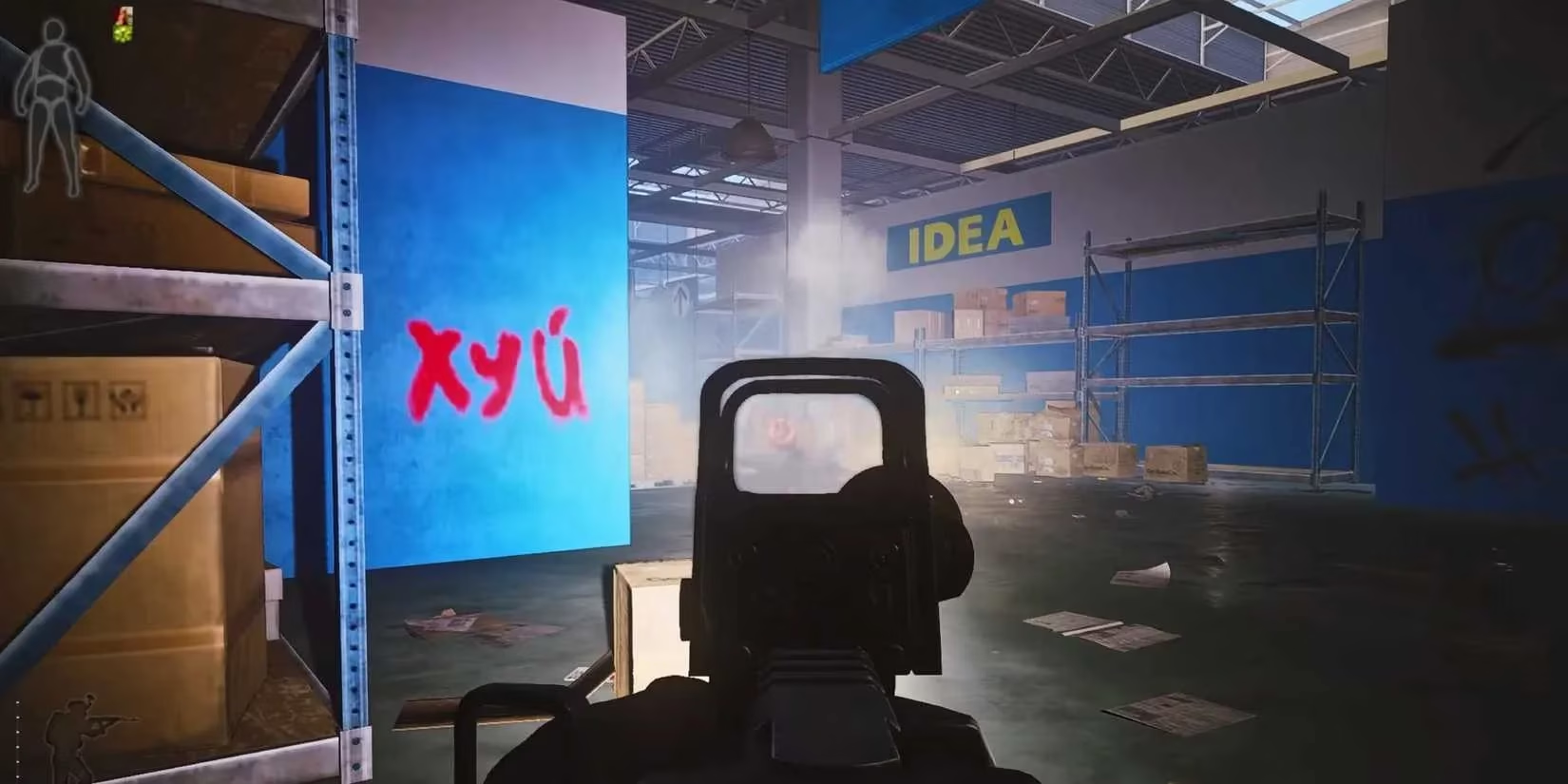
Escape from Tarkov is a game where research matters before the first raid. New players face a wall of ammo types, maps, loot locations, and extraction routes. Fighting is often strategic rather than purely mechanical: picking fights, using local advantages, and knowing when not to shoot are as important as recoil control. The only way to improve is to play, die, memorize, and repeat until the maps become as familiar as a daily commute.
💣 Counter-Strike 2
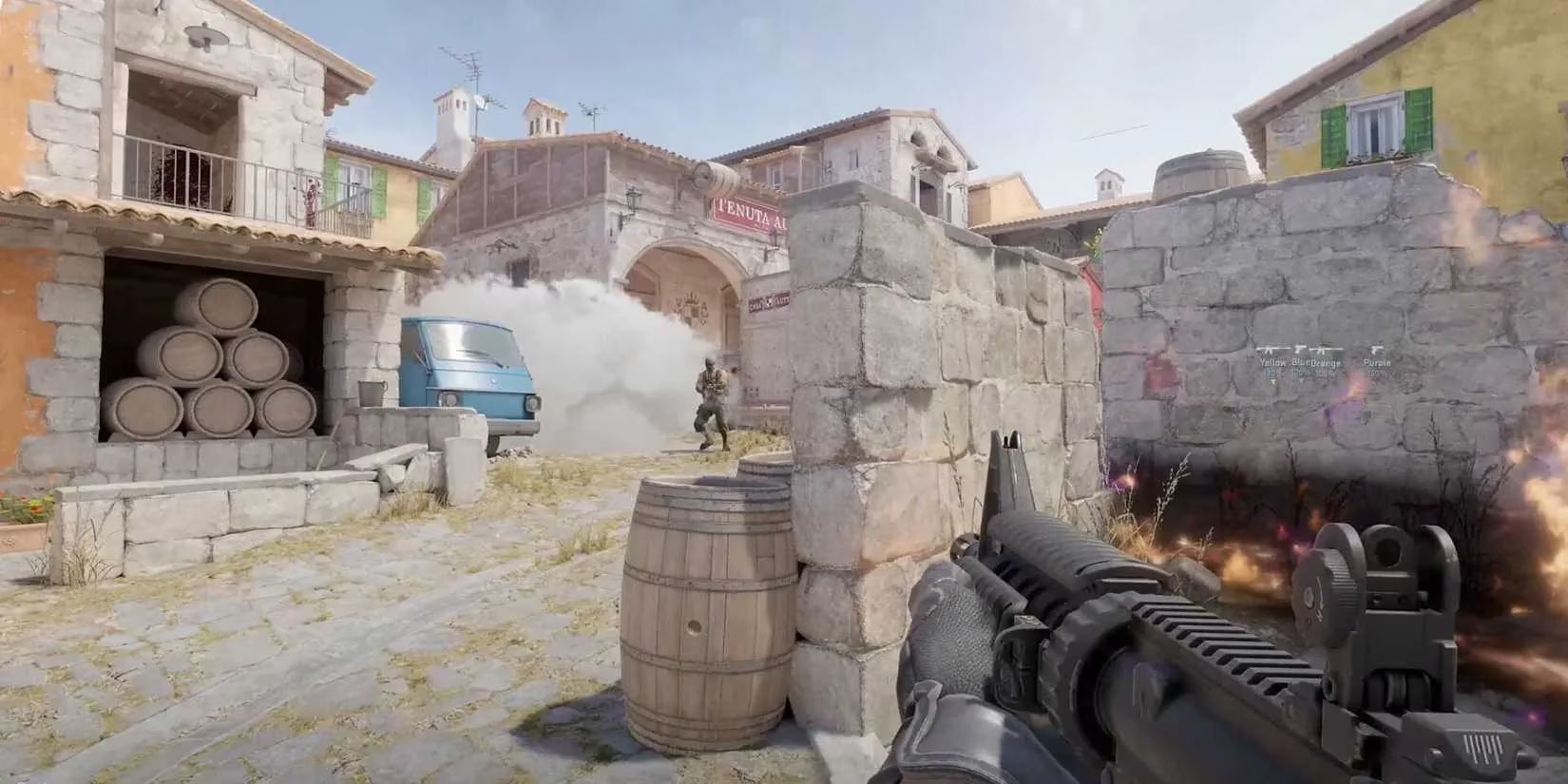
Counter-Strike 2 remains the standard for tactical FPS difficulty in 2026. It may reuse familiar maps and weapons from CS:GO, but the depth is still enormous. Every map has its own grenade line-ups, every weapon has a distinct recoil pattern, and peeking at the wrong millisecond can undo a round. Older players have spent years polishing their game sense, while new players have to climb out of the bottom tier through deliberate study as much as mechanical aim.
Across all these titles, the same rule applies: nobody is born good at Counter-Strike or Tarkov. Competence is built through repetition, pattern recognition, and a willingness to lose. The players who thrive are the ones who treat each death as a data point rather than a failure. Whether it is Halo's movement sandbox or Siege's destructible walls, the climb is long, but for people who enjoy solving a problem while bullets are flying, that climb is exactly the point.