In the competitive landscape of North American VALORANT, one name has consistently risen to the top, silencing critics and rewriting the playbook on team-building strategy. The year 2026 has solidified Sentinels' legacy not as a flash-in-the-pan success, but as a dynasty built on a bold, initially questioned, philosophy. Their journey, marked by decisive victories and a relentless pursuit of excellence, serves as a masterclass in modern esports evolution. How did a team assembled from individual superstars transform into an unstoppable, coordinated force? The answer lies in their triumph at events like the 30Bomb: Summer Cup, a victory that was less an endpoint and more a definitive statement of intent.
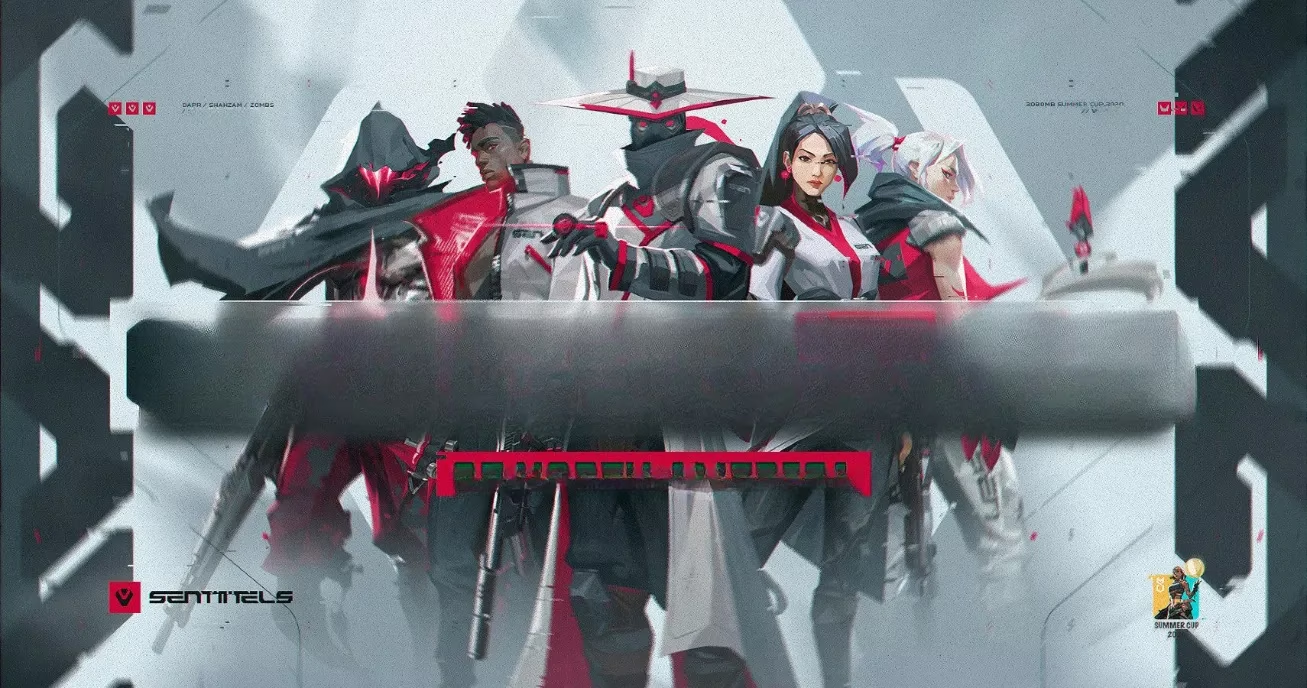
The 30Bomb: Summer Cup was more than just another tournament; it was a proving ground for the continent's elite. Featuring a gauntlet of top-tier organizations like Gen.G, Immortals, and Complexity Gaming, the two-day event ultimately distilled into a classic rivalry: Sentinels versus Team SoloMid. The narrative was compelling. TSM, long heralded for its cohesive, roster-first approach, represented the established order. Sentinels, with their 'star-stacking' strategy, represented the audacious new challenger. The finals delivered a resounding verdict. After dispatching TSM 2-0 in the upper bracket finals, Sentinels watched their rivals battle through the lower bracket, only to meet them again in the grand finals. The result was a decisive 3-1 victory for Sentinels, a win that wasn't just about points on a board, but about validating an entire methodology.
The Architects of Victory: Dapr and ShahZaM
While Sentinels' roster reads like a who's who of VALORANT talent, two players emerged as the pivotal architects of their 30Bomb championship run.
-
Michael \"dapr\" Gulino: Often the quiet cornerstone, dapr's performance was deafening. As the team's fifth and final signing, the then-21-year-old didn't just fill a role; he redefined it. Playing the strategic sentinel Cypher, his primary duty was intelligence gathering—setting traps and watching flanks. Yet, dapr consistently managed to top-frag (achieve the most kills) while executing this complex role. His impact was symbolized by a breathtaking 360-degree no-scope kill on TSM's seasoned veteran, James \"hazed\" Cobb, during the finals—a move that broke both hazed's concentration and the spirit of TSM's defense. Was he just a support player? The scoreboard and the highlight reels screamed otherwise.
-
Shahzeeb \"ShahZaM\" Khan: If dapr was the silent engine, ShahZaM was the dazzling weapon. His duel against TSM's legendary sniper, Matthew \"Wardell\" Yu, became the event's most thrilling subplot. In repeated, high-stakes 1v1 Operator battles, ShahZaM often came out on top, shutting down TSM's primary offensive threat and proving that Sentinels' firepower could outmatch even the most celebrated individual talents. His leadership and clutch performances propelled the team through tense moments.
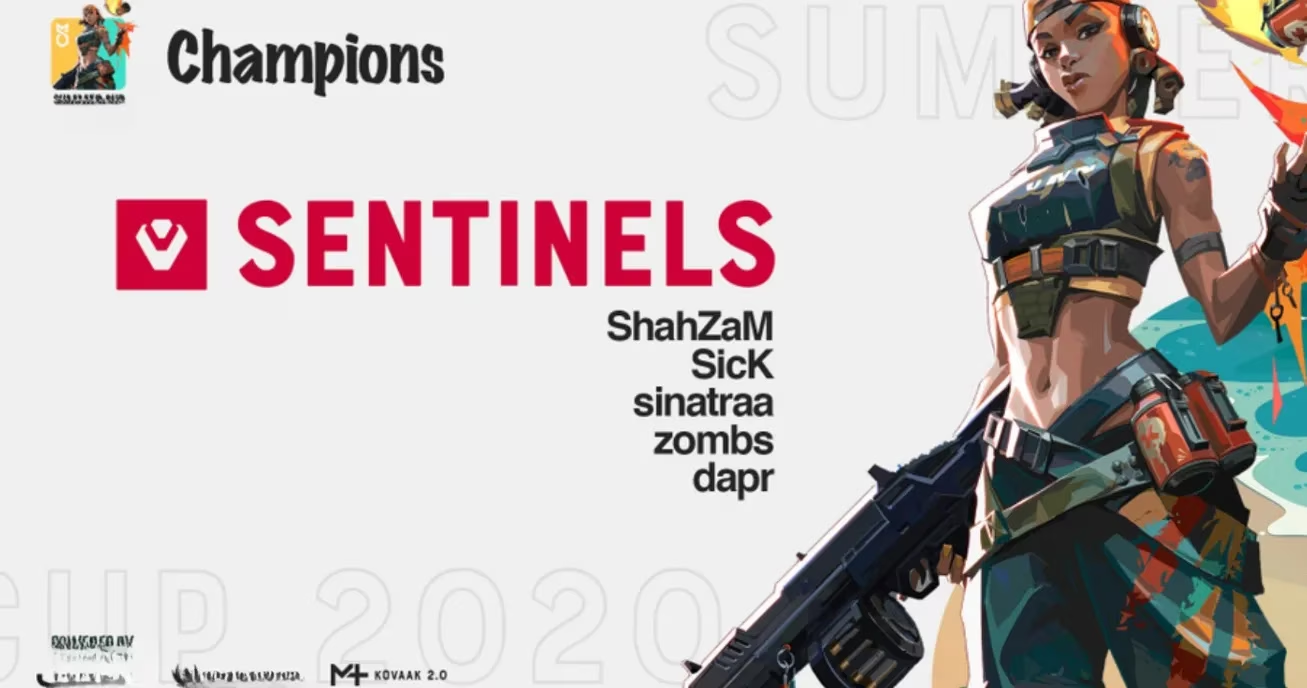
The Strategy Validated: From Criticism to Crown
The Sentinels' path to the top was paved with skepticism. In the early days of VALORANT esports, the conventional wisdom, championed by teams like TSM, was clear: sign a complete, pre-existing roster to ensure instant chemistry and coordination. Individual skill, many argued, would always fall to superior teamwork. Sentinels defiantly chose the opposite path, assembling a dream team of individual superstars. For a time, the critics seemed right. TSM hoarded early tournament wins while Sentinels appeared shaky, their immense talent not quite gelling.
But the 30Bomb: Summer Cup victory marked a turning point. It wasn't just a win; it was the moment the \"gel\" set. After a dedicated month or two of practice and competition, the individual stars had transformed into a cohesive unit. The victory proved a powerful thesis: elite individual skill, when properly harnessed and coordinated, can reach a ceiling that pre-built rosters might never touch. The win streak that followed—capturing two tournaments in a row and three of the last four—cemented their status not just as the best team in North America, but as a global powerhouse. The narrative had flipped entirely.
The Road Ahead: A New Era of Competition
The 30Bomb event was spectacular, but in 2026, we recognize it as a precursor to an even more explosive era. The FaZe Clan Invitational, part of the prestigious Ignition Series, loomed on the horizon. That tournament promised a colossal showdown, featuring:
| Team | Motivation & Status in 2026 Context |
|---|---|
| Team SoloMid | Burning for revenge, aiming to reclaim their throne. |
| Cloud9 | A storied organization with a deep roster and championship pedigree. |
| FaZe Clan | The hosts, known for aggressive, flashy playstyles. |
| T1 | A global esports giant with immense resources and talent. |
The stage was set for Sentinels to defend their new title against a hungrier, more prepared field. Their victory at 30Bomb was the proof of concept; the upcoming battles would be the stress test. Would their superstar strategy hold under the brightest lights and against the most prepared opponents? The entire VALORANT world was watching, knowing that the outcome would define the meta for team construction for years to come. The era of the superteam was no longer a theory—it was a reality, and Sentinels were its pioneering champions.