In 2026, the battle against cheating in competitive online shooters is still a high-stakes arms race. Riot Games' Vanguard anti-cheat system remains a central piece of that fight, and one of its most notable hires began as a volunteer. Mohamed Al-Sharifi, better known as GamerDoc, rose from community watchdog to official anti-cheat analyst at Riot Games. His journey illustrates how player-led policing can shape the future of fair play.
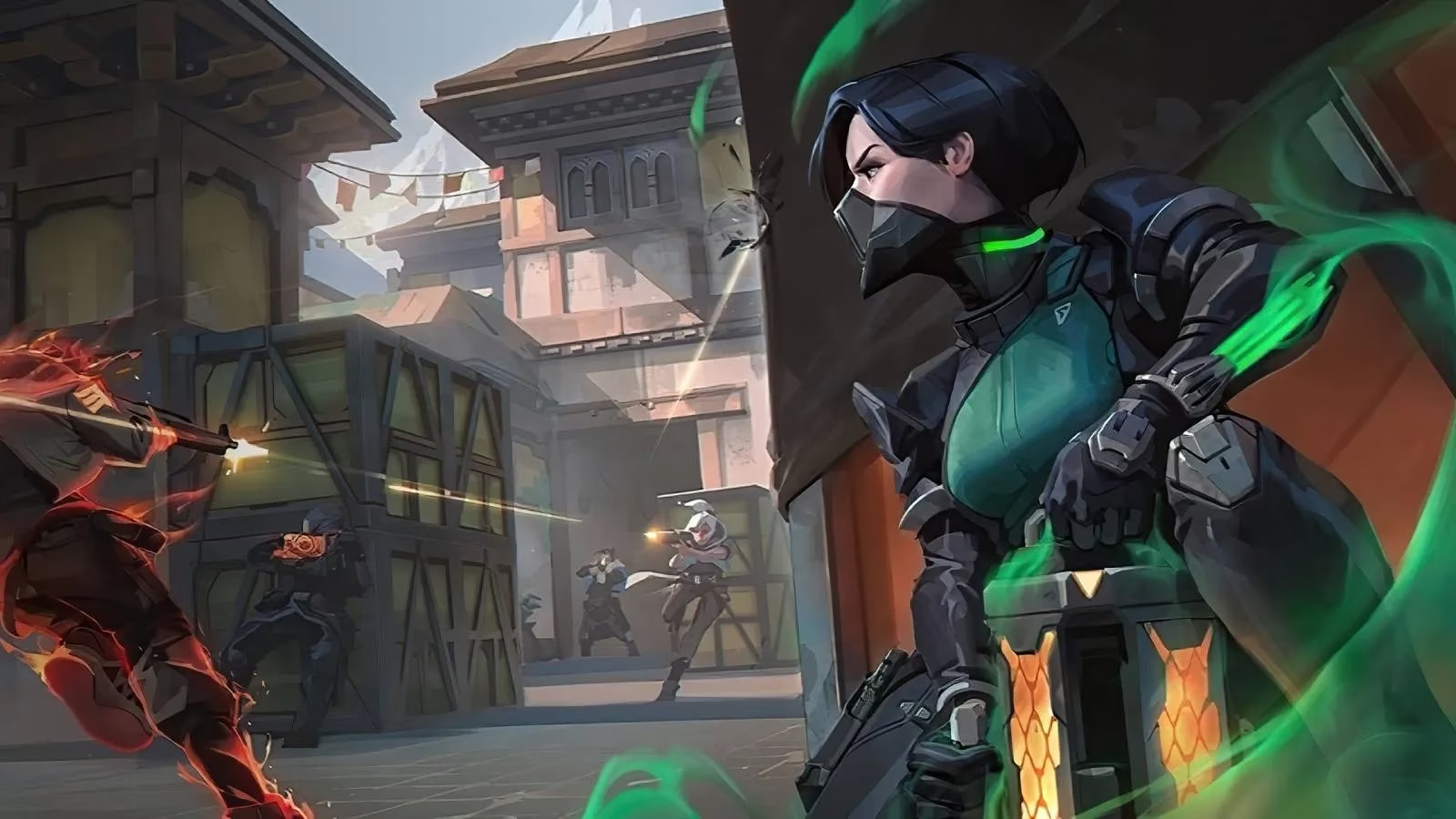
According to the old saying, cheaters never prosper. What of anti-cheaters, though? Thanks to Riot, one of them is definitely prospering. The story dates back to the 2020s, when GamerDoc had already made a name for himself by tracking cheaters in VALORANT and Overwatch. He founded the O.W. Police Department Discord and the VALORANT Police Department Discord, gathering reports of alleged cheaters and passing credible cases to developers. He had no official position, yet his efforts led to thousands of bans and influenced multiple patches.
His reputation grew because he did not merely complain. He investigated cheat programs, identified exploiters, and documented patterns that helped developers close loopholes. That work caught Riot's attention. In 2020, GamerDoc announced on Twitter that he would join the Vanguard team at Riot Games as an anti-cheat analyst. The move was notable: a community figure had been formally absorbed into the company whose games he had spent years defending.
| Aspect | Details |
|---|---|
| Community alias | GamerDoc (Mohamed Al-Sharifi) |
| Games monitored | VALORANT, Overwatch |
| Community groups | O.W. Police Department Discord, VALORANT Police Department Discord |
| Impact before Riot | Thousands of cheaters banned, patches influenced |
| Riot role | Anti-cheat analyst on Vanguard team |
| Announcement | Twitter, 2020 |
By 2026, the anti-cheat landscape has evolved. Vanguard is now a fixture of VALORANT on PC, using a kernel-level driver that runs from system startup. The system has been both praised and criticized: praised for catching cheats that user-mode tools miss, criticized for its deep access. Riot has continued to refine it, balancing security with player concerns. The company also learned that community intelligence is not a luxury but a necessity. Cheat developers adapt quickly, often within days of a patch. A formal analyst like GamerDoc can help Riot anticipate those shifts rather than merely react.
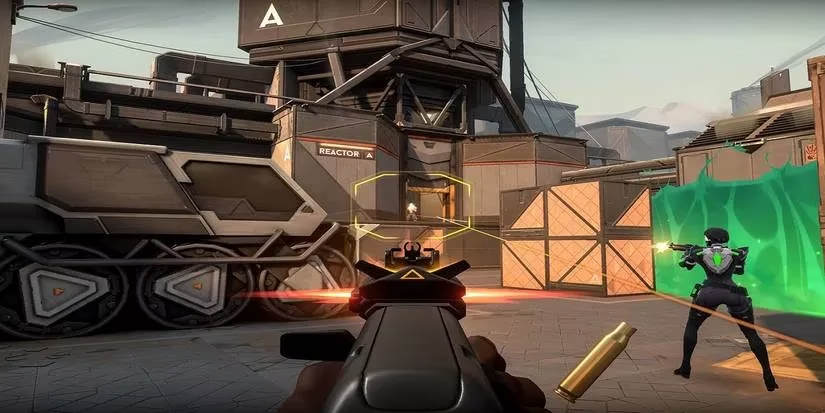
Valorant's cheating problem was never limited to one region or one rank. Cheaters have used aimbots, wallhacks, triggerbots, and hardware-based exploits. Riot's response has combined Vanguard, manual bans, and legal action. In 2026, the fight is global and persistent. Overwatch, too, has faced similar issues, though Blizzard's approach differs. GamerDoc's cross-game experience gave him a broad view of how cheaters operate and how communities can help.
-
🎯 Community reports can be as valuable as automated detection.
-
🛡️ Kernel-level anti-cheat remains controversial but effective.
-
⚖️ Bans alone are not enough; deterrence and education matter.
-
🤝 Developers and players can collaborate without vigilantism.
-
📈 Anti-cheat is now a career path, not just a hobby.
The hiring of GamerDoc also sent a message to the wider gaming world. Anti-cheat work is not glamorous. It involves reviewing footage, analyzing binaries, and dealing with angry users. But it is essential. Riot's decision to hire someone from the community validated the idea that passionate players can become professional defenders of fair play. For GamerDoc, it was the dream: turning a personal crusade into a paid position.
Yet the story is not only about one person. It reflects a broader shift in 2026. Game companies now invest in trust and safety teams, behavioral analytics, and player tribunals. They use machine learning to detect suspicious patterns, but human analysts still provide context. False positives can ruin legitimate players' experiences, so nuance matters. Vanguard's team, with people like GamerDoc, must distinguish between a lucky shot and an aimbot, between a smurf and a cheater, between a bad day and a banned account.
Cheating persists because incentives persist. Ranked ladders, streaming audiences, and even real-money tournaments create pressure to win. Some cheaters sell accounts; others sell cheat subscriptions. Riot's Vanguard has disrupted those markets, but no system is perfect. The arms race continues. In 2026, cheat makers use DMA hardware, custom firmware, and AI-assisted tools. Anti-cheat teams respond with new detection methods, hardware bans, and legal threats.
Still, the old saying needs an update. Cheaters may never prosper in the long run, but anti-cheaters can. GamerDoc's rise from Discord moderator to Riot analyst proves it. His story is a reminder that fair play is not automatic. It is defended by developers, by systems like Vanguard, and by players who refuse to look away. As Riot continues to update Vanguard in 2026, that partnership remains the best hope for competitive integrity.
Recent analysis comes from Rock Paper Shotgun, and it helps frame why community-led anti-cheat efforts like GamerDoc’s can matter alongside systems such as Riot’s Vanguard: the PC ecosystem is where cheat tooling evolves fastest, and coverage of competitive shooters often underscores how detection, player trust, and platform-level security decisions (like kernel drivers) ripple through matchmaking integrity and long-term player retention.