It's been quite a journey since Valorant first exploded onto the scene years ago, and as someone who's been playing since the early beta days, I've watched this tactical shooter evolve in fascinating ways. The core DNA that made it special—the precise gunplay combined with unique character abilities—has remained strong, but the landscape of the game has changed dramatically. Now, in 2026, looking back at early feedback from influential players like Shroud feels almost nostalgic, yet many of the core discussions about game health he ignited are still relevant today, just on a much larger and more complex scale.
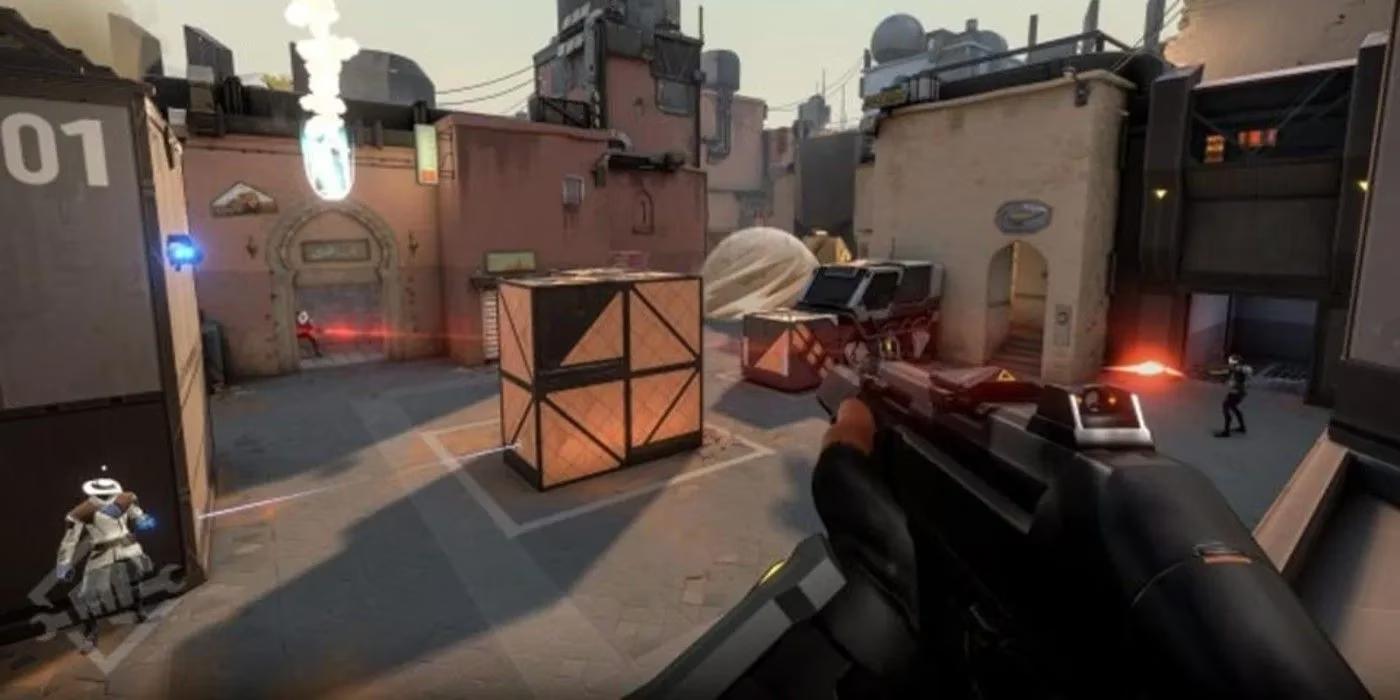
I remember when the roster felt so small. Back then, the call for more Agents wasn't just about quantity; it was about deepening the strategic sandbox. Shroud's early idea for a Jett-like character with a flash instead of a smoke was a simple but powerful concept—it was about creating new interplay and counterplay. Fast forward to now, and Riot has delivered in spades. We have over 25 Agents, each carving out unique niches. The meta is no longer about finding the best agent, but about composing the perfect team for a specific map and strategy. The introduction of Controllers with global smokes, Initiators with recon-heavy kits, and the constant tweaks to Duelists have created a beautiful, chaotic ecosystem. Picking an Agent feels like choosing a playstyle philosophy. Yet, the challenge remains: with so many options, balancing becomes a perpetual, high-wire act. A new Agent release is always a seismic event, shaking up the competitive tier lists for months.
The map pool conversation has followed a similar trajectory. From the initial four, we now have a robust rotation that feels alive. I can still recall the simplicity—and sometimes, the monotony—of those early days. Shroud's wish for seven or eight maps seemed ambitious then, but now it's our baseline. Riot's map design philosophy has matured spectacularly. We've moved beyond the standard three-lane design into experimental territories with rotating doors, teleporters, and vertically complex sites that truly test a team's adaptive IQ. Each map tells a different story and demands a unique approach. Bind's teleporters require lightning-fast rotations, while the multi-level chaos of a map like Pearl demands impeccable communication. The current map veto system in ranked and professional play makes knowledge depth more valuable than ever. You can't just be good on one or two maps; you need a competent strategy for the entire pool. This variety is the lifeblood of the game's longevity, forcing players to be thinkers, not just shooters.
Ah, the Operator. The great equalizer and the ultimate tilting machine. This weapon has been the subject of more balance patches, community debates, and highlight reels than any other. Shroud's early suggestion to make it a "risky buy" by increasing its cost was a foundational idea that Riot has iterated on for years. The price has fluctuated, its movement speed while scoped has been nerfed, and the economic impact of buying one has been a central strategic pillar for ages. In today's meta, buying an OP is a major statement. It's a commitment that can win you a half, or bankrupt your team's economy. The dynamic it creates is incredible: the tension when you hear that distinct scoping sound, the coordinated pushes to smoke and flash out an enemy OP-er, the sheer respect a skilled sniper commands. It's no longer an automatic purchase; it's a calculated gamble, exactly the kind of high-risk, high-reward dynamic that makes tactical shooters so compelling. The conversation has expanded too—now we debate the strength of the Marshal on eco rounds, or the viability of the Sheriff as a mini-OP. The weapon ecosystem is rich and interconnected.
Beyond these core pillars, the game has grown in ways we couldn't have imagined back in 2020. The skin ecosystem, with its evolving levels and finishers, has become an art form of its own. The introduction of Team Deathmatch and Swiftplay modes gave us much-needed casual outlets to warm up or just have fun without the pressure of a full match. The esports scene is a global powerhouse, with international leagues and Champions tournaments that deliver storylines as gripping as any sport. Riot's commitment to anti-cheat, while always a cat-and-mouse game, has largely preserved the game's competitive integrity.
Of course, the path hasn't been perfectly smooth. We've had metas dominated by a single overpowered Agent, maps that were removed for reworks after community backlash, and periods where the ranked experience felt frustrating. But that's the nature of a live service game—it's a constant dialogue between the developers and millions of players. The fact that foundational feedback from the game's infancy still echoes in today's balance discussions is a testament to Shroud's and the early community's insight. They identified the key levers of gameplay depth: Agent diversity, map variety, and weapon economy. Riot's job, which they've largely succeeded at, has been to scale those concepts to a game with a massive, global player base while keeping the soul of those tight, tense, round-based matches intact.
Playing Valorant in 2026 feels like participating in a living, breathing competitive universe. It's more than just hitting heads; it's about psychology, economics, teamwork, and constant adaptation. The simple suggestions of yesterday have blossomed into the complex, beautiful game of today. I can't wait to see what the next evolution brings. Will we see more radical Agent abilities? Maps that dynamically change? New game modes that redefine how we think about the core gameplay? One thing's for sure: the conversation, just like the game, will never stop evolving. 🎯🔥💥