It's 2026, and I still remember the excitement when Skye first joined the VALORANT roster back in 2020. As someone who's played since beta, I've seen agents come and go through meta shifts, but Skye's unique kit has maintained a special place in my heart and in competitive play. How does an agent designed around gathering information and supporting teammates remain relevant years after her release? The answer lies in her beautifully balanced design that rewards game sense over pure mechanical skill.
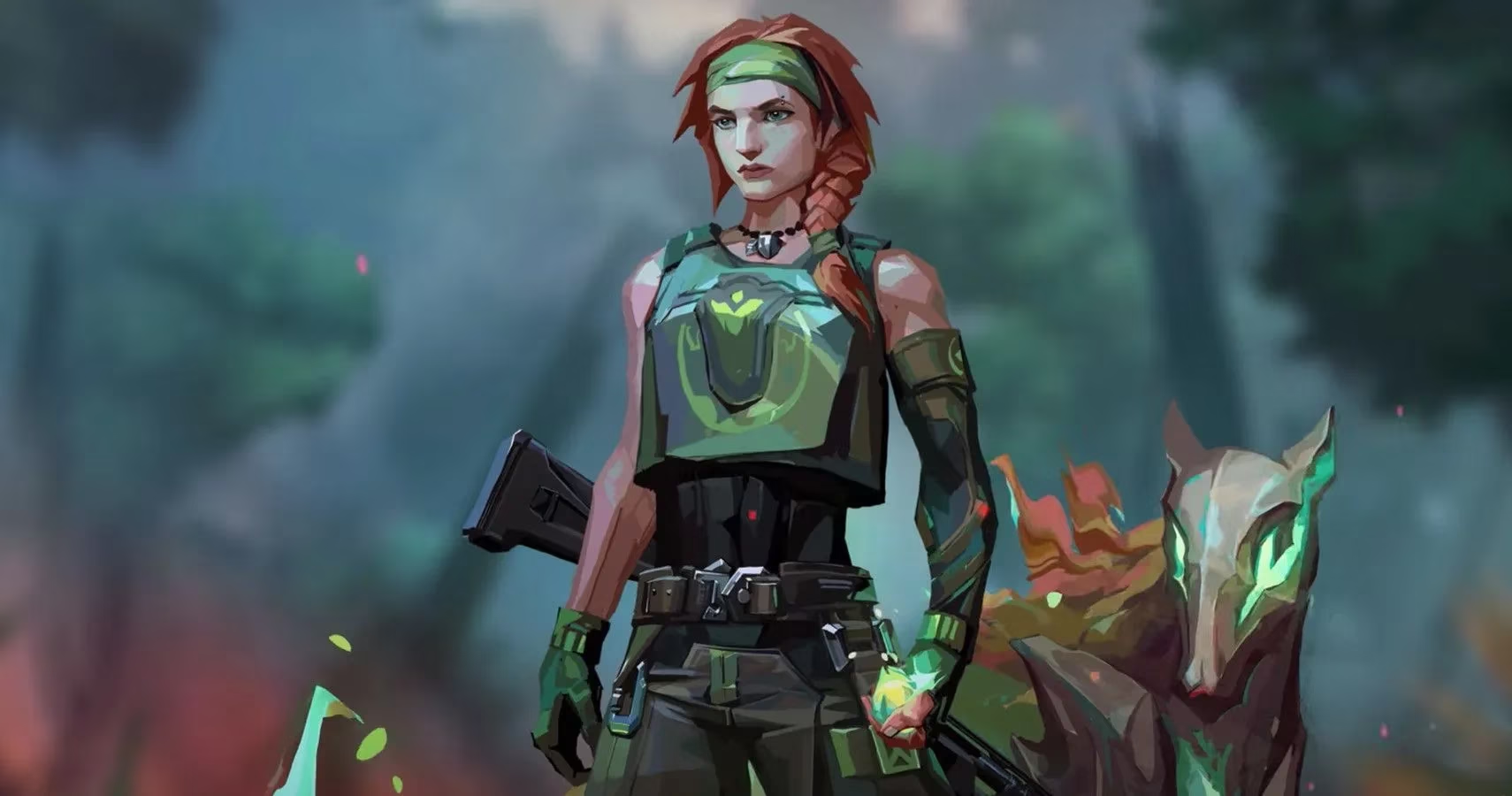
🌿 The Heart of the Team: Regrowth
When I first read about Skye's abilities, Regrowth immediately caught my attention. Here was a healer who could restore multiple allies simultaneously—something even Sage couldn't do at the time. In practice, this created incredible strategic depth. Do I heal my duelist who's holding a risky angle, or save my pool for after the execute? The limitation that Skye couldn't heal herself forced me to position carefully. Was I playing too aggressively as a support character? This self-healing restriction created interesting trade-offs that made her feel fair to play against.
Over the years, I've developed some key strategies with Regrowth:
-
Timing is everything: Healing during lulls in combat maximizes value
-
Positional awareness: Staying alive as Skye means your team stays alive
-
Resource management: That healing pool depletes faster than you think!
🐅 Scouting with Trailblazer
Trailblazer—oh, how I love this ability! Controlling that Tasmanian tiger felt awkward at first. Why would I give up control of my agent to scout? But once I mastered it, I realized its true power. The concussion effect isn't just about dealing damage; it's about creating opportunities. A concussed enemy is essentially a free kill for your team. The psychological impact alone is valuable—players become hesitant to hold angles knowing a tiger might jump around the corner.
What makes Trailblazer balanced even in 2026? Its vulnerabilities:
-
Audible approach: Enemies can hear it coming
-
Destroyable: A few well-placed shots take it down
-
Limited duration: You can't scout forever
This creates a beautiful risk-reward dynamic that hasn't aged a day.
🦅 The Information Game: Guiding Light
Guiding Light represents Skye's core identity as an information gatherer. That controllable hawk reminds me of Sova's drone, but with a crucial difference—it can blind enemies! The learning curve here was steep. When do I use it for scouting versus blinding? How do I avoid getting it shot down immediately?
After countless matches, I've found these principles hold true:
-
Early round: Use for information gathering
-
During executes: Use for blinding key positions
-
Post-plant: Use to delay defusers
The sound cue when you hit someone with the flash is one of the most satisfying feedback mechanisms in the game. That immediate knowledge that you've blinded an enemy creates perfect opportunities for your team to capitalize.
🔍 Ultimate Pressure: Seekers
Seekers might be my favorite ultimate in VALORANT. Needing six ultimate points means you can't spam it every round, but when you do get it, the pressure it creates is immense. Three seekers hunting down the three closest enemies forces the opposition to make difficult choices. Do they shoot the seekers and reveal their position? Do they try to hide and risk getting nearsighted?
The beauty of Seekers in 2026's meta is how it complements Skye's overall kit:
| Ability | Information Gathered | Team Utility |
|---|---|---|
| Trailblazer | Local area recon | Concussion effect |
| Guiding Light | Long-range recon | Blind effect |
| Seekers | Enemy positions | Nearsight effect |
This table shows how each ability serves dual purposes, making Skye incredibly versatile.
🎯 Skye's Evolution in the Meta
Looking back from 2026, Skye's journey through VALORANT's competitive scene has been fascinating. She started as a niche pick, then became a must-have in certain compositions, and has now settled into a comfortable position as a flexible support option. What lessons can we learn from her design longevity?
First, utility that rewards game sense ages better than pure mechanical abilities. Skye's kit doesn't require insane flick shots or reaction times—it requires understanding enemy patterns, predicting rotations, and coordinating with teammates.
Second, clear counterplay keeps an agent healthy. Every one of Skye's abilities can be countered:
-
Regrowth: Kill Skye first
-
Trailblazer: Shoot the tiger
-
Guiding Light: Destroy the hawk
-
Seekers: Shoot the seekers
Third, versatility creates adaptability. Skye can fit into multiple team compositions and strategies, which has kept her relevant through various meta shifts.
🤔 Why Skye Still Feels Fresh
Even after all these years, playing Skye never gets old. Why is that? I believe it's because her kit encourages creative problem-solving. Each round presents new challenges: different enemy compositions, varying economic situations, changing map control. Skye's tools give you multiple ways to approach these challenges.
Consider this: How many agents can simultaneously heal teammates, scout multiple areas, blind enemies, and reveal positions with their ultimate? Skye's unique combination of support and initiation creates gameplay moments that feel distinctly rewarding.
💭 Final Thoughts
As I queue for another match in 2026, I often find myself selecting Skye. There's something timeless about her design—the way she encourages teamwork, rewards strategic thinking, and creates opportunities for spectacular plays. While newer agents have come with flashier abilities and more complex mechanics, Skye remains a testament to elegant, purposeful design.
Her release back in October 2020 marked a turning point for VALORANT's agent design philosophy. She proved that support characters could be exciting to play and crucial to competitive success. So here's to Skye—the Australian scout who taught us that sometimes, the best way to win isn't by out-aiming your opponents, but by out-thinking them.