I still remember the excitement back in 2020 when Riot Games first teased something "cold" coming to Valorant. The speculation among my friends was intense—would it be a new Agent with ice powers? A winter-themed event? When the official reveal confirmed a brand new arctic map called "Icebox" arriving with Episode 1, Act 3, our gaming group chat exploded. Looking back from 2026, Icebox wasn't just another map addition; it became a turning point in Valorant's map design philosophy, introducing verticality and environmental storytelling in ways that would shape future arenas like Breeze and Lotus.
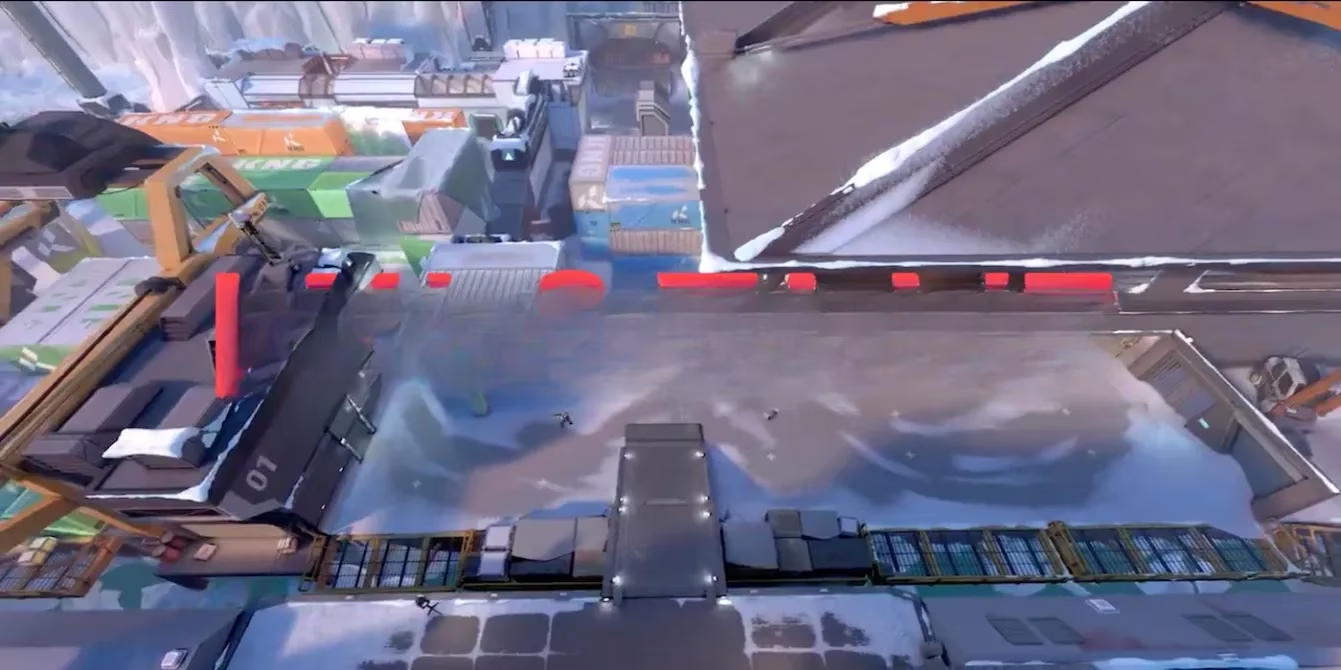
What struck me immediately when Icebox launched was how it defied expectations. Executive producer Anna Donlon had initially stated new maps would only come with each Episode, not every Act. Getting Icebox in Act 3 felt like an unexpected gift—one that addressed our community's growing hunger for variety. Back then, Valorant only had four maps (Bind, Haven, Split, and Ascent), and the rotation was becoming painfully predictable. I can't count how many times my squad would queue up only to play Split three matches in a row! Icebox's arrival broke that monotony with its frozen Russian port setting, creating immediate buzz in the tactical shooter scene.
The map's vertical design language was revolutionary for its time. Unlike previous maps that primarily operated on two levels, Icebox introduced:
🎯 Multi-level shipping containers that created sniper nests and unexpected angles
🎯 Rope ascension points similar to Split but more strategically placed
🎯 Underground passages beneath the ice that allowed for stealthy rotations
🎯 Destroyed ship hulls serving as natural cover with peek holes
Playing on Icebox felt like solving a three-dimensional puzzle. I recall my first match there—our team kept getting picked off from above until we learned to constantly check the container tops and crane positions. The learning curve was steep but rewarding, forcing players to develop new spatial awareness skills that would later prove useful on maps like Fracture and Pearl.
From a strategic perspective, Icebox introduced several innovations that have become standard in today's Valorant maps:
| Icebox Innovation | How It Changed Gameplay | Legacy in 2026 Maps |
|---|---|---|
| Horizontal ropes | Quick vertical repositioning | Enhanced in Lotus's rotating doors |
| Breakable ice walls | Temporary sightline creation | Evolved into destructible elements on District |
| Ship container maze | Complex post-plant situations | Inspired Breeze's pyramid structures |
| Outdoor-long sightlines | Sniper dominance areas | Balanced in newer maps with more cover |
What many players don't realize looking back is how Icebox's development timeline reflected Riot's responsive approach to community feedback. The map arrived earlier than planned because players were vocal about map variety. This established a pattern we still see today—Riot listening to the community and adjusting their content pipeline accordingly. Just last year, when players expressed concerns about too many gimmicky mechanics, Riot scaled back on overly complex map features, finding a balance between innovation and competitive integrity.
The visual storytelling on Icebox deserves special mention. Every time I drop into the map now, I notice new details:
-
Frozen whales and sea creatures trapped in the ice
-
Abandoned research equipment suggesting a hasty evacuation
-
Russian signage and corporate logos hinting at the location's backstory
-
Weather effects that actually impact visibility during certain rounds
These environmental details weren't just cosmetic; they provided tactical information. The broken ice near B site, for example, indicated where utility could create unexpected angles. The hanging chains on A site produced unique sound cues when players brushed against them. This attention to interactive environments would later reach its peak with 2024's Nexus map, where entire sections could be temporarily altered during the round.
Playing Icebox in 2026 feels like visiting a living museum of Valorant's evolution. The map has received several updates over the years—container positions have shifted, some rope points were removed for balance, and the lighting has been improved for competitive clarity. Yet it retains its core identity as Valorant's first true vertical playground. When I introduce new players to the game today, I always take them to Icebox early in their learning journey because it teaches essential skills:
-
Vertical audio awareness - Distinguishing footsteps above versus beside you
-
Angle clearing discipline - Checking high, medium, and low positions
-
Utility creativity - Using abilities across multiple levels
-
Rotation timing - Navigating the map's alternative paths efficiently
Interestingly, Icebox also marked a shift in how Riot introduces new content. The teaser campaign leading to its reveal—those mysterious "cold" social media posts—established a pattern for future reveals. We saw similar buildup before the release of Agent KAY/O (with glitch-themed teasers) and the map Pearl (with oceanic hints). This approach has created anticipation cycles that keep the community engaged between major updates.
From my perspective as someone who's played since beta, Icebox represents more than just map number five. It symbolizes Valorant's willingness to experiment and take risks. Not every innovation on Icebox worked perfectly—the initial version had some balance issues with Operator dominance—but Riot's commitment to iterating based on professional and community feedback created a template for healthy map development. The recent 2025 map, Oasis, directly references Icebox's verticality while addressing its shortcomings with more gradual elevation changes.
As Valorant continues to evolve with new Agents, game modes, and esports developments, Icebox remains a testament to thoughtful map design. It proves that introducing new mechanics doesn't require overhauling the core gameplay that makes Valorant special. The map challenges players without frustrating them, rewards creativity without breaking competitive balance, and tells a story without distracting from the tactical action. In many ways, Icebox was the blueprint for what makes a great Valorant map in 2026—a perfect fusion of innovation, balance, and atmosphere that keeps players coming back six years after its frosty debut.