Since Riot Games dropped Valorant like a bombshell back in 2020, the tactical shooter scene has been completely shaken up. Fast forward to 2026, and the game still dominates the competitive landscape, with its roster of Agents constantly reshaping the meta. Among the most disruptive and game-changing picks is Breach, the Swedish bionic demolisher whose motto could easily be “walls are just a suggestion.” He’s not about sneaky flanks or pixel-perfect headshots alone—he’s about rewriting the rules of engagement by ignoring cover entirely. In a game where holding an angle can make or break a round, Breach turns every wall and corner into a death trap for the opposition.
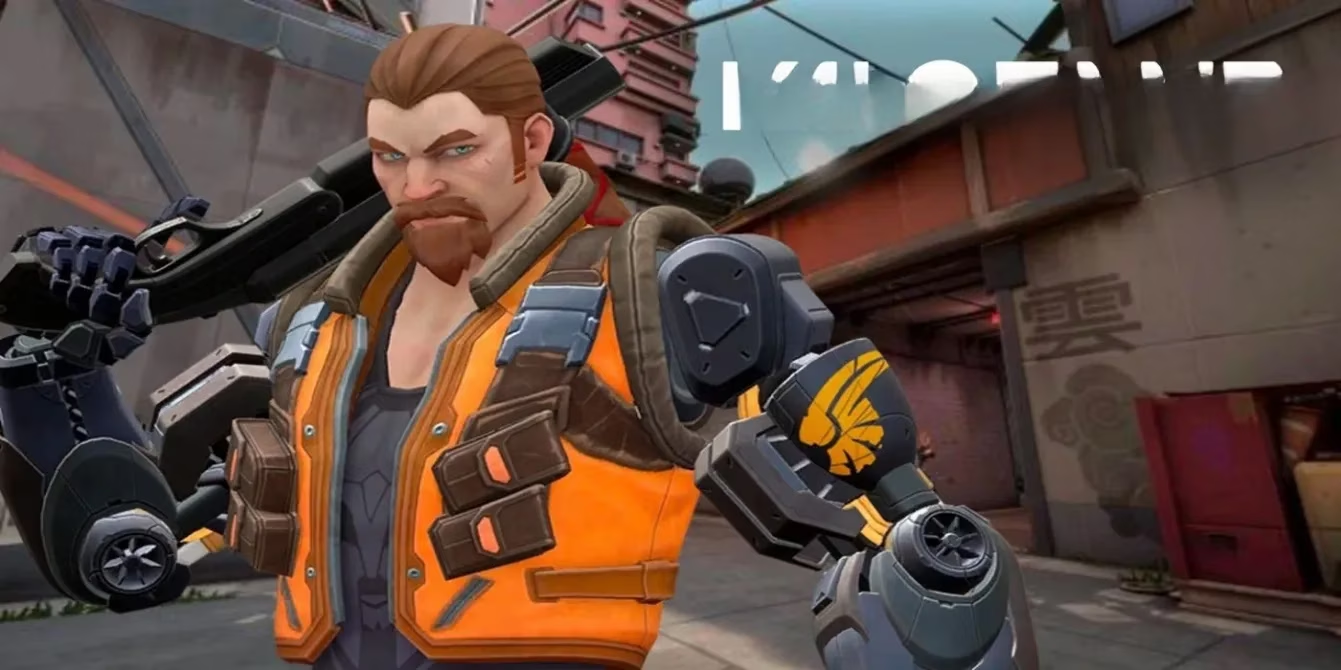
Breach is a true oddball—part initiator, part demolition expert, and 100% a walking earthquake. While other Agents might rely on smokes, flashes, or mobility to outplay their foes, Breach simply says “no.” No to camping, no to hiding, and definitely no to any sense of safety behind solid concrete. His entire kit is built around seismic charges, concussive blasts, and shockwaves that travel through terrain, making him the ultimate bunker buster. But mastering Breach isn’t just about knowing when to fire his abilities; it’s about understanding the geometry of every map, the timing of his slow but devastating moves, and most importantly, how to synergize with a team. This guide dives deep into everything a player needs to know to become a top-tier Breach main, from ability breakdowns to practical combos that will leave the enemy squad totally tilted.
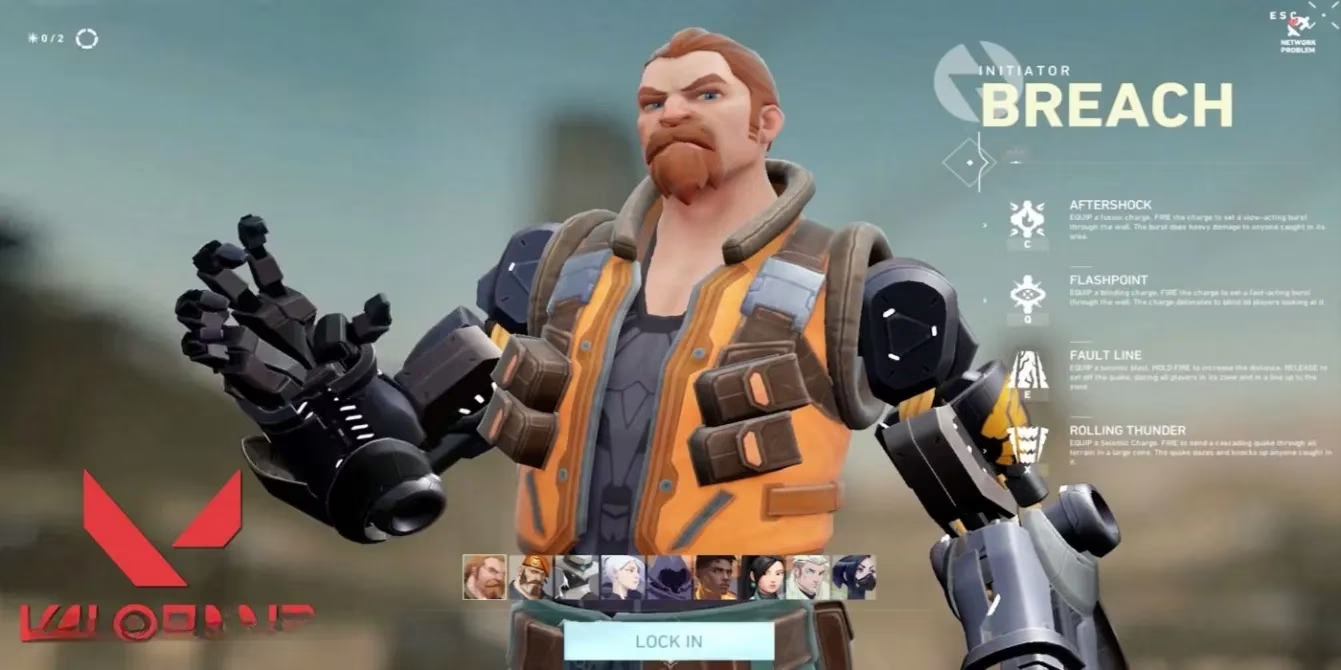
Breach’s Ability Kit: A Tectonic Toolbox
Breach’s loadout can feel clunky at first because every single one of his abilities has a wind-up time and requires the player to commit. However, once you get the hang of them, each one becomes a powerful tool for area denial and forcing enemies out of their comfort zones. Let’s break down each ability and what makes it tick.
Aftershock: The Wall-Breaching Payload
Aftershock is Breach’s signature ability and the one that immediately makes an enemy Cypher or Killjoy sweat bullets. When activated, Breach fires a slow but devastating fusion charge that burrows into a wall and detonates on the other side. This blast deals massive damage in a tight area, capable of one-shotting multiple opponents if they’re hugging the same corner. The catch? The startup is painfully slow, and savvy opponents can dodge if they hear the audio cue. The secret sauce is using Aftershock when a teammate provides reconnaissance—like a Sova dart or a Fade eye—to guarantee the kill. Pro tip: don’t sleep on its post-plant potential; nothing stops a defuser faster than an unexpected Aftershock through the spike’s cover.
Flashpoint: The Sight-Stealing Shockwave
Flashpoint is often where new Breach players get their first taste of “wallhack-level” utility. Unlike traditional pop-flashes that require pixel-perfect lineup, Flashpoint sends a blinding charge through the geometry itself, exploding into a full-blind on the other side. The range is generous, and it can be angled to blind entire chokepoints without exposing yourself. The key is timing—it takes a couple of beats to charge and transit, so you need to communicate with your entry fragger. When you land it right, the enemy team is left staring at a white screen, completely vulnerable. Pairing Flashpoint with a dash-in Duelist like Jett or Raze is a classic setup that never gets old.
Fault Line: Stagger Them Into Submission
Fault Line is the unsung hero of Breach’s kit. This ability menetas a wide, linear seismic blast that staggers any enemy caught in its path. A staggered opponent moves like they’re wading through molasses and suffers a severe fire-rate penalty, turning even the most accurate Phantom user into a sitting duck. Because Fault Line charges faster than Aftershock and has a colossal range, it’s an excellent opening tool to disrupt an enemy site hold. One well-placed Fault Line can turn a 5v5 into a series of easy pickoffs. Just beware of the self-stagger if you’re too close—it’s a rookie mistake that can cost you the round.
Rolling Thunder: The Earthquake Ultimate
Rolling Thunder is the ultimate “I own this space now” ability. Breach sends out a cascading series of seismic eruptions in a massive cone, staggering anyone hit and then launching them helplessly into the air. The initial concussive wave already wreaks havoc, but the airborne effect is the real killer—teammates get a window of free shots on helpless, floating targets. It can clear an entire bombsite, break a tightly held defense, or stop a full enemy push dead in its tracks. Because it charges relatively quickly (only 9 ultimate points since recent tuning), Breach mains can often use it multiple times per half. The psychological impact alone is worth the pick; few things tilt an enemy team harder than getting bounced around like popcorn.
Playing Breach Effectively: Synergy and Strategy

Breach is not a lone wolf—anyone who tries to play him like a solo carry will quickly find themselves getting traded out with zero impact. His entire kit screams teamwork, and the true magic happens when you coordinate with your squad. Think of Breach as the setup king; his job is to create unfair fights for his Duelists and to peel pressure off his Sentinels.
The Flashpoint-Aftershock Double Whammy
The most reliable self-contained combo in Breach’s arsenal is Flashpoint into Aftershock. Start by scouting a common hiding spot with a teammate’s info or your own game sense. Charge up Flashpoint and let it rip through the wall, blinding whoever is holding that angle. Immediately follow up with Aftershock on the same spot. The timing is tight, but when it hits, the blinded enemies have no chance to move away, resulting in a clean multi-kill that feels like cheating. This combo alone can singlehandedly break a defense on maps like Ascent’s B main or Haven’s Garage.
Communication Is Your Real Ultimate
Even the best Breach in the world will whiff if their team doesn’t act on the setup. Constantly call out when you’re about to use Fault Line or Flashpoint so your entry can peek exactly as the effects land. Announce your Rolling Thunder and ping the target area so your Duelists can position for easy cleanup kills. A silent Breach is a useless Breach. Use voice chat or the ping system religiously—your teammates will love you for it, and your win rate will skyrocket.
Map-Specific Mastery
Certain maps feel like they were designed for Breach to dominate. Fracture’s many long corridors and ziplines let Fault Line slice through entire enemy formations. Lotus’s three-site layout makes Rolling Thunder a site-retake dream. On Bind, the teleporters mean enemies often stack in predictable positions behind walls, perfect for Aftershock surprises. Spend time in custom games learning where walls are penetrable, and experiment with unexpected angles. Wall-banging isn’t just a gimmick; it’s a lifestyle.
Counterplay and Pitfalls
Despite how oppressive Breach can feel, he has clear weaknesses. His abilities have loud audio cues, and good opponents will scatter the moment they hear his “Going!” or “Flash out!” callouts. To mitigate this, vary your timing and don’t become predictable. Another common trap is over-committing to a Fault Line when enemies can simply back up. Always have a fallback plan and never use all your utility at once unless it’s the final push. A smart Breach keeps one ability in reserve to deal with flanks or post-plant chaos.
Final Thoughts: Is Breach Right for You?
If you’re the type of player who loves playing mind games with the enemy and dictating the pace of the round from relative safety, Breach is your spirit animal. He’s not the flashiest Agent, but he’s arguably one of the most consistent initiators in the game when played correctly. His high skill floor might turn off newcomers, but the payoff is immense. There’s nothing in Valorant quite like watching a perfectly timed Rolling Thunder send three enemies airborne while your Jett dashes in to clean up the mess—all because you said, “Lights out.” So gear up, load into the range, and start practicing those wall lines. The battlefield wants a Breach main who’s not afraid to shake things up, literally.