It was a crisp autumn evening in 2026, and I had just logged into VALORANT for my usual nightly session. The gunplay felt as tight as ever, and the new agent, with her shimmering smoke abilities, had me genuinely excited. I loaded into a ranked match on Haven, my heart pounding with that special mix of hope and anxiety that only competitive games can deliver. My first callout was simple—enemies spotted at A long—but the voice that left my microphone betrayed me. I’m a woman, and in the world of online gaming, that can still feel like a liability.
Within seconds, a teammate perked up. “Are you a girl?” he asked, his tone wobbling somewhere between disbelief and amusement. I stayed silent, hoping to diffuse the moment through sheer lack of engagement. But he persisted, soon shifting into a sing-song “Hey babe” loop that derailed the entire game. I tried to focus on my crosshair, to listen for footsteps in the chaos, but his voice was a relentless mosquito in my ear. Predictably, I died clutching a corner that I would have held easily in silence. I wish I could say this was a one-off, but it was just the latest drop in a very stale ocean.
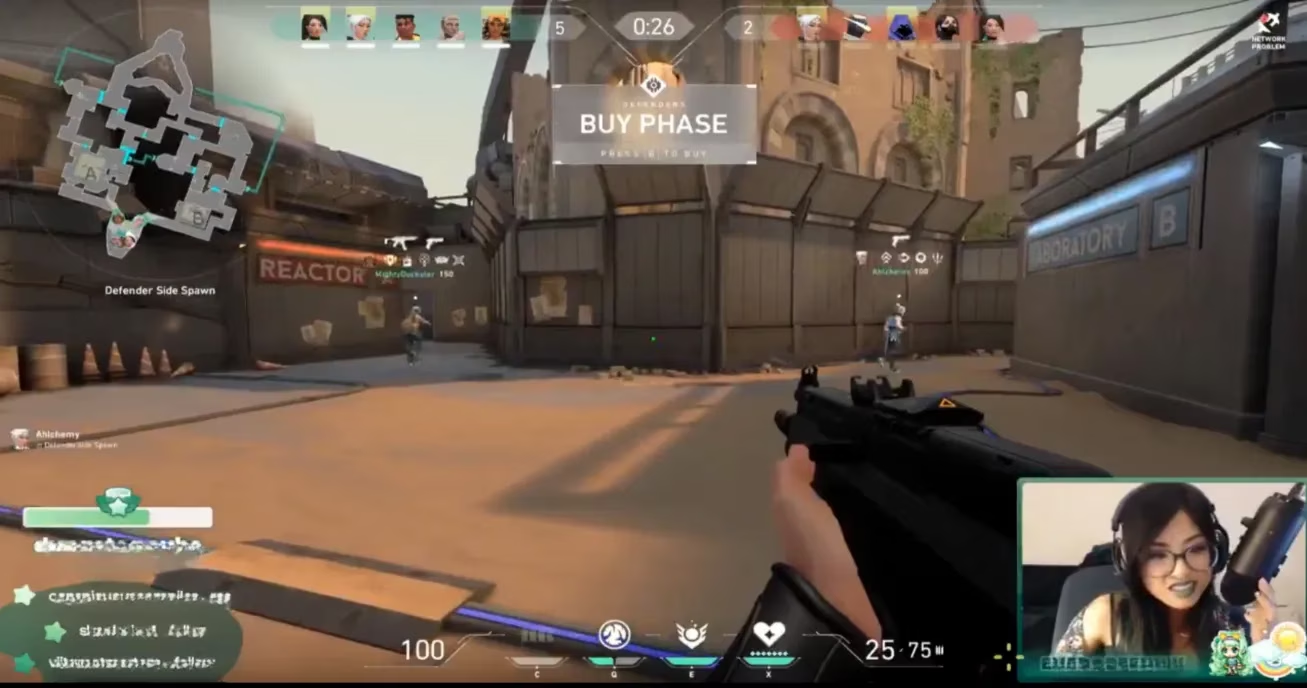
When I later scrolled through community forums for solidarity, I saw the same stories I’ve seen since the game’s closed beta back in 2020. The names change, the agent skins get flashier, but the venom remains. I vividly remember reading about Greenly, a Riot employee who streamed VALORANT during its beta and posted a clip where a player—maybe a teenager, maybe not—belittled and harassed her. Her strategy back then was to stay quiet and ignore, a survival tactic many of us adopt because even a polite response can feel like gasoline on a fire. The harasser in her game repeatedly barked “Hey Babe” until she was eliminated, a cheap tactic that turned a tactical shooter into a twisted endurance test. Years later, I found myself in the exact same scenario, proving that time alone doesn’t heal game culture.
I’ve also thought a lot about Aeneia, another Riot employee who was mistaken for a female gamer and told to “save their ideas for the kitchen.” The cruelty of that phrase is only matched by the silence of the three other players who heard it and did absolutely nothing. Every single time harassment happens, there are potential allies standing by, invisible and mute. I’ve been that spectator too, frozen in the awkward fear of making things worse, and I’m not proud of it. But Aeneia’s point rings painfully true: this behavior is taught by our culture, and it’s enabled by the very people who could intervene but choose not to.
When I shared my experience with a trusted group of friends, the advice came swift and well-meaning: “Just mute him. Problem solved.” I wish it were that simple. If I mute one harasser, I lose vital communication—a core part of VALORANT’s teamplay essence. That disadvantage falls squarely on me, the target, not on the person causing the problem. It’s like telling someone to simply close their eyes during a real-life assault and expect the threat to vanish. Beyond that, the advice shifts the responsibility entirely onto the shoulders of the harassed. We are asked to fix a situation we didn’t create, while the harasser slinks into the next match with zero friction. In the long run, muting doesn’t protect the next player, and it certainly doesn’t protect me from that first burst of venom that arrives before I can even reach for the settings menu.
Riot has made genuine strides since the early days. The in-game reporting system is more robust, and there are machine-learning tools scanning for abusive voice chat patterns in ways that seemed like science fiction back in 2020. But a reporting system is only as strong as its weakest link, and here in 2026, the cracks are still visible. A harasser needs to be flagged, reviewed, and found guilty—a process that can feel agonizingly slow to a player who just wants to enjoy their evening. And even when a ban lands, have the consequences really changed the underlying attitudes? I’ve seen banned players return on alternate accounts within days, their misogyny intact. The social repercussions remain just as daunting; when I’ve reported someone, I’ve occasionally been met with the dreaded “just suck it up” or the insinuation that I’m overreacting, as if protecting a harasser’s reputation matters more than my safety.
What gives me a sliver of hope are the voices at Riot who refuse to let this slide. I’ve read Ana Donlon’s old tweets from the beta era, where she called herself the “Executive Decider of Things” on VALORANT and publicly responded to Greenly’s harassment clip with real frustration and a commitment to change. That commitment seems to have evolved into sensitive player surveys, focus groups, and a slow but steady shift in how the community moderates itself. Yet, as Donlon implied then and as we’re still learning now, a long-term solution demands more than software. It demands a cultural overhaul within the player base, and that’s a boss fight no patch can win overnight.
The truth is, misogyny in gaming culture predates VALORANT by decades, and it will outlast my personal play sessions unless every layer of the ecosystem changes. In 2026, I still catch myself hesitating before using voice comms, still weigh the risk of being myself versus being a silent phantom. I’ve met incredible allies along the way—players who call out toxicity, who use the in-game reporting tools thoughtfully, who simply treat me like a teammate first. But I’ve also seen the weary resignation in the eyes of every woman who queues up, the unspoken calculation of how many matches we can endure before muting the world entirely.
I want VALORANT to be a place where skill and teamwork are the only things that define us. I want to never again freeze mid-round because someone decides my voice is an invitation for abuse. Until the consequences for harassment are swift, severe, and universally enforced—until the culture drowns out the “Hey babe”s and “go to the kitchen” quips with a chorus of immediate rejection—we will keep having these conversations. I’ll keep queuing, because I adore this game, but I’ll also keep hoping that someday, my story won’t be so painfully common.