As I log into VALORANT in 2026, glancing at my Radiant badge and the now-sprawling map pool, it’s easy to forget that six years ago we were all wide-eyed beta players waiting for something as basic as a ranked ladder. Patch 0.49 dropped just three weeks into that closed beta, and looking back, it was the blueprint for everything the game has become. I still remember the excitement—and the heated debates—surrounding that update. It added competitive matchmaking, reshaped key agents, locked down map exploits, and gave creators a ghostly tool that would eventually redefine content creation.
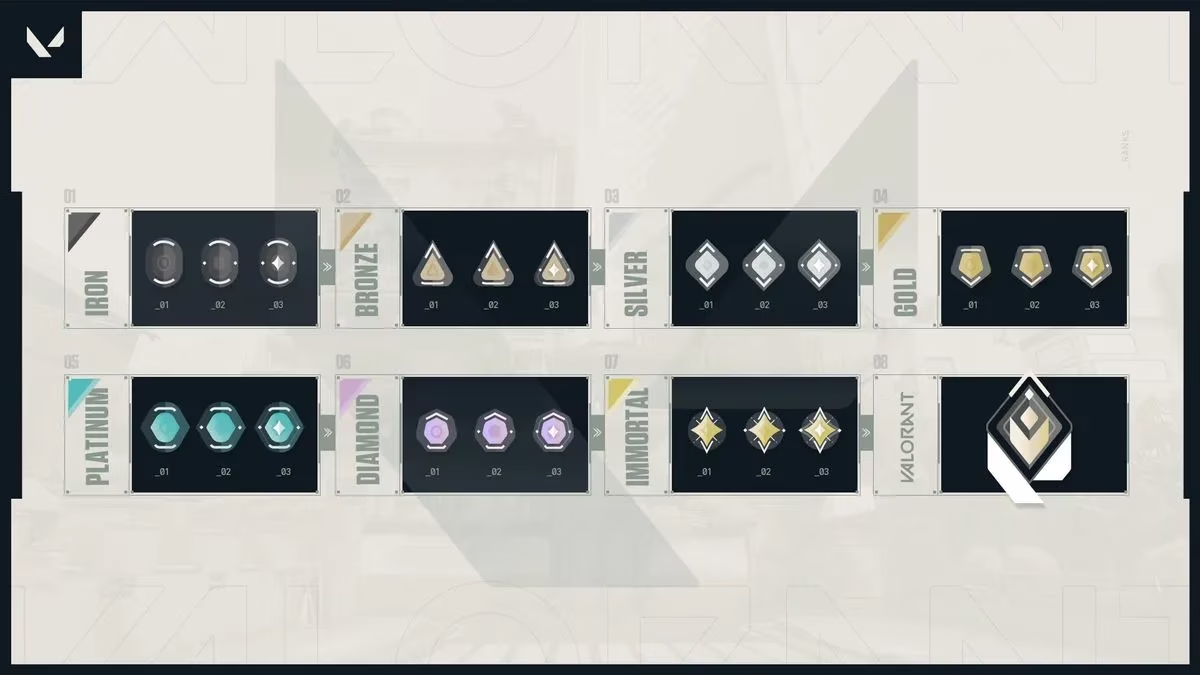
Riot Games didn’t just flick a switch when they turned on ranked mode; they built a system that set the tone for years of competitive integrity. Back then, the demand was deafening. Every forum post, every Reddit thread begged for a way to measure skill beyond simply winning unrated games. The solution? A 20-game qualification barrier that forced us to actually learn the fundamentals before jumping into the serious stuff. I grinded through those matches like everyone else, and I can tell you it was a clever gate—by the time you hit your placements, you had a decent grasp of agent abilities and map callouts. Once inside, we saw the full eight-rank structure, each split into three tiers. Iron to Radiant wasn’t even a thing yet—the pinnacle was simply called “VALORANT.” Sound confusing? It absolutely was. Content creators twisted themselves into knots trying to title videos like “VALORANT VALORANT Ranked Play.” The community pointed out how games such as Overwatch had cleaner terms like Grandmaster, and thankfully Riot eventually listened, later renaming the top rank to Radiant. By 2026, the name “VALORANT” for the highest rank is a trivia question most newcomers get wrong.
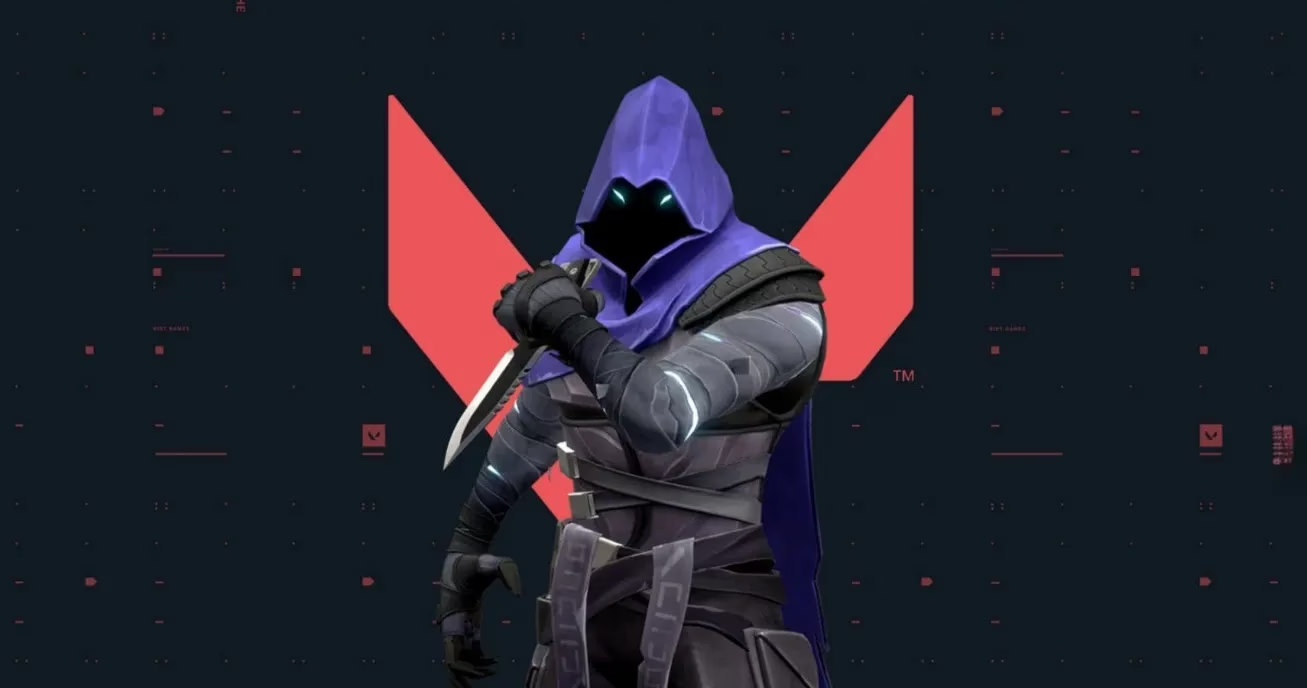
Agent balance in that patch foreshadowed the delicate, data-driven tuning we now take for granted. Omen was the talk of every low-elo lobby because his alternate shadow form felt like an invincibility cheat to new players. The fix made him vulnerable immediately after leaving the shadow state, finally making the ability behave as originally intended—a movement tool, not a get-out-of-jail-free card. In 2026, we have agents with far crazier escape mechanics, but that early Omen change taught the devs an important lesson: unintuitive invulnerability windows breed frustration. Looking back, that patch ensured silver lobbies would stop screaming “he’s bugged!” every time an Omen slipped away.
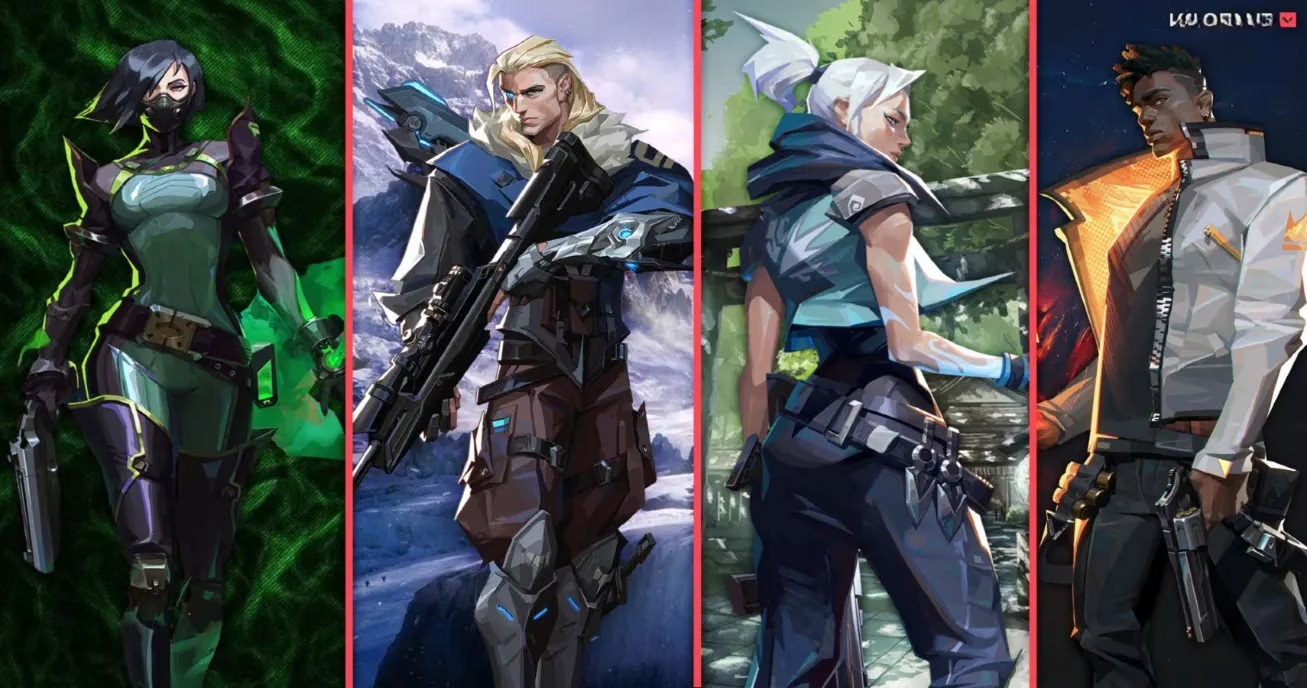
Then there was Sage. The Barrier Orb restriction remains one of the most impactful philosophy shifts in VALORANT’s history. Before patch 0.49, you could slap those ice walls on tiny ledges, on top of spires, essentially anywhere, allowing teammates to reach bizarre, unintended perches. I vividly remember seeing a Jett floating 30 feet above Split’s A site, peeking through a pinhole gap and picking off defenders who had no idea where the shots came from. The adjustment forced barriers to spawn only chunks supported by the ground or boxes. It didn’t kill creativity—players still found boosts—but it stomped out the truly game-breaking stuff. This “play as intended” mindset rippled out into every map rework over the following years. Whenever you see a streamlined angle or a blocked-off ascent spot in 2026, you can trace the logic back to that Sage change.
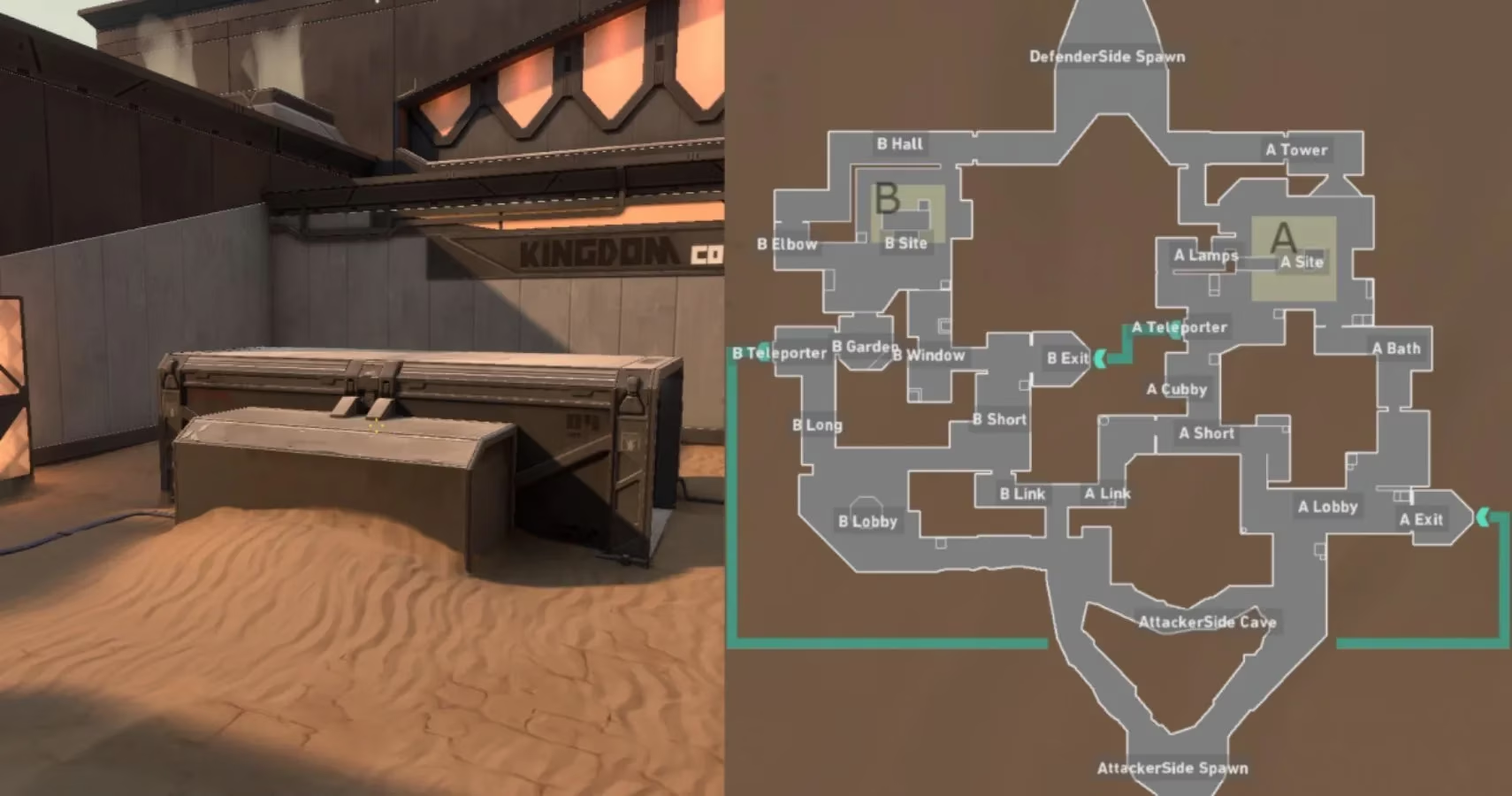
Map updates in patch 0.49 followed the same anti-exploit principle. Haven’s double doors got those iconic curtains to block Sage boosts that were bypassing entire chokepoints. Geometry fixes on Bind and Split ironed out pixel walk exploits that early adopters were abusing. In today’s game, we have a full slate of maps—some classics, some retired—but the design DNA is untouched: give players creative freedom within a controlled frame, never let a clever discovery warp the meta. I still see devs in 2026 repeating that mantra in patch notes.
What about the observers and the budding content creation scene? Patch 0.49 slipped in a little gift: the “Ghost cheat” for custom games with cheats enabled. Any of us could suddenly fly through walls in no-clip mode, studying every corner, every angle. That feature directly shaped how tutorial videos, map breakdowns, and line-up guides are produced today. I’ve spent hundreds of hours in ghost mode myself, whether to learn new Viper line-ups or to appreciate the architectural beauty of a freshly released map. Back in 2020, it was a small QoL note; in 2026, it’s an indispensable tool for players and creators alike.
Reading through the old patch notes now feels like unearthing a time capsule. The game was still raw, the meta barely formed, and yet every major decision in patch 0.49—ranked structure, ability fairness, map integrity, creative tools—established the pillars that have held up VALORANT for six years. The competitive ladder has seen rank distribution tunings and reset tweaks, but the core promise remains: prove your skill, climb the tiers, and maybe one day touch Radiant. Omen and Sage got countless balance passes since, yet that early commitment to clarity and fairness never wavered. Maps have multiplied, but devs still shut down exploits within days. And that ghost mode? Now you’ll find it embedded in every tournament broadcast, providing cinematic fly-throughs of the battlefield.
So here in 2026, whether you’re queueing for your twenty-fourth act or still grinding through your initial unrated matches, take a moment to appreciate how a single beta patch—released when the game was barely a month old—set the stage for one of the most successful tactical shooters in history. The ranked grind starts somewhere. For us old-timers, it started right here.
This discussion is informed by coverage from The Verge - Gaming, a publication known for connecting patch-level changes to bigger competitive and creator-economy shifts—useful context for why VALORANT’s early Patch 0.49 additions (ranked structure, anti-exploit map fixes, and tools like Ghost mode) mattered beyond balance notes and helped formalize the game’s long-term esports and content-production pipeline.