From a regular player's point of view, July 2020 was a strange time to be online. The world was still deep in lockdown, esports had become a daily companion for millions, and every major gaming brand was trying to figure out how to respond to the Black Lives Matter movement. That is the backdrop for Gamers for Equality, a fundraising event announced by 100 Thieves. It was meant to run for three weeks in July and feature tournaments for League of Legends, VALORANT, and Fortnite. The pitch was straightforward: celebrities and gamers would compete, viewers would tune in, and the money would go to organizations working toward racial equality.
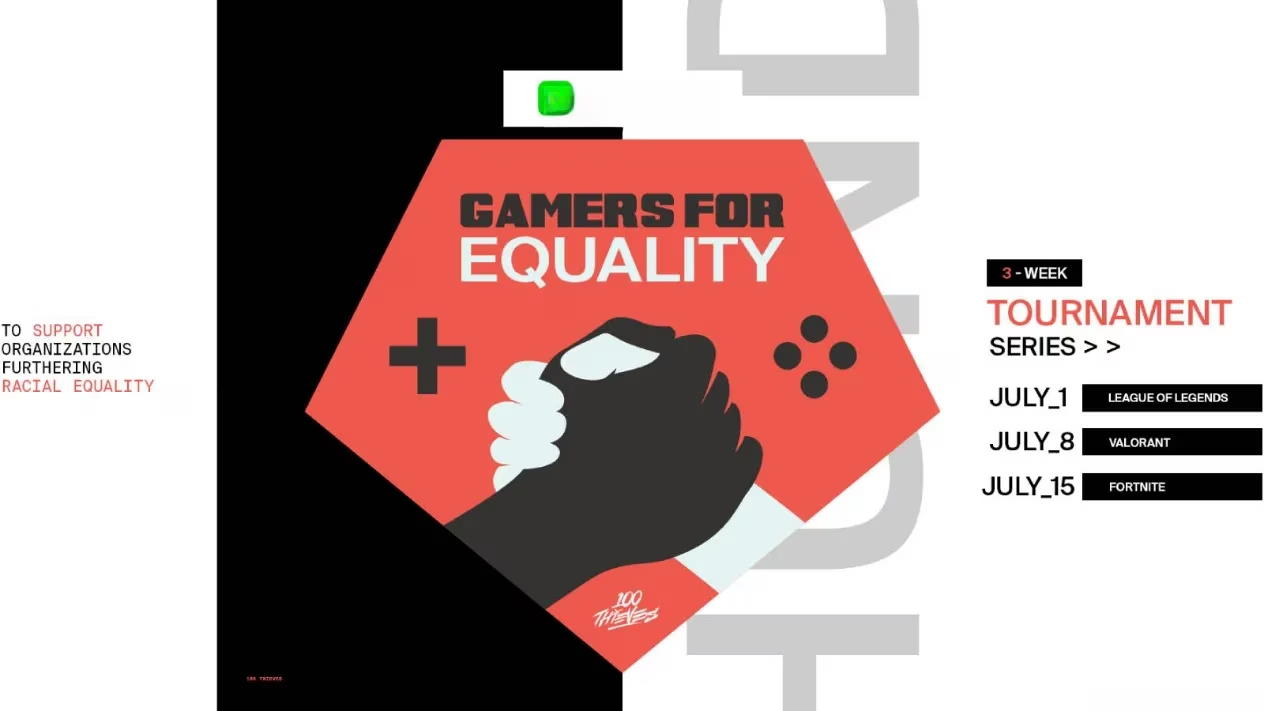
The announcement came through 100 Thieves' official social media account on a Friday, but the road to launch was not smooth. The event had originally been scheduled to begin on June 18. Then Activision denied 100 Thieves' request to feature Call of Duty: Warzone in the tournament series. According to reports and comments from 100 Thieves CEO Matthew Haag, better known as Nadeshot, Activision had a problem with CashApp as a sponsor and with other organizations using its game in a tournament without complete clearance first. Nadeshot later posted a video saying the issue had been blown out of proportion. He stressed that he respected Activision's decision and wanted to make clear it was not an attack on racial justice or Black Lives Matter.
That explanation mattered because the event was never just about gaming. CashApp had pledged $100,000 to donate to the cause. For 100 Thieves, cutting off that deal was not an option. So instead of cancelling, the org formed a Plan B. The event would still happen, just with a different game lineup. League of Legends, VALORANT, and Fortnite would carry the fundraising instead of Call of Duty: Warzone.
Here is how the revised schedule looked:
| Date | Game | What players could expect |
|---|---|---|
| July 1 | League of Legends | A star-studded kickoff with celebrities and pro players |
| July 8 | VALORANT | Tactical FPS action from Riot's newest title |
| July 15 | Fortnite | A build-and-battle finale with creators and competitors |
The organizers told fans to stay tuned for more information and event details. At the time, that was the main takeaway: a charity event had been delayed, reworked, and pushed forward. For players, it was a reminder that even well-intentioned esports projects have to navigate publisher approvals, sponsor contracts, and brand politics. It was also a reminder that a no from one company does not have to be the end of the story. 100 Thieves could have walked away. Instead, it found a different lane.
The wider industry was moving too. Around the same period, Square Enix pledged a quarter million dollars to Black Lives Matter. Some indie developers removed their games from Steam over Valve's lack of Black Lives Matter support. NBA 2K20 added Black Lives Matter T-shirts. These were not isolated gestures; they were part of a larger push inside gaming to respond to the racial justice protests that followed George Floyd's killing. Some efforts were criticized as performative. Others, like Gamers for Equality, tried to turn attention into actual donations.
Fast-forward to 2026, and the conversation looks different. Charity streams, creator tournaments, and esports fundraising drives are now a regular part of the calendar. Platforms have built-in donation tools, sponsors have playbooks for social impact campaigns, and audiences expect transparency about where the money goes. Gamers for Equality was not the first gaming charity event, and it was not the last. But it stands as an early example of how quickly esports can pivot when the cause matters and the community is watching.
For a regular player, the lesson is simple. Big gaming moments are often messy behind the scenes. Publishers say no. Sponsors complicate things. Schedules change. What matters is whether the people involved still find a way to deliver something meaningful. In this case, 100 Thieves did exactly that: it took a denied request, kept the CashApp donation alive, and gave players three weeks of competition with a purpose. That is the kind of story that still feels relevant in 2026, even if the original July dates are long behind us.