In the luminous chaos of Valorant’s tactical ballet, few figures slice through the smoke and gunfire with the grace of a storm spirit. She is Jett, the South Korean duelist who moves like a whispered secret and strikes like a thunderbolt. Since the game’s explosive debut in 2020, she has remained a beacon for those who value speed, precision, and the sheer artistry of motion. A tempest wrapped in a slender silhouette, Jett does not simply duel – she choreographs moments of breathless beauty, turning each round into a canvas of kinetic poetry.
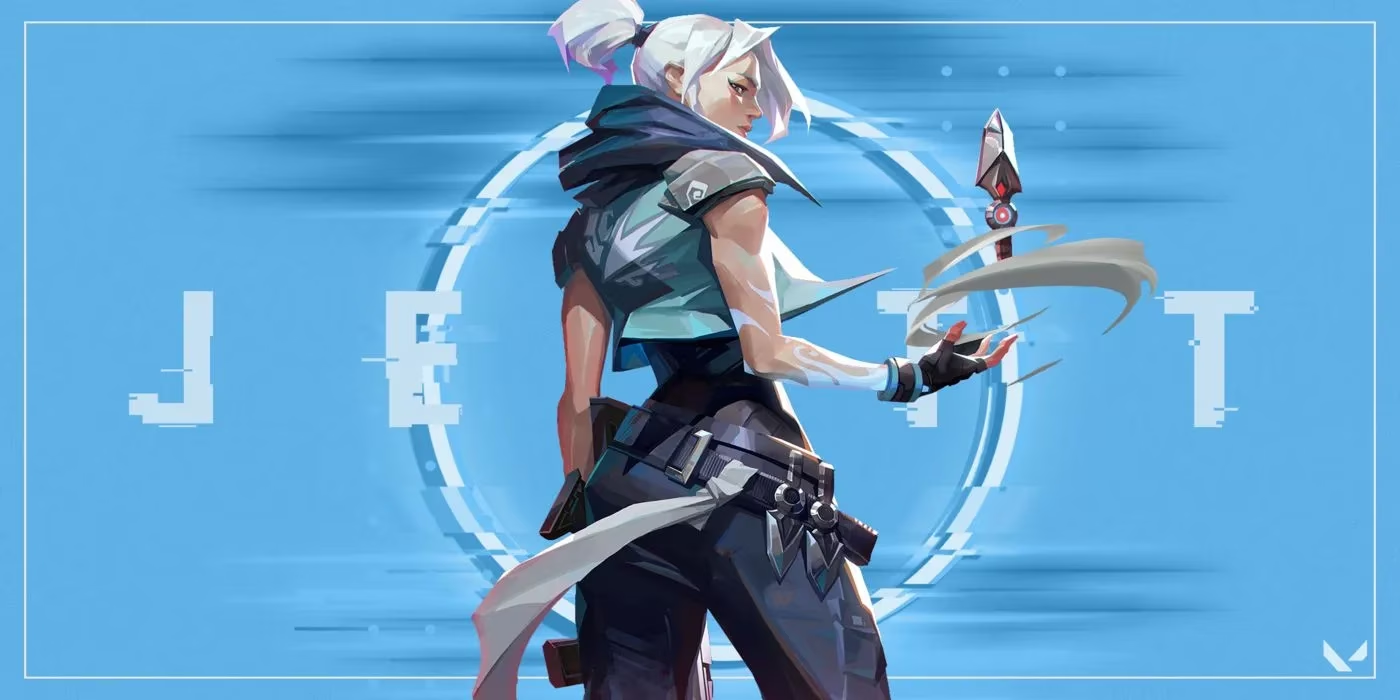
As a Duelist, Jett embodies the frontline fury, the entry‑fragger’s promise of shattered defenses. Yet her soul belongs to the wind, a force that refuses to be tethered. Her abilities are not mere tools; they are extensions of a dancer’s body, each one a note in a symphony of controlled chaos. Tailwind flings her across the battlefield like an arrow loosed from a bow – a needle threading through the fabric of a firefight. Updraft vaults her to heavens unseen, transforming the vertical axis into a personal playground where gravity itself seems to pause. Cloudburst conjures a fleeting eclipse, a shroud of mist that bends light and breaks line of sight, a gentle yet disarming veil. And then, Bladestorm – a maelstrom of conjured knives, each one a vow of lethality, recharged like the endless breath of the gale.
These gifts, bound to the Q, E, C, and X keys by default, have over the years received the careful attention of Riot’s balance artisans. Subtle shifts – a second trimmed from Tailwind’s recharge, a whisper of reduction in Cloudburst’s duration – have kept her dance brisk yet honest. By 2026, Jett’s core remains untamed. In a landscape where new Agents and ever‑shifting metas roil the waters, she still pirouettes at the edge of the competitive spotlight, cherished in both ranked queues and the gleaming stadiums of the VCT.
To watch a master Jett is to witness a lesson in momentum. Her legendary synergy with the Operator sniper rifle needs no proclamation: a shot rings out, and before the enemy can triangulate the sound, she has already dashed behind a corner or up to an improbable perch, a phantom eluding retribution. The marriage of Updraft and Tailwind births aerial maneuvers so disorienting that opponents are left gawping at empty sky while a cascade of precise bullets rains from above. On maps like Ascent’s mid‑courtyard or Breeze’s echoing halls, these flights become both art and ambush.
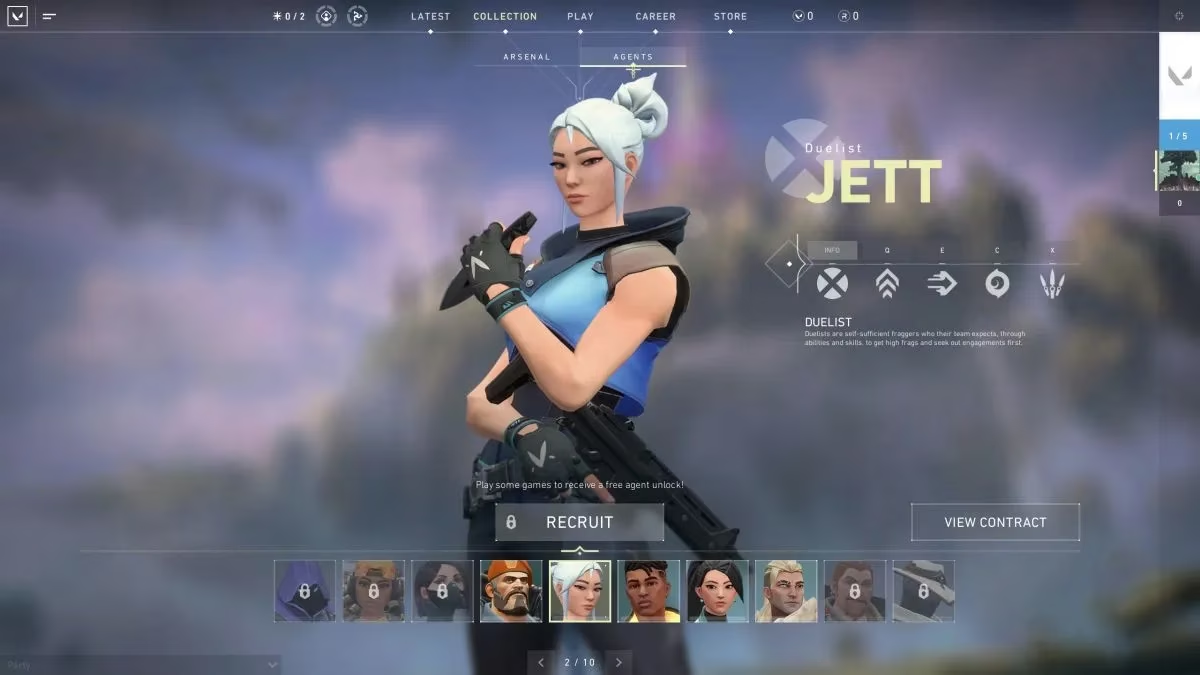
Cloudburst, though humble in duration, is the glove over her iron fist. Placed deftly on a choke point, it buys a single heartbeat of hesitation – and in Valorant, a heartbeat is an eternity. Cast beneath her own feet as she ascends, it becomes a magician’s silk, concealing the angle of her rise. Followed by a silent Tailwind, it transforms a bold Jett into a ghost that reappears from impossible vectors, flanking with the fury of a squall.
Then comes the ultimate crescendo. Bladestorm is more than a weapon – it is a covenant of precision. In the hands of a player who hears the rhythm of their own aim, the floating daggers become a surgical orchestra. Each throw is a note that, if sharp, resonates with the next, the kills recharging the very air around the knives. The alternate fire, a fan of all remaining blades unleashed in one defiant breath, is a gambler’s exultation – a high‑stakes flourish that can erase entire squads or leave a lone Jett with nothing but the echo of her own audacity. In the eco‑rounds of 2026, where every credit is a precious ember, a well‑timed Bladestorm can rewrite a match’s economy and carve heroes from shadows.
The culture that fans around Jett is itself a vortex. From Twitch highlights to cinematic montages hammered out in custom lobbies, players have spent thousands of hours dissecting her every step. They practice “Jett dashes” – those blink‑and‑you‑miss‑it bursts of motion – on fractured walls and pixel‑perfect edges, discovering new pathways that the developers might never have imagined. The wind magician has become a lifestyle, a philosophy whispered between rounds: sometimes the best defense is to become untouchable. In a game where split‑seconds decide victory, she teaches that movement is not merely repositioning, but a form of dialog with danger.
Her presence in professional play remains a blazing constant. On stages lit by the neon glow of global tournaments, star duelists still lock in Jett when the map demands a surgically aggressive opener. Her ability to snatch early picks and vanish before retaliation has shaped entire team compositions and forced opponents to weave extra layers of utility just to slow her down. Yet no amount of counter‑strategy can fully cage the wind. A creative Jett player, responsive to the ebb and flow of each unique round, will always find a gap – a sliver of space through which a Tailwind can slip, a narrow corridor where an Updraft can break line of sight, a moment of arrogance in an enemy’s hold that Bladestorm can punish.
Valorant has grown immeasurably since its closed beta days. New maps like the shimmering lunar base “Eclipse” and the sun‑baked “Aurora” have expanded the playgrounds where Jett’s vertical whimsy shines. New agents with their own disruptive abilities have entered the roster, yet none have stolen the wind from her sails. For as long as there are corners to peek, angles to create, and hearts to quicken at the sound of a blade slicing the air, Jett will remain a standard‑bearer for the dualist spirit – a reminder that Valorant, for all its tactical grit, still honors the lone artist who can make the impossible look effortless.
In the grand tapestry of Agents, Jett is a brushstroke of vibrant motion. She does not simply dash, shoot, or smoke; she sculpts the very tempo of a match. For those who master her, every kill is a stanza, every dodge a rest in the music of conflict. And as the years roll forward, the wind carries her name ever onward – a Duelist, a dancer, a dream of sun‑kissed victory.